 Pin
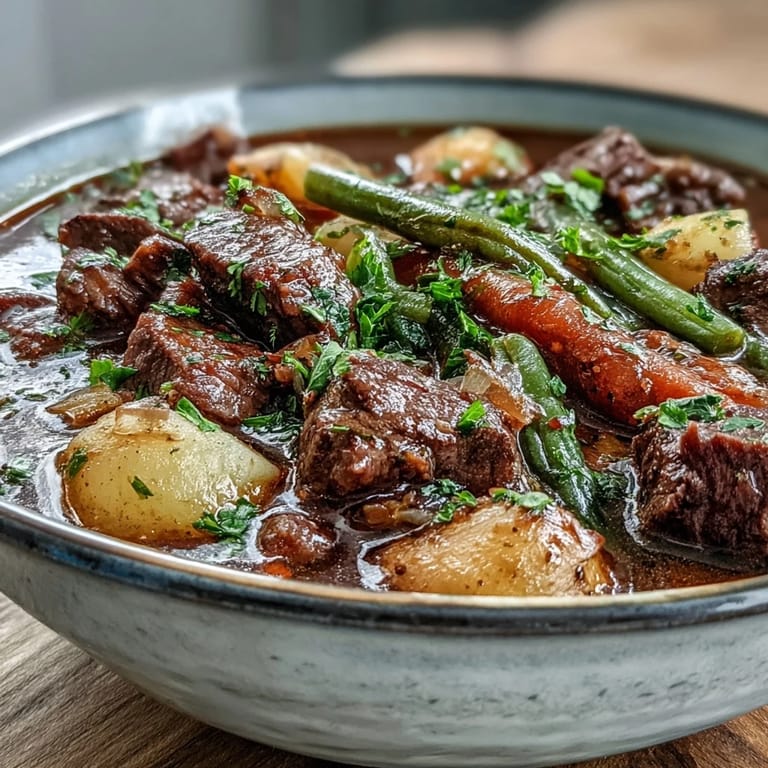
Pin My neighbor stopped by on a gray February afternoon smelling like snow, and I had nothing prepared except a block of beef and determination. She stayed longer than expected, so I threw together what I had in the pantry, letting the soup simmer while we talked at the kitchen table. By the time she left three hours later, the whole house smelled like home, and I'd discovered that the best meals often come from happy accidents rather than careful planning. That soup became our standing joke—the one I make when someone needs feeding without fuss.
I made this for my dad when he came home from the hospital, and watching him eat without grimacing made me understand why people say soup is medicine. It wasn't complicated or show-offy, just honest and warm, exactly what he needed.
Ingredients
- Beef chuck, 1.5 lbs cut into 1-inch cubes: Chuck has enough marbling to stay juicy through long cooking, and those irregular pieces actually brown better than uniform cuts.
- Olive oil, 2 tbsp: Use a neutral one for browning—save the fancy stuff for drizzling.
- Onion, 1 large diced: The foundation that builds flavor as it softens; don't skip this step even if you're in a hurry.
- Garlic, 3 cloves minced: Add it after the softer vegetables or it'll taste bitter and remind you why timing matters.
- Carrots, 3 medium sliced: They naturally sweeten as they cook, balancing the savory beef beautifully.
- Celery, 2 stalks sliced: The quiet backbone of soup—you won't taste it directly but you'll miss it if it's gone.
- Potatoes, 2 medium peeled and diced: They thicken the broth slightly and keep the soup feeling substantial without cream.
- Parsnip, 1 peeled and diced optional: If you find one, use it—it adds an unexpected earthy sweetness that makes people ask what that flavor is.
- Green beans, 1 cup trimmed and cut: Keep them separate until the last stretch so they stay bright and don't turn to mush.
- Frozen peas, 1 cup: Don't thaw them; just drop them in at the end for a burst of sweetness and color.
- Diced tomatoes, 1 can with juice: The acidity cuts through the richness and brings everything into focus.
- Beef broth, 8 cups: Use good broth if you can—it's the canvas everything else paints on.
- Bay leaves, 2: Fish these out before serving or you'll find them like little flavor grenades.
- Dried thyme and oregano, 1 tsp each: These two together taste like Sunday dinner and can't be rushed.
- Black pepper and salt to taste: Add most of it early, then taste at the end and adjust—you know your palate better than any recipe.
- Fresh parsley, 2 tbsp chopped for garnish: It's not just decoration; it reminds you that fresh things matter even in long-cooked food.
Tired of Takeout? 🥡
Get 10 meals you can make faster than delivery arrives. Seriously.
One email. No spam. Unsubscribe anytime.
Instructions
- Heat and brown the beef:
- Get your Dutch oven or pot hot enough that the oil shimmers, then add beef in batches so each piece actually touches the surface and develops a golden crust. This takes patience, but it's where the soup's whole flavor personality gets established.
- Build the aromatic base:
- Once the beef is out, throw in onion, carrots, and celery without cleaning the pot—all those browned bits are liquid gold. After five minutes when they're starting to soften, add the garlic and let it perfume everything for just a minute before it burns.
- Bring everything together:
- Return the beef to the pot with the potatoes, tomatoes, broth, and all the seasonings, then bring it to a rolling boil so you know it's really started. Once you see it bubbling, dial the heat way down and cover it, because now it's time to let time do the work.
- Simmer until the beef surrenders:
- Cover and let it bubble gently for an hour and fifteen minutes, stirring every so often out of habit more than necessity. You'll know it's working when the beef breaks apart with a spoon and the broth has turned rich and brown.
- Finish with the bright vegetables:
- Uncover, add the frozen peas, and let everything cook together for another ten to fifteen minutes until the green beans are tender and the peas have heated through. This is when you taste and adjust the salt because the broth has concentrated.
- Final touches:
- Remove the bay leaves—I always fish mine out with a spoon and hold them up to the light to make sure I got both. Ladle into bowls, scatter parsley on top like you mean it, and serve while it's still steaming.
 Pin
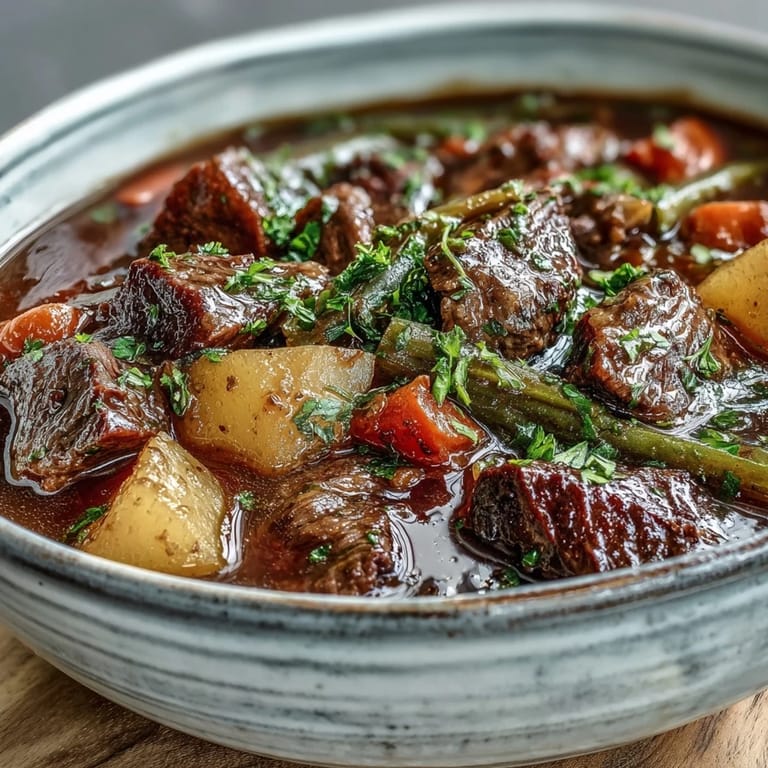
Pin There's something about watching someone eat soup you made that makes cooking feel like the truest form of saying I care about you. This one has become my go-to when life gets heavy, because it asks nothing fancy of you but gives back comfort in every bowl.
The Science of Long-Cooked Meat
That first hour and fifteen minutes isn't just time passing—it's collagen breaking down into gelatin, which is why the beef gets so tender and the broth becomes silky. Chuck is forgiving because it has enough connective tissue to transform rather than dry out, so you're actually working with the meat's natural design instead of against it.
Making It Your Own
I've made this with turnips instead of potatoes, added a splash of Worcestershire sauce when I had a bottle open, and once threw in roasted mushrooms just because they were sitting around. The structure is solid enough to handle swaps, so don't feel locked into the ingredient list if your kitchen or mood is pulling you somewhere else.
Storing and Reheating
This soup keeps for four days in the fridge and actually deepens in flavor as it sits, which is one of those rare cooking gifts where laziness is rewarded. When you reheat, do it gently on the stove over medium heat, stirring occasionally, because blasting it on high can make the vegetables turn mushy.
- Let leftovers cool to room temperature before refrigerating so condensation doesn't water down the flavors.
- Freeze portions in individual containers for up to three months if you want future-you to have an easy dinner waiting.
- Serve with crusty bread or alongside a simple salad to make it feel like a complete meal without much extra effort.
 Pin
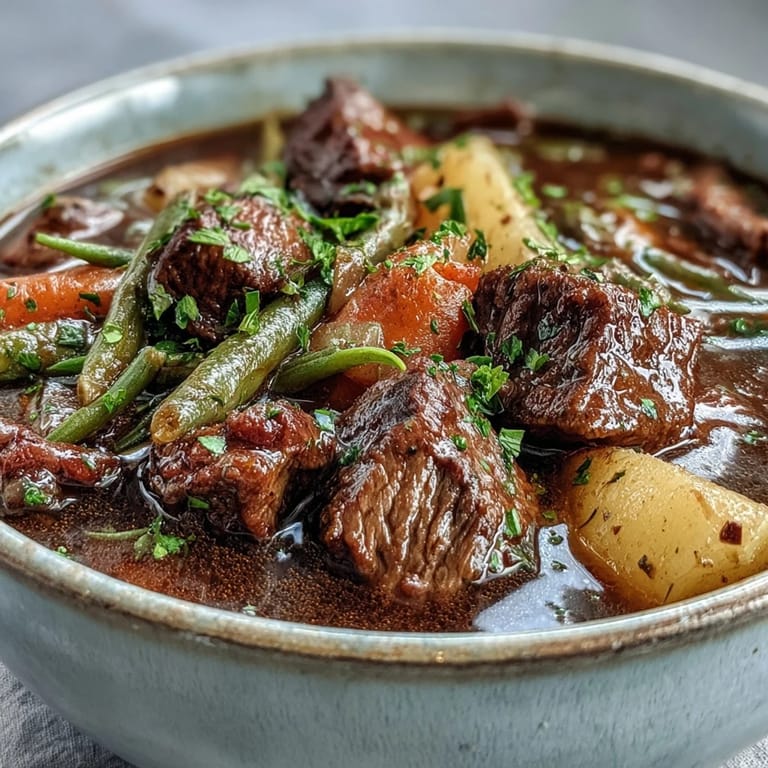
Pin This soup is proof that the most satisfying food doesn't come from complexity but from respect for simple ingredients and the willingness to let time work its magic. Make it once and you'll understand why it's been made the same way in kitchens for generations.
Recipe FAQ
- → What cut of beef works best?
Beef chuck is ideal because it becomes tender during long simmering and adds rich flavor. Look for well-marbled pieces cut into 1-inch cubes for even cooking.
- → Can I make this in a slow cooker?
Yes. Brown the beef first, then add all ingredients to your slow cooker. Cook on low for 7-8 hours or high for 4-5 hours until beef is tender.
- → How do I store leftovers?
Refrigerate in an airtight container for up to 4 days. The flavors develop and improve over time. Reheat gently on the stovetetop, adding broth if needed.
- → What vegetables can I substitute?
Turnips, rutabaga, or sweet potatoes work well instead of regular potatoes. You can also add other vegetables like corn or kale during the last 15 minutes of cooking.
- → Can I freeze this soup?
Yes, freeze for up to 3 months. Leave slightly undersalted as flavors concentrate when frozen. Thaw overnight in the refrigerator before reheating.
- → How do I know when the beef is done?
The beef is ready when it forks apart easily and offers no resistance. This typically takes about 1 hour 15 minutes of simmering.