 Pin
Pin I discovered this dish while watching my neighbor arrange vegetables in her garden one spring morning—not in a cookbook, but in the way she'd line up her seedlings in perfect rows. It struck me then that food could be as much about visual rhythm as taste, and I became obsessed with creating something that felt like edible architecture. The Botanical Lattice was born from that moment, a way to turn humble asparagus and chives into something that makes people pause before they eat.
I made this for the first time at a spring brunch when my sister brought her new partner to meet the family, and I wanted something that said both 'I care' and 'I'm calm enough to handle this.' Watching them lean in to examine the lattice before tasting it—that moment when people realize food can be art—became exactly why I keep coming back to this recipe.
Ingredients
- Asparagus stalks (16 medium, trimmed): Choose spears that are roughly the same thickness so they cook evenly and weave together without snapping. Trim the woody ends just where the color shifts from pale to green.
- Fresh chives (16 long stems): These are your culinary thread—select the longest, most pliable ones you can find, as they'll tie the lattice together without breaking.
- Blueberries (1/2 cup): Their mild sweetness and firm texture hold up beautifully in the squares; they're the anchors of the fruit mix.
- Raspberries (1/2 cup): These add delicate tartness and jewel-like appeal, though handle them gently as they bruise easily.
- Fresh strawberries (1/2 cup, halved if large): Their natural sweetness balances the earthiness of the asparagus and creates visual pops of color.
- Golden berries (1/2 cup, halved if large): These bring a subtle tropical tartness that rounds out the flavor profile in an unexpected way.
- Extra virgin olive oil (1 tablespoon): Drizzle this just before serving to catch the light and add richness without overwhelming the delicate vegetables.
- Flaky sea salt (1/4 teaspoon): Use flaky salt rather than fine—it dissolves slowly on the tongue and enhances rather than masks the fresh flavors.
- Freshly ground black pepper: A whisper of pepper adds complexity; resist the urge to over-season.
Tired of Takeout? 🥡
Get 10 meals you can make faster than delivery arrives. Seriously.
One email. No spam. Unsubscribe anytime.
Instructions
- Blanch the asparagus until it's just awake:
- Bring salted water to a rolling boil and slip in your asparagus—you're cooking just until the spears turn that brilliant, almost neon green and a fork passes through easily, about 1-2 minutes. Immediately scoop them into an ice bath because every second longer and they'll soften past the point where they'll weave cleanly.
- Soften the chives with a quick dip:
- Hold each chive stem gently over steaming water or quickly submerge it in hot water for just 5 seconds, then plunge it into ice water—this makes them pliable without turning them into limp strings. Pat them completely dry so they grip the asparagus without slipping.
- Lay the foundation of your lattice:
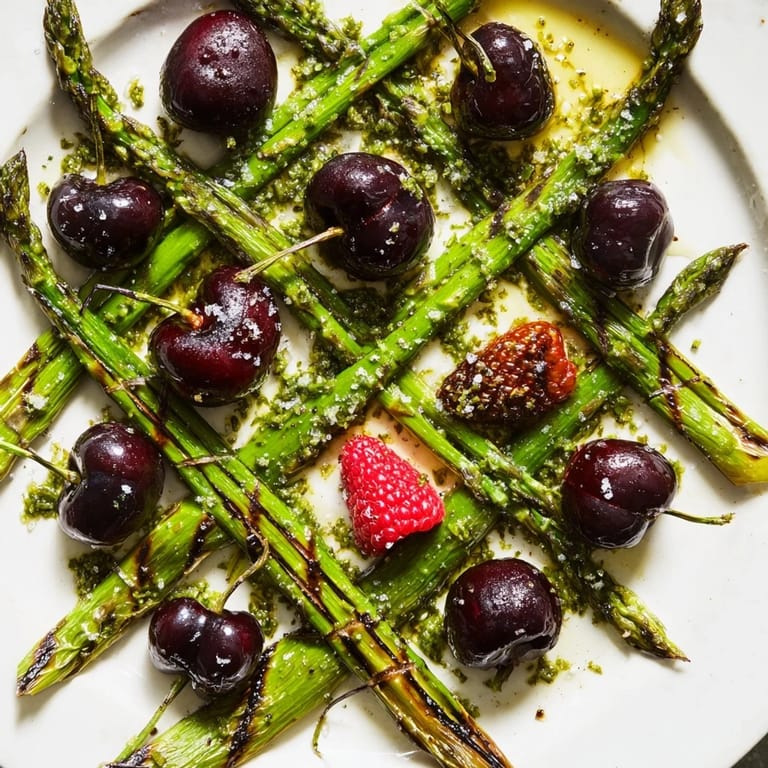
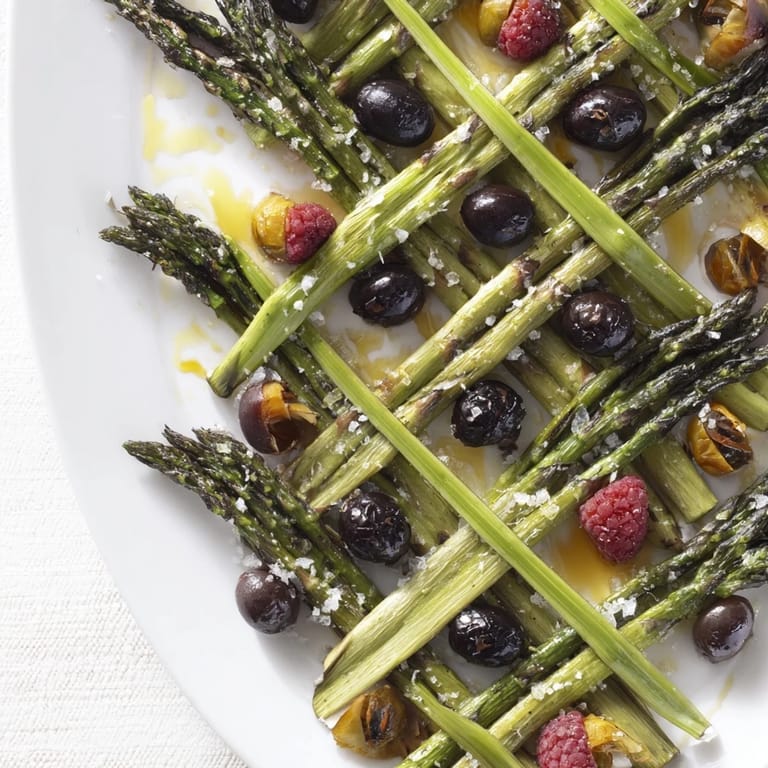
- On your serving platter, arrange 8 asparagus spears in parallel lines, all pointing the same direction and spaced about a thumb-width apart. This is your warp; take your time getting them evenly distributed because the grid only looks balanced if the spacing is intentional.
- Weave the second layer and create the grid:
- Now comes the meditative part: take your remaining 8 spears and weave them perpendicularly over and under the first layer, alternating as you go. You're building a checkerboard pattern, and watching it emerge feels almost hypnotic.
- Bind the intersections with chive ties:
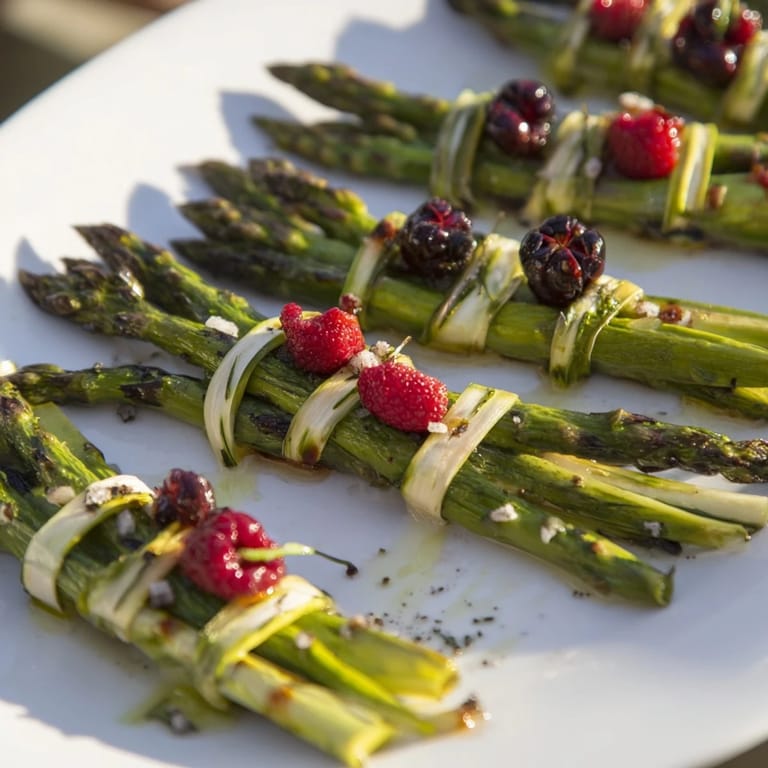
- At each crossing point where asparagus meets asparagus, gently wrap a softened chive stem around both spears and tie a simple knot—nothing tight enough to crack them, just enough to hold the structure together. This is what keeps your lattice from collapsing when you move the platter.
- Fill the squares with jeweled fruit:
- Starting from one corner, nestle your berries into each open square in whatever arrangement feels right to you—I usually alternate the colors so each square has a little rainbow. Leave the fruit sitting on top rather than pressing it down, so each bite includes a burst of juice.
- Finish with oil, salt, and a grind of pepper:
- Just before serving, drizzle the olive oil in a light zigzag across the entire lattice, sprinkle the flaky salt so it catches on the berries, and give the whole thing a few turns of the pepper mill. This final seasoning is what pulls all the flavors into focus.
 Pin
Pin There was a quiet moment during that brunch when everyone had stopped talking, and all I could hear was the sound of forks gently touching plates and small appreciative sounds. That's when I realized this dish had become more than just vegetables and fruit arranged on a platter—it was permission to slow down and notice beauty in something simple.
The Geometry of Flavor
What makes this appetizer sing isn't just visual—it's the way each element plays against the others. The cool, grassy asparagus provides a savory base that lets the fruit's sweetness feel like a surprise rather than the main event. The chive is there too, a whisper of onion complexity that ties everything together. It's a lesson I keep relearning: the best dishes aren't about starring ingredients but about ingredients that make each other better.
Timing and Temperature
This is one of those dishes where temperature matters as much as technique. Serving everything cold—the asparagus blanched and chilled, the fruit fresh from the refrigerator, even the platter if you have time to chill it—keeps every element crisp and bright. I've tried serving it at room temperature, and something gets lost; the asparagus starts to feel tired, and the berries begin to weep. Cold is what keeps this dish feeling alive and alert on the plate.
Variations and Personal Touches
Once you master the basic lattice, this becomes a canvas for whatever fruits are at their peak. In summer, I swap in blackberries and halved cherries; in fall, I've nestled in pomegranate seeds that catch the light like rubies. A whisper of fresh mint leaves scattered across the top adds herbal depth, and if you want to dress it up for an evening gathering, a delicate drizzle of aged balsamic adds richness without overwhelming the delicate vegetables.
- Keep fruit substitutions to small, firm varieties so they nestle securely in the asparagus squares.
- A light herb oil infused with thyme or tarragon can replace plain olive oil for another layer of flavor.
- This appetizer pairs beautifully with a crisp white wine or sparkling water with fresh lemon.
 Pin
Pin This dish taught me that sometimes the most memorable food is the food that makes people look up from their plates and really see what's in front of them. That's worth the extra few minutes of care.
Recipe FAQ
- → How do I create the lattice structure?
Arrange asparagus stalks in a grid by placing some parallel and weaving others perpendicularly. Tie intersections gently with chive stems to hold the shape.
- → What is the best way to prepare the asparagus?
Blanch asparagus for 1-2 minutes in boiling salted water until bright green and just tender, then cool immediately in an ice bath to maintain crispness.
- → Can I substitute the fruits used?
Yes, small firm fruits like blackberries, red currants, or pomegranate seeds work well as alternatives and maintain the balance of flavors.
- → How should this dish be served?
Serve chilled as a light appetizer or brunch centerpiece to highlight the fresh ingredients and delicate textures.
- → Are there any suggested flavor enhancements?
Adding a drizzle of balsamic glaze or a sprinkling of fresh mint leaves can enhance the flavor profile without overpowering the natural ingredients.