 Pin
Pin There's something about the sizzle of beef hitting a hot wok that makes you feel like you're cooking something special, even on a Tuesday night. I discovered bulgogi at a small Korean restaurant tucked between a laundromat and a flower shop, and the moment I tasted that sweet, savory glaze coating tender beef, I knew I had to figure out how to make it at home. The first time I tried, I oversalted the marinade and the beef turned out more like jerky than the silky, caramelized strips I'd fallen in love with. But that failure taught me something valuable about balance, and now this is the dish I make when I want to feel like I'm traveling without leaving my kitchen.
I made this for my friend Marcus on a rainy Sunday, and watching him close his eyes on that first bite while rain pattered against the window felt like the simplest kind of magic. He asked for the recipe immediately, and I realized this was the kind of dish that doesn't just feed people—it makes them feel seen and cared for, which might be the real secret ingredient all along.
Ingredients
- Beef sirloin or ribeye (500 g): Slice it thin—I use the freezer trick, partially freezing the beef for 30 minutes so it's firm enough to slice cleanly without shredding.
- Soy sauce (3 tbsp): This is your umami anchor, so use something you actually like to taste on its own.
- Brown sugar (2 tbsp): It caramelizes on the beef and balances the salt, creating that signature sweet-savory depth.
- Sesame oil (1 tbsp): A little goes a long way—this is about fragrance and flavor, not cooking oil.
- Rice vinegar (1 tbsp): The acidity brightens everything and prevents the sauce from tasting flat or one-dimensional.
- Garlic and ginger (2 cloves and 1 thumb-sized piece): Fresh is non-negotiable here; they bring warmth and punch to every bite.
- Grated pear (1): This is the secret that makes bulgogi taste like itself—use an Asian pear if you can find one, or a sweet apple if you can't.
- Gochujang (1 tbsp, optional): Add this if you want a gentle heat that builds rather than overwhelms.
- Scallions and sesame seeds: Layer them through the marinade and as a final garnish to keep the flavors bright and the texture interesting.
- Rice (2 cups cooked): Jasmine or short-grain white rice absorbs the sauce like it was made for it.
- Vegetables (carrot, cucumber, bean sprouts): Keep them raw and crisp to contrast the warm, glossy beef—the textural play is part of the appeal.
Tired of Takeout? 🥡
Get 10 meals you can make faster than delivery arrives. Seriously.
One email. No spam. Unsubscribe anytime.
Instructions
- Build your marinade:
- Whisk together soy sauce, brown sugar, sesame oil, rice vinegar, minced garlic, grated ginger, grated pear, gochujang if using, sliced scallions, sesame seeds, and black pepper in a large bowl. Taste it—it should be sweet, salty, and slightly funky all at once.
- Marry the beef to the sauce:
- Add your thinly sliced beef and toss gently to coat every piece, then cover and let it sit for at least 15 minutes (an hour is even better if you have time). The longer it marinates, the deeper the flavor.
- Get your wok screaming hot:
- Heat a large skillet or wok over high heat until it's almost smoking—you want the beef to sear and caramelize, not steam. If your pan is too crowded, work in batches.
- Cook the beef:
- Add the marinated beef with its sauce and stir-fry for 2–3 minutes until the edges are slightly charred and glossy. The beef should be cooked through but still tender, not grey and tired.
- Assemble your bowl:
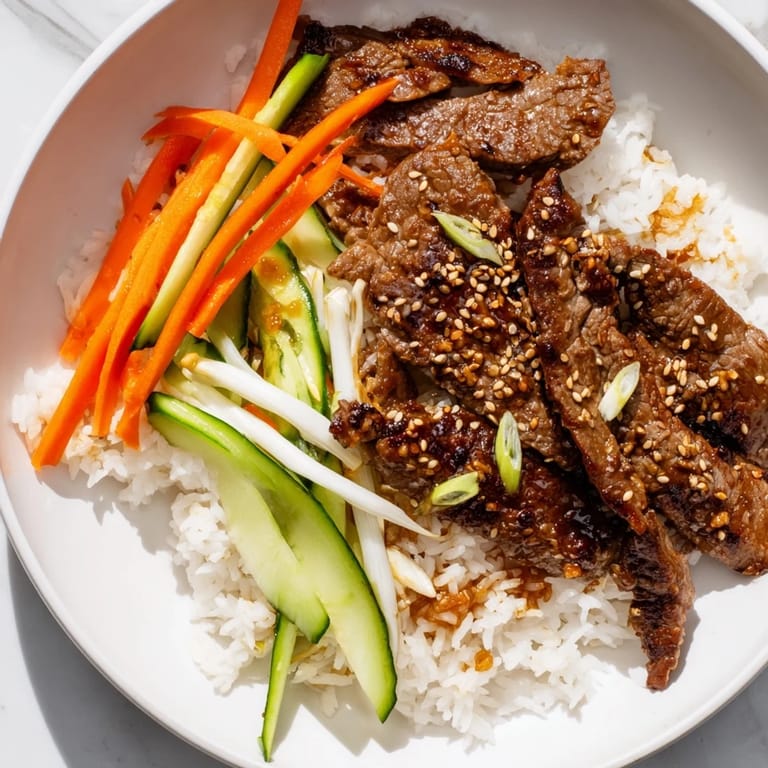
- Divide warm rice among four bowls, then top with the beef and all its pan juices, followed by fresh carrot, cucumber, blanched bean sprouts, and kimchi if you're using it. The warmth of the rice softens the vegetables just enough.
- Finish with intention:
- Scatter extra scallions and toasted sesame seeds on top, then serve immediately while everything is still hot and the vegetables are crisp.
 Pin
Pin My mom tried this last month and said it reminded her of the restaurants we used to visit when I was a kid, but that this version felt more personal because I made it. That comment stuck with me—there's something powerful about recreating a taste memory and making it your own, especially when someone you love recognizes themselves in that effort.
The Secret of the Marinade
The magic here isn't in any single ingredient—it's in how they work together. The pear softens the beef while adding sweetness, the ginger and garlic provide warmth, the soy sauce brings salt and umami, and the vinegar keeps everything bright instead of cloying. I've tried this with honey instead of brown sugar and it flattened everything; I've skipped the pear and lost that tender, almost melting texture. What I've learned is that this particular combination exists for a reason, and respecting that balance is what separates a good bowl from a transcendent one.
Building Your Perfect Bowl
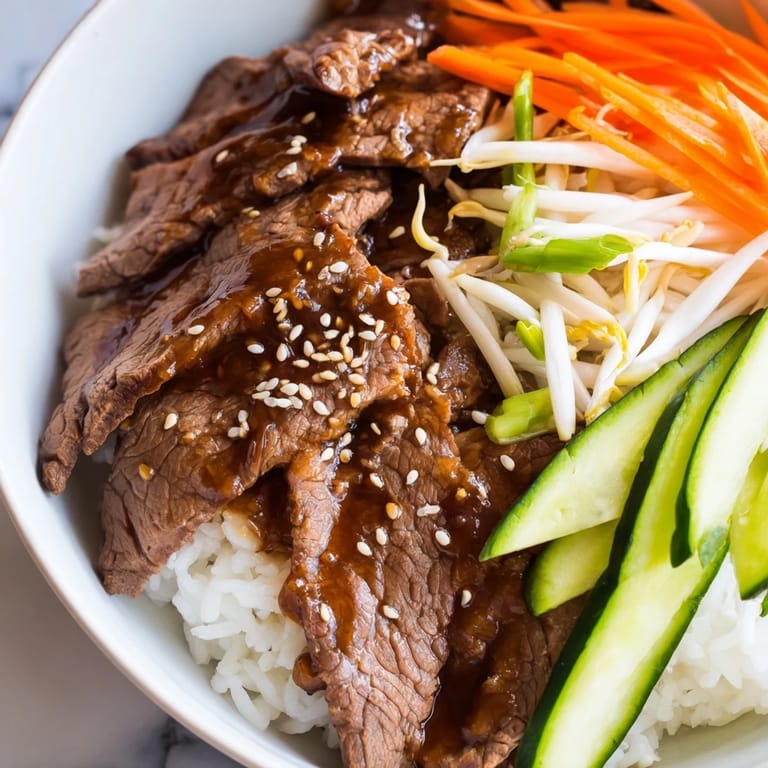
The rice is your canvas, warm and neutral, ready to soak up all the sauce the beef releases. The vegetables are your contrast and your texture—crunchy, cool, bright against the warm, glossy beef. I've learned that blanching the bean sprouts for just 30 seconds before adding them keeps them from being too raw while still maintaining that slight snap. Some nights I add kimchi, which adds a fermented funk that makes everything taste more interesting; other nights I skip it and the bowl feels cleaner and more delicate.
Variations and Personal Touches
I've made this for meal prep by marinating the beef the night before and cooking it when I get home, turning 15 minutes into my dinner instead of a restaurant trip. I've added a fried egg on top on mornings when I wanted to turn this into breakfast. I've even made it with cauliflower rice on nights when carbs felt heavy, and while it's different, it still tastes like home. The dish is flexible enough to bend to what you have and what you're craving, but solid enough that it never loses its identity.
- Try a fried or soft-boiled egg on top for richness and a glossy yolk that becomes sauce.
- Swap the rice for cauliflower rice if you want lower carbs without sacrificing satisfaction.
- Add extra gochujang if you like heat, or skip it entirely if spice isn't your thing—this dish doesn't need it to be delicious.
 Pin
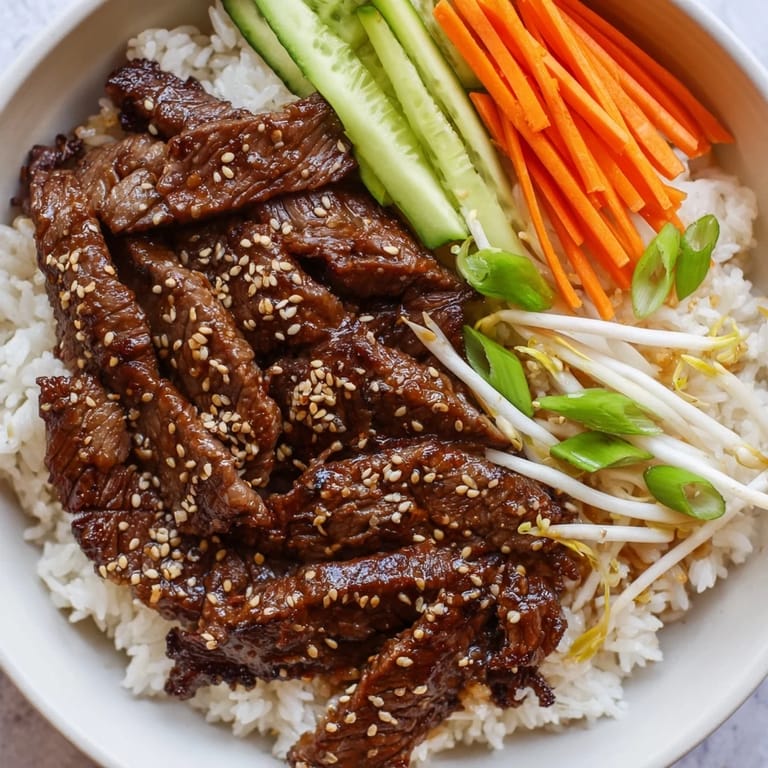
Pin This bowl has become my version of comfort, the dish I make when I want to feel resourceful and skilled without spending hours in the kitchen. It's reliable, it's forgiving, and it tastes like something special every single time.
Recipe FAQ
- → What cut of beef works best for this dish?
Thinly sliced ribeye or sirloin are ideal for quick cooking and tender texture.
- → Can I adjust the spice level?
Yes, modifying the amount of gochujang or omitting it adjusts the heat to your preference.
- → How long should the beef marinate?
At least 15 minutes allows flavor penetration, but up to an hour deepens the taste.
- → Are there any suitable substitutions for rice?
Cauliflower rice serves as a low-carb alternative without sacrificing texture.
- → What garnishes enhance this bowl?
Toasted sesame seeds and sliced scallions add aroma and a satisfying crunch.
- → Is this dish suitable for dairy-free diets?
Yes, all ingredients are dairy-free, making it suitable for those avoiding dairy.