 Pin
Pin I discovered this idea at a holiday gathering where a friend arrived with a charcuterie board that looked so stunning, I spent more time photographing it than eating. That night, I thought: what if I took that flat concept and made it playful, architectural, turning humble cheese and cured meats into something three-dimensional and surprising? The Checkerboard Chalet was born from that moment of wanting to create something guests would actually gasp at before diving in.
I remember building the first one for my sister's promotion dinner, my hands moving quickly as I stacked and aligned cubes, worried the whole thing would topple before guests arrived. It didn't, and watching her face when she saw it made every careful placement worth it. That's when I realized this wasn't just appetizer food; it was edible theater.
Ingredients
- Sharp cheddar cheese, 200 g cubed and sliced: The bold flavor stands up beautifully against the salty meats, and its firm texture holds up when stacked—softer cheeses tend to compress and lose their architectural integrity.
- Swiss cheese, 200 g cubed and sliced: The subtle sweetness and those characteristic holes create visual texture that somehow makes the checkerboard feel less rigid.
- Smoked ham, 200 g cubed and sliced: This provides a gentle, approachable smokiness that doesn't overpower; it's the voice that brings everything together.
- Salami, 200 g cubed and sliced: The deeper, spicier character adds complexity and visual drama with its darker color against lighter cheeses.
- Fresh chives, 16 small: These become your structural beams for the roof, and they add a whisper of onion flavor that keeps the whole thing from feeling too rich.
- Cherry tomatoes, 8 halved: Optional but transformative—they mimic a little garden or landscape around your chalet, and the tartness cuts through the richness.
- Flat-leaf parsley, 1 small bunch: Fresh green foliage grounds the whole composition and adds a clean, herbaceous note that refreshes the palate between bites.
- Toothpicks or short skewers, 8: These are your invisible support system, holding your stacked tower upright without being obvious.
Tired of Takeout? 🥡
Get 10 meals you can make faster than delivery arrives. Seriously.
One email. No spam. Unsubscribe anytime.
Instructions
- Cut everything to uniform size:
- Use a sharp knife and cutting board to cut each cheese and meat into roughly 1.5 cm cubes and slices—consistency matters far more than perfection. This isn't about precision; it's about creating visual rhythm, so minor variations actually add charm.
- Build your checkerboard foundation:
- On your largest serving platter, arrange cheese and meat slices in a tight 4×4 grid, alternating cheddar, Swiss, ham, and salami in whatever pattern calls to you. Press them close together so the checkerboard reads clearly at a glance.
- Stack the chalet walls:
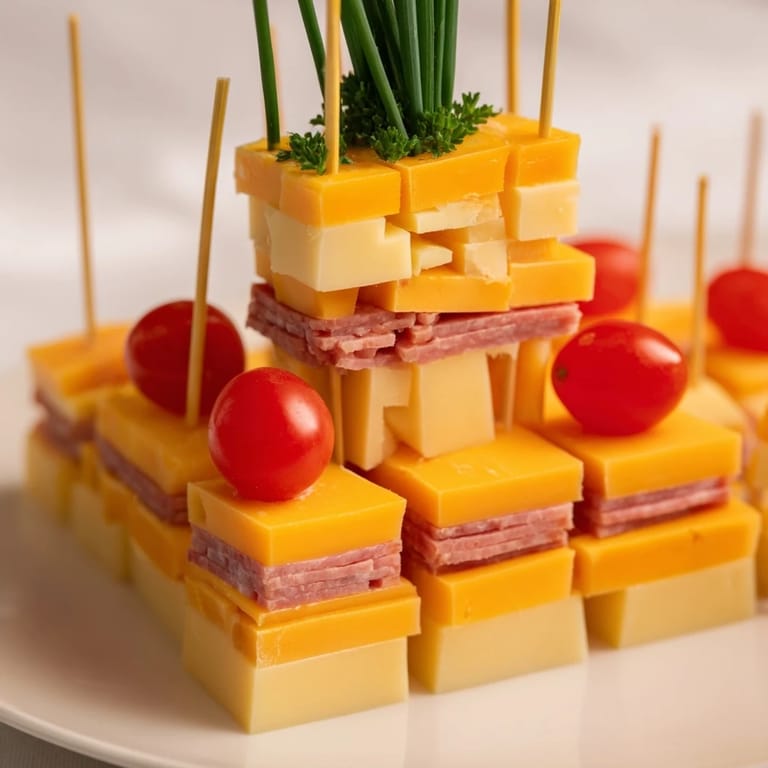
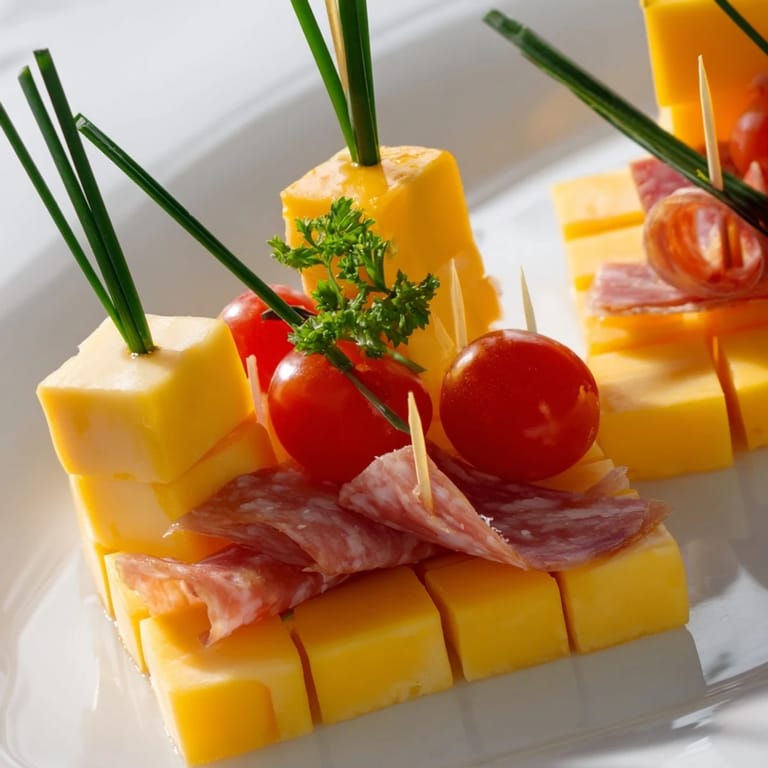
- On one edge of your checkerboard, begin layering cubes in a square footprint—about 4 cubes per layer, alternating cheese and meat as you go up. If your tower feels wobbly, slip a toothpick through the center discreetly, but most structures hold surprisingly well with just the weight of the pieces.
- Crown it with a roof:
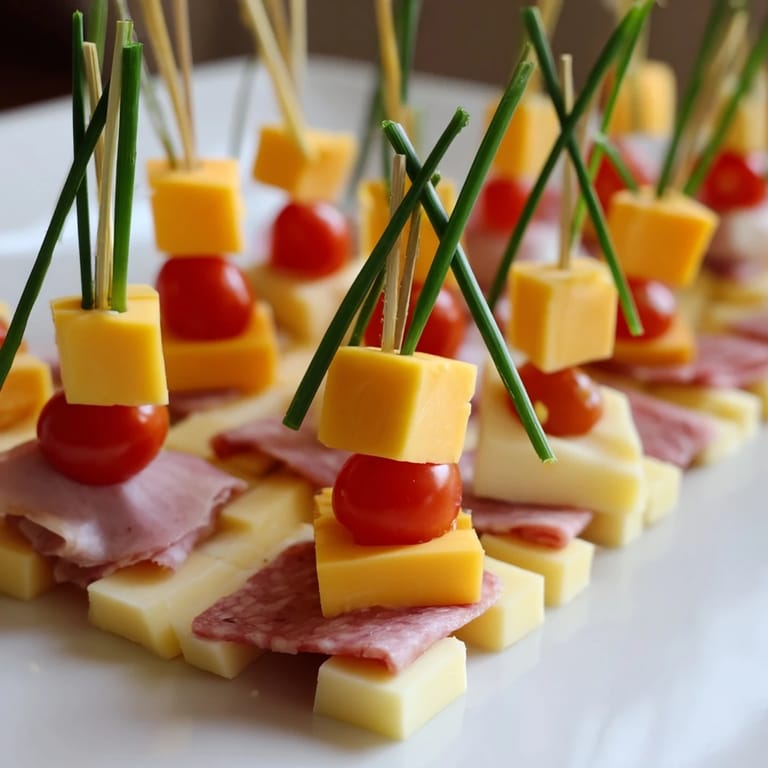
- Lean cheese slices or cubes at angles across the top, creating a peaked roof shape, then lay fresh chives across like decorative beams. The chives add height and the visual suggestion of a real structure.
- Dress the landscape:
- Scatter halved cherry tomatoes around the chalet's base and tuck in parsley sprigs to suggest a little garden or pathway. This softens the geometry and makes the whole thing feel less formally composed.
- Finish and serve:
- Step back and admire what you've built, then set out small forks or cocktail picks beside the platter so guests can help themselves without dismantling your artwork all at once.
 Pin
Pin There's something almost childlike about building with food, about treating your appetizer like a tiny edible village. At one party, a guest asked if they could have the chalet 'whole' because it seemed a shame to dismantle it—I'd never felt prouder about an appetizer.
Assembly as Meditation
I've come to love the quiet rhythm of cutting and arranging—knife through cheese, the soft *thunk* of pieces landing on the board, the satisfaction of watching chaos become pattern. It's meditative in a way that feels different from cooking, more like creating something temporary that will be enjoyed and gone. The best part is that if you make a small mistake, you simply rearrange—there's no recipe police, just your own eye and the knowledge that guests will be too delighted to notice.
Cheese and Meat Pairings
The beauty of this recipe is how flexible it is without losing its impact. Sharp cheddar and smoked ham are classic partners, but I've experimented with Gouda (earthier, slightly sweet) and pepper jack (with a gentle heat that lingers). Turkey breast works beautifully if you want something lighter than ham, and prosciutto adds elegance if the occasion calls for it. The rule I follow is simple: choose cheeses and meats you actually love to eat on their own, because that's what makes this board special—there's no hiding behind sauce or cooking technique.
Make It Your Own
The chalet structure is just a suggestion—I've seen versions built as pyramids, as simple stacked towers, even as little log cabins with toothpicks arranged as walls. One friend created a crenellated castle by cutting rectangles instead of cubes. Use the cherry tomatoes and olives as windows, pimento-stuffed olives as doors, cornichons as fence posts. The joy is in making it yours.
- Add pimento-stuffed olives or cornichons to suggest windows, doors, or a little fence around your creation.
- Pair this with a crisp white wine or sparkling beverage—the brightness cuts through the richness perfectly.
- Serve at the beginning of a party when guests are hungry and genuinely impressed by visual spectacle.
 Pin
Pin This is the kind of dish that reminds you why we gather around food—it's delicious, but it's also surprising, playful, and memorable. Make it, and watch what happens.
Recipe FAQ
- → How do I achieve the checkerboard pattern evenly?
Cut cheeses and meats into uniform 1.5 cm cubes and slices for consistent alternating placement, ensuring a neat grid that highlights the pattern distinctly.
- → What cheeses work best for this dish?
Sharp cheddar and Swiss cheeses provide contrasting colors and flavors, but you can substitute with Gouda or pepper jack for variety and added flair.
- → How can I ensure stability when stacking the chalet?
Use toothpicks or short skewers to secure layers of cheese and meat cubes, preventing the structure from toppling while keeping the look clean.
- → Are there suggested garnishes to enhance presentation?
Halved cherry tomatoes and fresh parsley mimic garden elements, while chives act as decorative roof beams, adding freshness and visual interest.
- → Can the meat components be substituted for dietary preferences?
Yes, turkey breast can replace ham for a lighter option, and you may adjust cured meats to suit dietary needs, keeping the cube and slice format intact.