 Pin
Pin I learned to make this cold noodle salad on a sweltering afternoon when my air conditioner stopped working and I had nothing but a desire for something cold and alive on my tongue. A friend texted asking what I was making for dinner, and instead of ordering takeout like I normally would, I found myself boiling water in the worst heat imaginable, then rushing those noodles under the coldest tap water I could muster. The sesame-ginger dressing came together while I stood in front of the open refrigerator, and suddenly what felt like a desperate improvisation became the most refreshing thing I'd eaten all summer.
The first time I made this for a picnic, I was so worried about the noodles getting mushy that I basically treated them like they were made of spun glass. My partner laughed when I pulled them out of the water after barely three minutes, and we ended up with perfectly al dente noodles that stayed interesting in every bite even hours later in the heat. That small moment of doubt turned into the lesson I use every time now.
Ingredients
- Dried soba or rice noodles (250 g): Soba has a nutty depth that pairs beautifully with the sesame oil, but rice noodles work just as well and are the safer choice if anyone at your table has gluten concerns.
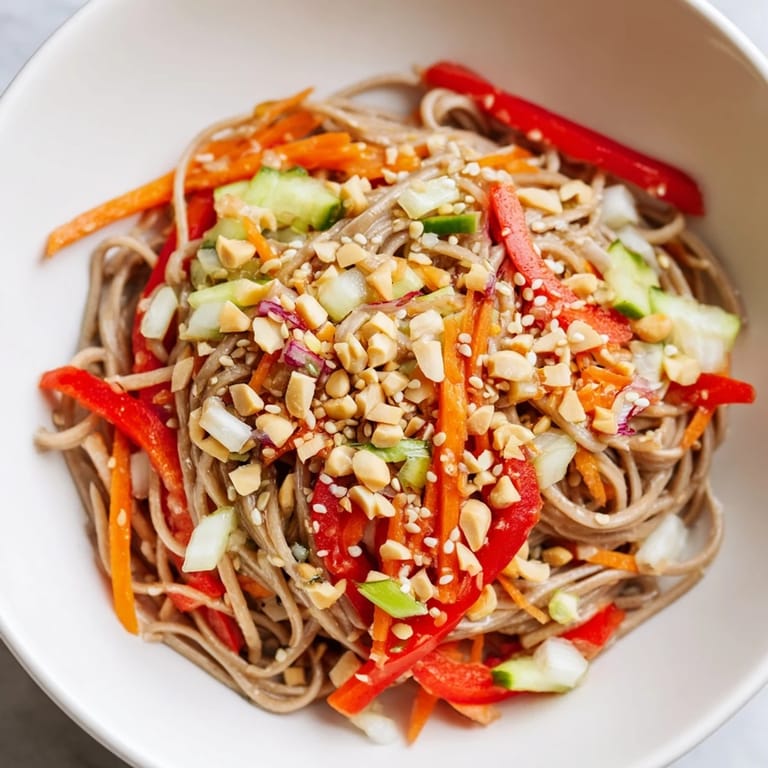
- Carrot, julienned: The sweetness cuts through the umami of the dressing, and the texture stays crisp for days, which is why I always make extra.
- Red bell pepper, thinly sliced: Adds a sweet crunch and makes the whole bowl look like something worth photographing.
- Cucumber, seeded and julienned: This is where you get that cooling effect, the reason this salad feels like relief on a hot day.
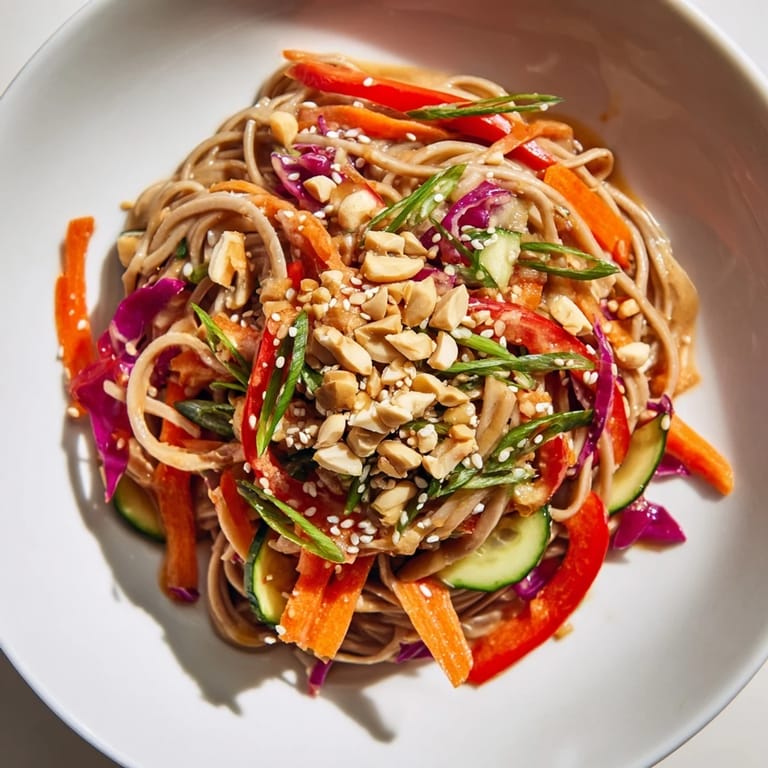
- Spring onions, finely sliced: A little sharpness that wakes up your palate with every bite.
- Red cabbage, thinly shredded: It stays crunchy even after sitting in dressing overnight, and the color adds visual life to the bowl.
- Fresh cilantro, chopped: If you're one of those people who thinks cilantro tastes like soap, just skip it or use parsley instead—I promise no judgment.
- Soy sauce (3 tbsp): The backbone of the dressing, it provides the salty umami that makes everything taste intentional.
- Rice vinegar (2 tbsp): Bright acidity that keeps the whole dish from feeling heavy, even though there's sesame oil involved.
- Toasted sesame oil (2 tbsp): This is non-negotiable—regular sesame oil is pale and thin, but toasted sesame oil is dark and fragrant and makes the entire dressing sing.
- Honey or maple syrup (1 tbsp): Just enough sweetness to balance the acid and salt, creating a dressing that feels complete.
- Fresh ginger, finely grated (1 tbsp): The warmth of ginger against cold noodles creates this unexpectedly comforting contrast.
- Garlic clove, minced (1): One clove is enough to let you know it's there without overpowering the more delicate sesame notes.
- Sriracha or chili sauce (1 tsp, optional): For people who like their food to talk back to them.
- Toasted sesame seeds (1 tbsp): These go into the dressing itself, giving it a subtle nutty body and texture.
- Roasted peanuts or cashews, roughly chopped (2 tbsp): The crunch is essential—it's what keeps your mouth interested with every spoonful.
- Additional sesame seeds for garnish (1 tbsp): The finishing touch that makes this look like someone knew what they were doing.
Tired of Takeout? 🥡
Get 10 meals you can make faster than delivery arrives. Seriously.
One email. No spam. Unsubscribe anytime.
Instructions
- Boil and chill the noodles:
- Fill a large pot with water and bring it to a rolling boil, then add the noodles and cook according to the package instructions—usually 4 to 5 minutes for soba, longer for rice noodles. The moment they're tender, drain them in a colander and run them under cold water until they're cool to the touch, stirring gently with your fingers to break up any clumps and stop the cooking.
- Prepare your vegetables while the water boils:
- This is the perfect time to get everything cut and arranged on the cutting board because once you're tossing, you want to move quickly. The sound of your knife against the board becomes almost meditative once you find a rhythm.
- Whisk the dressing into existence:
- In a small bowl, combine the soy sauce, rice vinegar, sesame oil, honey, ginger, garlic, Sriracha if you're using it, and the sesame seeds. Whisk it all together and taste a tiny drop on your finger—if it makes you close your eyes for a second, you've got it right.
- Bring everything together in one bowl:
- Place the cooled noodles in a large mixing bowl, add all the vegetables and cilantro, then pour the dressing over everything. Using salad tongs or two forks, toss until every noodle glistens and no pools of dressing sit at the bottom.
- Plate and garnish with intention:
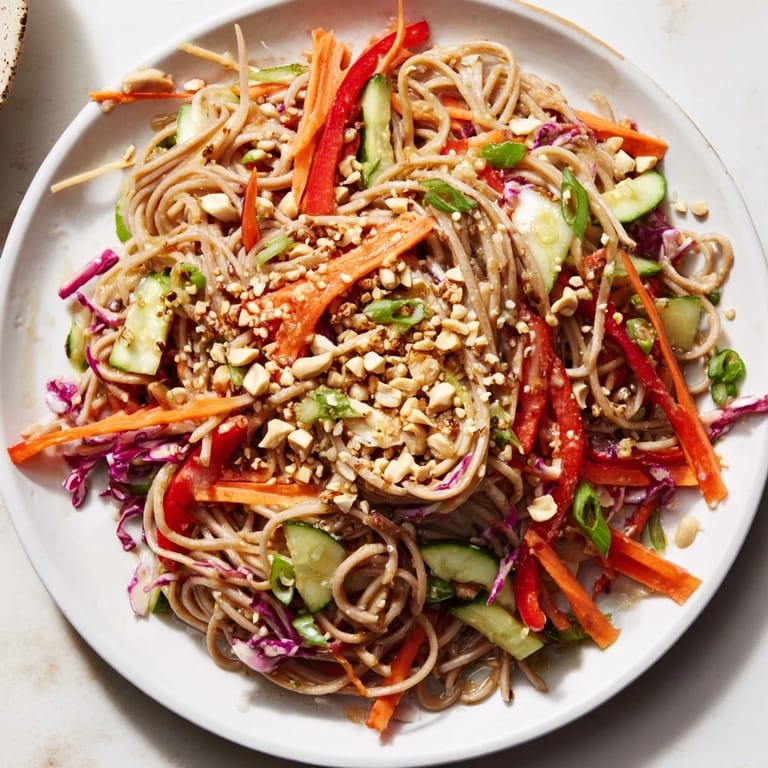
- Divide the salad among serving bowls and top each one with a scatter of peanuts and an extra pinch of sesame seeds. The presentation matters because you're about to eat something that looks as good as it tastes.
- Chill or serve immediately:
- You can eat this right away, but if you have even 30 minutes to let it sit in the refrigerator, the flavors deepen and the noodles absorb even more of that sesame-ginger magic.
 Pin
Pin I made this for my sister one evening when she was going through something difficult, and watching her relax after the first bite reminded me that food is sometimes the only language that works when words feel too small. She asked for the recipe that night, and now she makes it whenever she needs to feel better.
The Magic of Cold Noodles
There's something about eating noodles cold that feels like a small rebellion against how we're taught to cook. Warm noodles are comforting and traditional, but cold noodles are alive and refreshing, they feel like summer in a bowl. I've learned that the temperature matters as much as the ingredients because it changes not just how the dish feels in your mouth, but also how it makes you feel eating it.
Building Flavor Layers
The dressing is really the entire point of this salad, and I've learned through trial and error that it's not about throwing ingredients together but about understanding how each one plays with the others. The sesame oil is rich, so you need vinegar to brighten it. The soy sauce is salty and deep, so you need honey to round it out. The ginger adds warmth that feels almost spicy even though there's no heat involved. It's like an equation where every number matters.
Make It Your Own
This salad is forgiving enough to adapt to what's in your kitchen and brave enough to support whatever protein you want to add. I've made it with shrimp on nights when I wanted something more substantial, with crispy tofu when I was eating vegetarian for a month, and once with grilled chicken just because I had some left over. The dressing holds everything together, so you're really just playing within a framework that already works.
- For protein additions, grill or cook them separately so they don't release moisture that dilutes the dressing.
- If you can't find toasted sesame oil, regular sesame oil plus a pinch of salt is a temporary fix but not a permanent solution.
- Make the dressing a day ahead if you can—it tastes even better after the flavors have had time to know each other.
 Pin
Pin This salad has become my go-to recipe for almost every occasion, from lazy weeknight dinners to impressing people I'm trying to get to know better. It's the kind of dish that says you care without requiring you to stand over a stove, and that's everything I want from cooking.
Recipe FAQ
- → What type of noodles work best for this salad?
Soba or rice noodles are ideal as they hold dressing well and chill nicely. Rice noodles offer a gluten-free option.
- → How is the sesame-ginger dressing prepared?
Whisk together soy sauce, rice vinegar, toasted sesame oil, honey, fresh grated ginger, minced garlic, optional chili sauce, and toasted sesame seeds until well combined.
- → Can I add protein to this dish?
Yes, cooked shrimp, grilled chicken, or tofu can be added to enhance protein and make the dish more filling.
- → What vegetables complement the chilled noodles?
Julienned carrot, cucumber, red bell pepper, shredded red cabbage, spring onions, and fresh cilantro add crisp texture and freshness.
- → How should the salad be served and stored?
Serve immediately for best texture or chill for about an hour to deepen flavors. Store leftovers refrigerated in an airtight container.
- → Are there allergen considerations?
The dish contains soy, sesame, peanuts or cashews, and wheat if soba noodles are used. Nuts can be omitted or replaced with seeds for allergies.