 Pin
Pin My neighbor showed up one afternoon with a box of Fortnum & Mason Earl Grey and a bag of fresh guavas from her market trip, asking if I could turn them into something special for her book club. I'd never combined those flavors before, but something clicked when I realized the floral tea would play beautifully against the tropical sweetness. Three hours later, the kitchen smelled like a perfumed garden mixed with lemon zest, and I knew I'd stumbled onto something worth repeating.
I'll never forget pulling the second batch out of the oven while my mother-in-law was visiting, and she actually gasped at the aroma. She sat at the kitchen counter for an hour, eating bars one by one and telling me stories about afternoon tea in London decades ago. That's when I understood this recipe had become more than dessert—it was a small bridge between different worlds and memories.
Ingredients
- Unsalted butter: Use the good kind you'd actually eat on toast; it makes the crust tender and rich without any salty interference.
- Earl Grey tea: Buy whole leaf if possible, as the bergamot flavor stays brighter than dust-like fannings.
- Guava paste: The kind sold in blocks at Latin markets works perfectly; avoid the jarred versions which tend to be too thin.
- Fresh lemon juice: Bottled juice will make this taste one-dimensional, so squeeze your own even if your hands hurt a little.
- Eggs: Room temperature eggs incorporate more smoothly and create a creamier filling.
- Lemon zest: Use a microplane and aim for the yellow part only; the white pith tastes bitter and ruins everything.
Tired of Takeout? 🥡
Get 10 meals you can make faster than delivery arrives. Seriously.
One email. No spam. Unsubscribe anytime.
Instructions
- Set your stage:
- Preheat the oven to 350°F and line your pan with parchment so it drapes over the sides like a safety net. This detail saves you from frustrated chiseling later when you're trying to extract these beauties.
- Build the buttery foundation:
- Cream the softened butter and sugar until it looks almost mousse-like, pale and fluffy. Fold in the flour, salt, and tea leaves gently so the dough stays tender and doesn't turn tough from overworking.
- Bake the crust until golden:
- Spread the dough into the pan with your fingertips and bake for 18 to 20 minutes—you want it set but still pale gold at the edges, not dark. Trust the timer; it's your friend here.
- Melt the guava layer:
- While the crust bakes, gently heat the guava paste with water until it becomes smooth and spreadable like jam. The moment it looks silky, take it off the heat because overcooked guava tastes bitter and loses its brightness.
- Layer with speed and care:
- Pull out the hot crust and spread the warm guava paste over it in one smooth motion, working quickly before it sets. A warmed offset spatula helps, but your regular spoon works fine if that's what you have.
- Whisk the lemon-tea filling:
- Beat the eggs and sugar until they're pale and thick enough to hold a trail for a few seconds. Add the flour, baking powder, tea leaves, lemon juice, zest, and salt, whisking just until everything is combined and no streaks remain.
- Pour and bake the filling:
- Gently pour the mixture over the guava layer and slide it back into the oven. Bake for 15 to 18 minutes until the center barely jiggles when you give the pan a gentle shake—overbaking creates a dense, rubbery texture that tastes more like rubber than dessert.
- Cool with patience:
- Let the bars rest in the pan on a wire rack until completely cool, then refrigerate for at least 2 hours. This resting time lets the flavors marry and makes the bars firm enough to cut cleanly.
- Cut and finish:
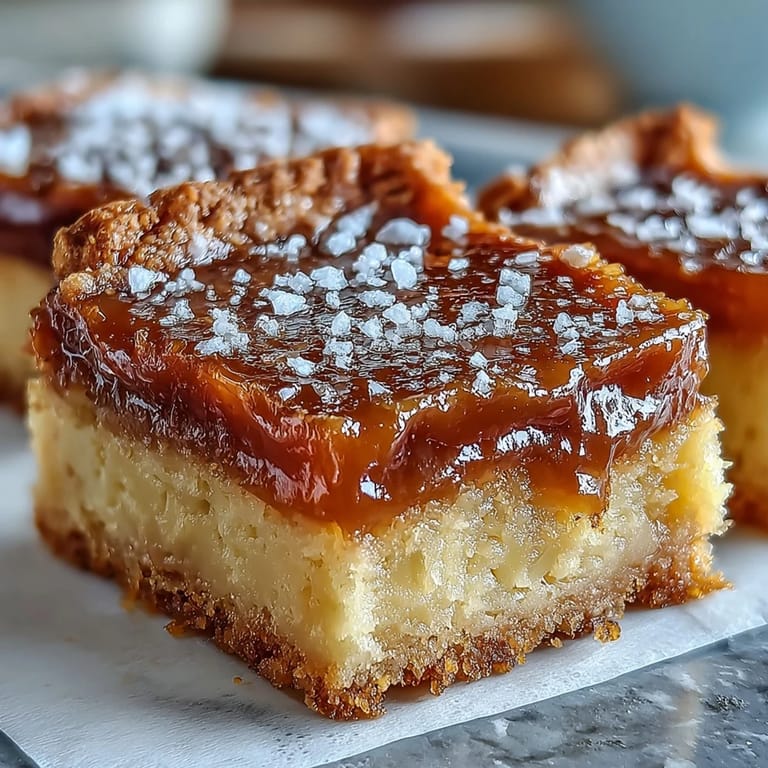
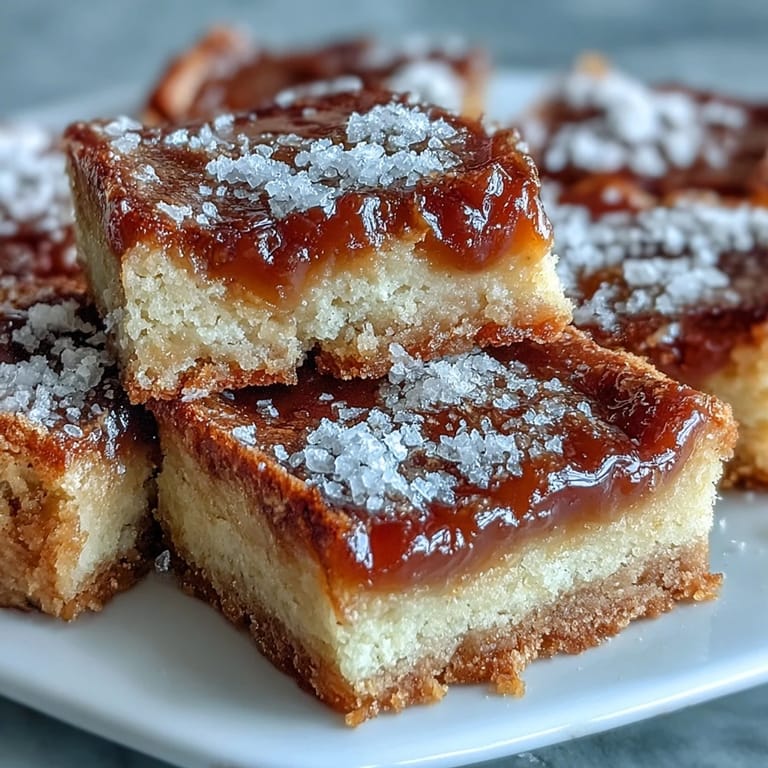
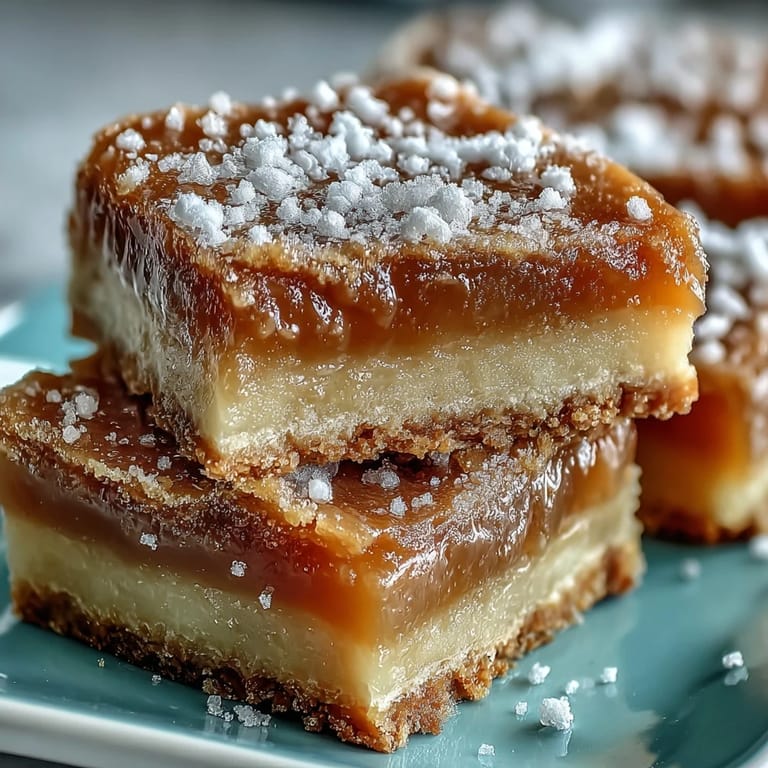
- Lift the whole slab out using the parchment overhang, then cut into 16 neat squares with a sharp knife dipped in hot water between cuts. Dust with powdered sugar just before serving so it doesn't disappear into the moisture.
 Pin
Pin The best moment came when my five-year-old nephew took one bite and said it tasted like a hug and sunshine had a baby. He couldn't articulate what the tea was doing, but he felt it, and that's the whole point of cooking food this way.
The Magic of Earl Grey in Desserts
Earl Grey tea carries a sophistication that comes from bergamot, a citrus that feels almost perfumed. Most people know it as a morning tea, but it becomes something entirely different when baked into sugar and egg—the heat mellows the bergamot into something deeper and more mysterious. It doesn't announce itself like vanilla or chocolate would; instead, it works quietly in the background, making people pause and ask what that subtle floral note is.
Why Guava and Lemon Belong Together
Guava is one of those fruits that tastes both sweet and vaguely floral at the same time, almost reminiscent of rose or honey. Lemon cuts through that sweetness with brightness and prevents the bars from feeling cloying or one-note. The combination mirrors the structure of a perfect symphony—you need the high note, the middle, and the bass, and all three live here together.
Storing and Sharing These Bars
These bars keep beautifully in an airtight container in the refrigerator for up to five days, though the texture becomes slightly softer as they sit—which some people actually prefer. They travel well for potlucks or gift boxes, and they're elegant enough that people feel special when they receive them.
- Store them stacked with parchment between layers to prevent sticking and crushing.
- You can make these up to three days ahead and simply dust with powdered sugar the day you serve them.
- Bring them to room temperature for about 15 minutes before eating to unlock all the flavor complexity.
 Pin
Pin These bars remind me that dessert doesn't have to be complicated to be memorable—it just has to be made with intention and the willingness to try something that doesn't exist yet. Serve them with a proper cup of Earl Grey or a glass of sparkling wine, and watch people close their eyes on the first bite.
Recipe FAQ
- → Can I make these bars ahead of time?
Yes, these bars actually improve when made ahead. They need at least 2 hours of refrigeration to set properly, and can be stored in the refrigerator for up to 3 days. The flavors meld together beautifully overnight, making them ideal for preparing the day before serving.
- → Where can I find guava paste?
Guava paste is typically found in the Latin or international aisle of most grocery stores, often in a flat rectangular block or tin. If unavailable, guava jelly or membrillo can work as substitutes, though the texture will be slightly different.
- → How do I know when the bars are done baking?
The filling is set when the center no longer jiggles when you gently shake the pan. The edges should be lightly golden, and the surface should appear mostly matte with just a slight shine in the very center. Avoid overbaking as this can cause cracking.
- → Can I freeze these bars?
Yes, these freeze exceptionally well. Cut the cooled bars into squares, place them in an airtight container with parchment paper between layers, and freeze for up to 2 months. Thaw overnight in the refrigerator and dust with fresh powdered sugar before serving.
- → What makes Earl Grey tea special in baking?
Earl Grey contains bergamot oil, which adds a distinctive floral-citrus aroma that enhances both the guava and lemon flavors. When baked into the crust and infused in the filling, it creates a sophisticated depth that pairs beautifully with butter and fruit.
- → Why does the guava layer go on the hot crust?
Spreading the melted guava paste onto the hot crust helps it adhere better and makes it easier to spread evenly. The heat softens the paste just enough to create a smooth layer without mixing into the crust or subsequent filling.