 Pin
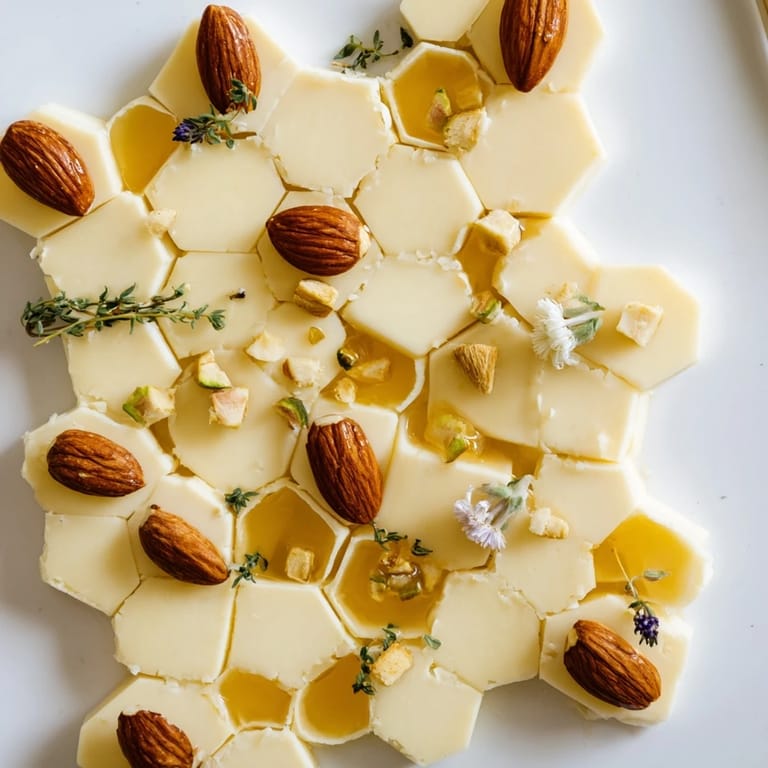
Pin I'll never forget the first time I saw a honeycomb pattern on a cheese board at a gallery opening in the city. The geometric precision, the way each hexagon caught the light, the thoughtful arrangement of creamy manchego and bright pistachios—it was so beautiful I almost didn't want to eat it. Almost. That night, I learned that the most memorable appetizers are the ones that make people pause before they reach for their fork, the ones that prove food can be both art and sustenance.
My sister asked me to bring something special to her dinner party last spring, and I made this board. I remember her face when she saw it—that quiet moment of joy before the conversation shifted from the appetizer itself to the memories it sparked. One guest told me it reminded her of the geometry classes she loved as a kid. That's when I realized this wasn't just cheese and nuts; it was an edible conversation starter.
Ingredients
- Manchego cheese: This Spanish gem has a firm texture that holds hexagonal shapes beautifully and brings a subtle nuttiness that pairs wonderfully with the honey—it's the backbone of this board
- Cheddar cheese: Sharp, reliable, and a color contrast that makes your board pop visually while adding a familiar comfort to the arrangement
- Brie: The creamy dreamer of the trio, those soft wedges add an indulgent moment that catches people off guard in the best way
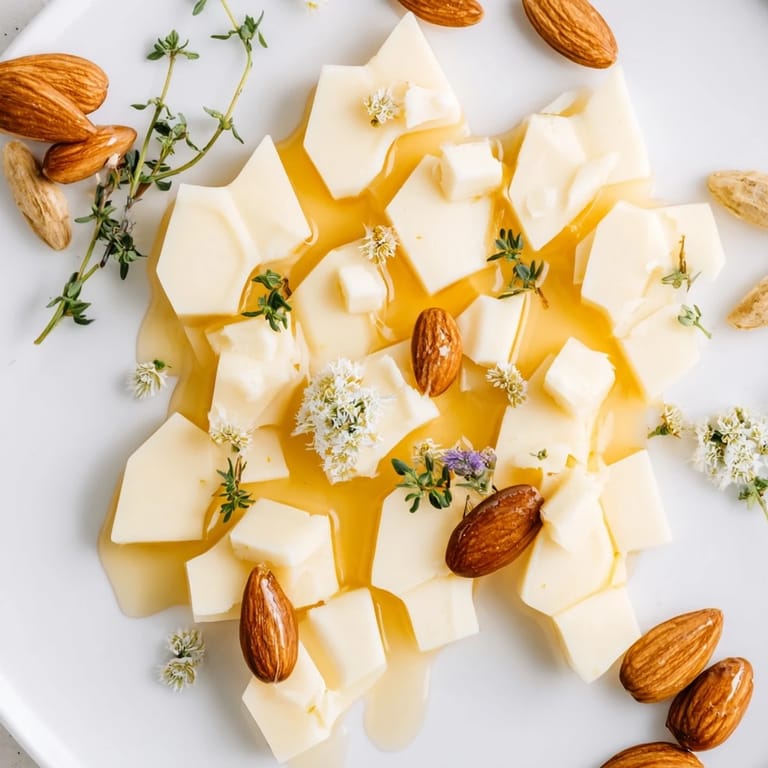
- Roasted almonds: They fill the gaps with texture and hold their crunch even after the honey drizzle—toast them yourself if you can, the difference is real
- Shelled pistachios: That pale green color is pure magic on a board, and their slightly salty edge plays against the sweetness like a culinary wink
- High-quality honey: Don't skimp here—this is the final note, the thing that ties everything together, so choose one you'd eat straight from the jar
- Fresh thyme: A whisper of herb that nobody expects but everyone notices, adding aroma and those tiny leaves that catch light
- Edible flowers: If you can find them, they're the exclamation point, but not essential—use them when you want the board to be show-stopping
Tired of Takeout? 🥡
Get 10 meals you can make faster than delivery arrives. Seriously.
One email. No spam. Unsubscribe anytime.
Instructions
- Cut your cheeses into hexagons:
- Use a hexagonal cookie cutter if you have one—it makes this so much easier and your shapes will be consistent and pristine. If you're cutting by hand with a sharp knife, take your time and don't worry if they're not perfect; slight imperfections actually add charm. Think of it like creating a puzzle where every piece has its own character.
- Plan your pattern on the board:
- Before you place anything, visualize how the hexagons will fit together. Start with one cheese in the center and work outward in concentric rings, nestling each new layer snugly against the last. It's like building a edible fortress, and the tighter they fit, the more intentional it looks.
- Arrange your cheese base:
- Place your manchego and cheddar hexagons in an interlocking pattern, alternating colors if you can. Leave small deliberate gaps between them—these aren't mistakes, they're spaces waiting for the nuts and the honey to create depth and visual interest.
- Nestle the brie wedges:
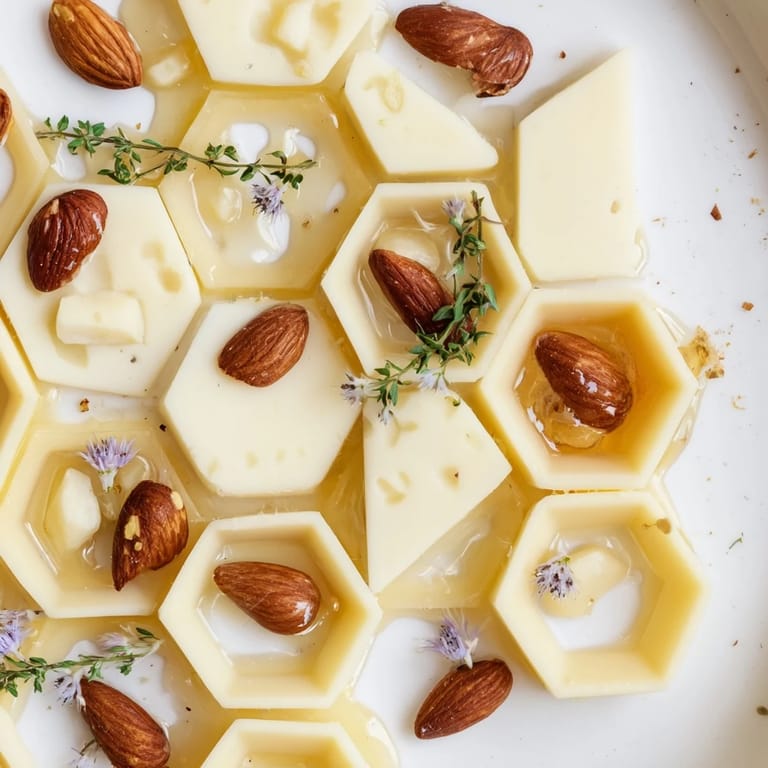
- Tuck those creamy brie pieces into strategic spots, letting them peek out between the firmer cheeses. They should look like little treasures tucked into a geometric maze.
- Fill the spaces with nuts:
- Now here's where the board becomes three-dimensional. Drop your roasted almonds and pistachios into the gaps, distributing them so the eye travels around the board naturally. You want some spots to have almonds, some pistachios, some both—variety keeps it interesting.
- Drizzle the honey with intention:
- Warm your honey slightly if it's thick, then drizzle it generously over the whole arrangement. Let it pool in the little crevices and flow between the cheese pieces. Don't be afraid to be generous; the honey is what unifies all these separate elements into one cohesive masterpiece.
- Add your garnishes:
- Break apart your thyme sprigs into tiny pieces and scatter them across the board. If you have edible flowers, place them with intention—they should look like they've naturally settled rather than strictly positioned. Step back and look at your creation from above, then from the side. It should make you smile.
- Serve with care:
- Provide small forks or toothpicks so guests can gently extract their selections without disrupting your carefully arranged maze. Watch how they approach it—usually with a moment of admiration before appetite takes over.
 Pin
Pin I brought this board to my neighbor's birthday gathering, and something unexpected happened. People stopped checking their phones. They gathered around, took photos, talked about the geometry, shared memories of honeycomb candy from childhood. Food that makes people present, that draws them together, that becomes part of the night's story—that's when you know you've created something that matters beyond just tasting good.
Why Geometry Works in Food
There's something in our brains that responds to pattern and symmetry. Honeycomb has been beautiful to humans since before we even understood why—the hexagon is nature's most efficient shape, used by bees, and when you recreate that pattern with food, you're tapping into something primal. People are drawn to it. They photograph it. They remember it. A simple cheese board becomes a moment, and that's the real magic here.
Choosing Your Cheese Partners
Manchego was my first choice because of its firm texture and golden color, but this board is infinitely adaptable. Gouda brings a subtle sweetness that plays gorgeously with honey. Comté adds an almost caramel note. Aged cheddar becomes more complex and interesting. The brie is non-negotiable for that creamy contrast, but beyond that, trust your own palate. Some of my best boards have come from using whatever cheeses called to me at the market that day, and the imperfection made them better, not worse.
Making It Yours
The beauty of this board is that it's a template, not a rule. Once you understand the basic principle—firm cheeses in a pattern, soft cheeses nestled in, nuts filling gaps, honey binding it all together—you can make it yours. Use different nuts. Add dried fruit. Swap the thyme for rosemary or lavender. For a vegan version, plant-based cheeses work beautifully, and agave syrup drizzles just as elegantly. This recipe is an invitation to play.
- Prep everything an hour ahead so you're not rushing the arrangement when guests are arriving
- If your board sits for a while before serving, the honey might crystallize slightly—this is actually lovely, it catches the light differently
- A sparkling wine or crisp white wine next to this board is the only pairing worth considering
 Pin
Pin Food that's this beautiful, this thoughtful, this easy to make—it changes how people think about entertaining. You don't need fancy equipment or hours in the kitchen. You just need intention and a little bit of geometric love.
Recipe FAQ
- → What cheeses work best for hexagonal shapes?
Manchego and cheddar hold firm well when cut into hexagons, while brie adds a creamy contrast in wedges or cubes.
- → Can I substitute the nuts used in this platter?
Yes, roasted almonds and pistachios offer crunch, but walnuts or cashews can be used for different flavors and textures.
- → How should I cut the cheeses for the honeycomb pattern?
Use a small hexagonal cookie cutter for uniform shapes or carefully slice by hand to create neat hexagons.
- → Is there a vegan alternative to the honey and cheeses?
Plant-based cheeses and agave syrup can replace dairy and honey for a vegan-friendly version without losing texture or sweetness.
- → What garnishes enhance the platter's presentation?
Fresh thyme sprigs and edible flowers add visual appeal and aromatic complexity to complement the honey and cheese.