 Pin
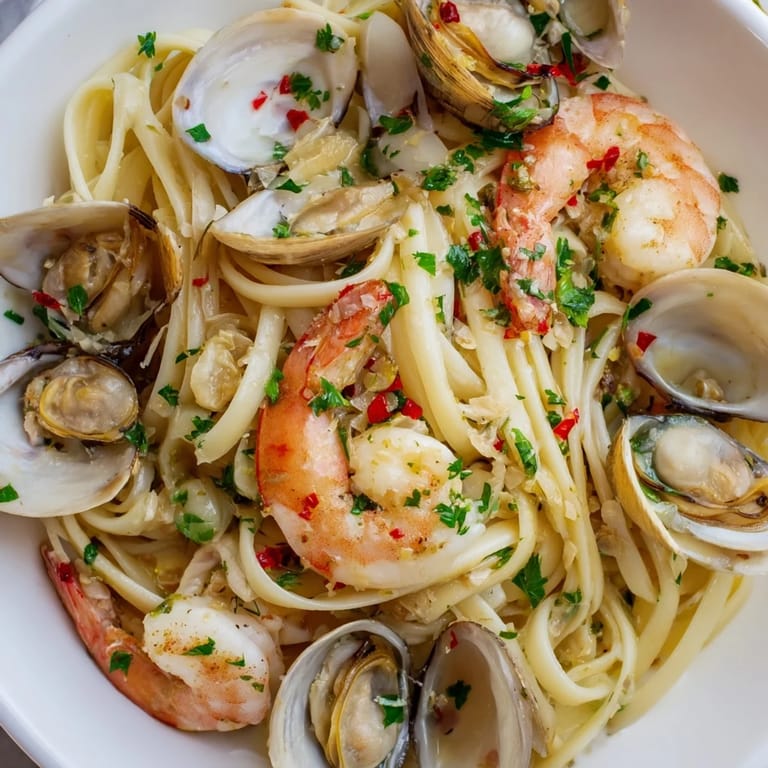
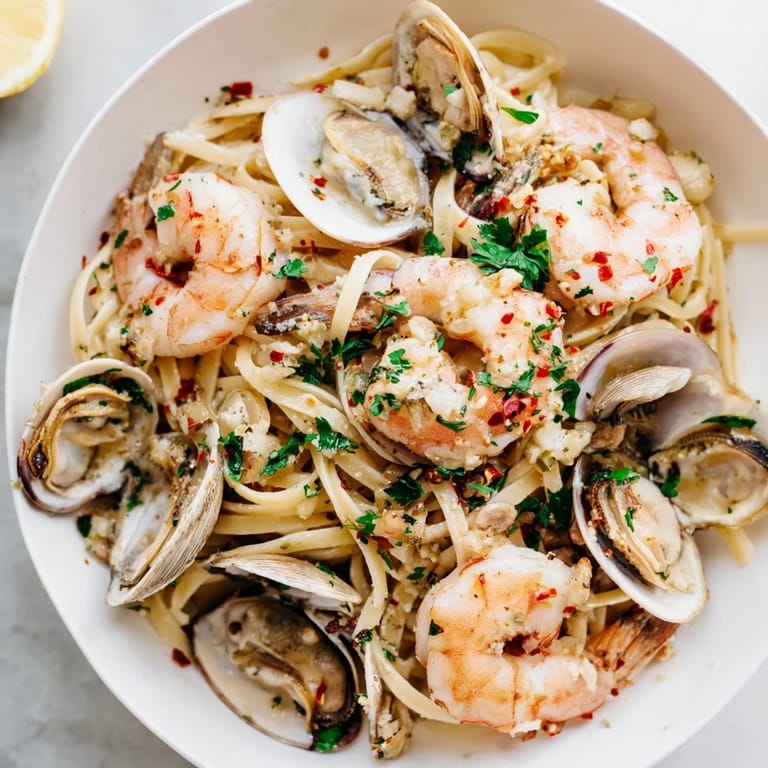
Pin There's something about the sound of clams and mussels snapping open in a hot skillet that reminds me why I fell in love with cooking seafood pasta in the first place. It happened one evening when I was trying to impress someone at a dinner party, and instead of panicking when I realized I had no complicated plan, I simply opened my pantry and let the ingredients speak for themselves. Fresh shrimp, a bottle of crisp white wine, and the briny sweetness of shellfish created something so effortlessly elegant that I've returned to this dish countless times since. What started as improvisation became my go-to whenever I want to feel like a real cook without spending hours in the kitchen. This seafood linguine is proof that the best meals often come from trusting your instincts and quality ingredients.
I made this for my mother on a Saturday afternoon when she mentioned offhandedly that she missed eating seafood since moving inland. Watching her close her eyes after that first bite, tasting the ocean in her kitchen miles away from the coast, felt like the greatest compliment I could have received. She asked for the recipe that same evening, and now it's become her signature dish when she wants to feel connected to the coast again.
Ingredients
- Large shrimp (200 g): Look for shrimp that smell clean and briny, not ammonia-like, which signals freshness; peeling and deveining them yourself makes a real difference in flavor compared to pre-prepped versions.
- Fresh clams (250 g): Scrub them under cold running water with a stiff brush and discard any with cracked shells or ones that won't close when tapped, as these won't open properly during cooking.
- Fresh mussels (250 g): Their dark, glossy shells should close when you handle them; debeard them by pulling the thin fibrous threads toward the hinge, which only takes a minute but makes the eating experience infinitely better.
- Dried linguine (400 g): Good quality matters here since the pasta is the foundation; bronze-cut pasta has a rougher surface that clings to sauce better than the smooth industrial kind.
- Extra virgin olive oil (3 tbsp): Use a fruity, peppery oil that you'd actually taste on its own, not the bland refined stuff that gets lost in the pan.
- Garlic cloves (4), thinly sliced: Slicing instead of mincing keeps the garlic pieces visible and prevents them from burning into bitter fragments that can overpower the delicate seafood.
- Small shallot, finely chopped: Shallots add an undertone of sweetness that garlic alone cannot provide, balancing the wine and creating a more sophisticated sauce.
- Red pepper flakes (½ tsp, optional): A whisper of heat wakes up the palate and makes the brinier flavors of the shellfish sing without making anyone reach for water.
- Dry white wine (200 ml): Choose something you'd drink, preferably a crisp Pinot Grigio or Sauvignon Blanc, because its acidity and flavor become the backbone of your sauce.
- Fish or chicken stock (250 ml): Fish stock adds authenticity, but good chicken stock works fine; avoid anything overly salty since you'll be reducing the liquid and concentrating flavors.
- Unsalted butter (2 tbsp): Butter finishes the sauce with silky richness and helps emulsify everything into a cohesive whole that coats each noodle.
- Lemon zest and juice (½ lemon): The zest adds brightness and aroma, while the juice provides acidity that prevents the sauce from feeling heavy or one-dimensional.
- Salt and black pepper: Season in stages rather than all at once, tasting as you go, because the seafood and wine already contribute their own salinity.
- Fresh parsley (3 tbsp, chopped): Added right at the end, parsley adds color and a clean herbal note that complements the richness without overwhelming the seafood flavors.
Tired of Takeout? 🥡
Get 10 meals you can make faster than delivery arrives. Seriously.
One email. No spam. Unsubscribe anytime.
Instructions
- Start your water and pasta:
- Bring a large pot of generously salted water to a rolling boil and add linguine, stirring occasionally so the strands don't stick together. Cook until just al dente, which means it should have a slight firmness when you bite it; taste a strand at the minimum time listed on the package to avoid ending up with mushy pasta.
- Build your aromatic base:
- While pasta cooks, warm olive oil in a large deep skillet over medium heat and add your sliced garlic and finely chopped shallot, letting them soften and become fragrant for about two minutes. This gentle foundation prevents the garlic from scorching while allowing its flavors to infuse into the oil, creating the backbone of your sauce.
- Quickly sear the shrimp:
- Turn the heat up to medium-high, add shrimp to the pan, and give each side just one minute so they turn from translucent gray to opaque pink. This brief cooking keeps them tender because shrimp continues cooking from residual heat even after you remove it from the pan.
- Steam open your shellfish:
- Add clams and mussels directly to the skillet, pour in white wine, and cover the pan with a lid so the steam can coax the shells open in three to four minutes. Listen for the gentle clinking sound that means shells are opening, and discard any stubborn ones that refuse to open after cooking since this signals they were already dead.
- Bring it all together:
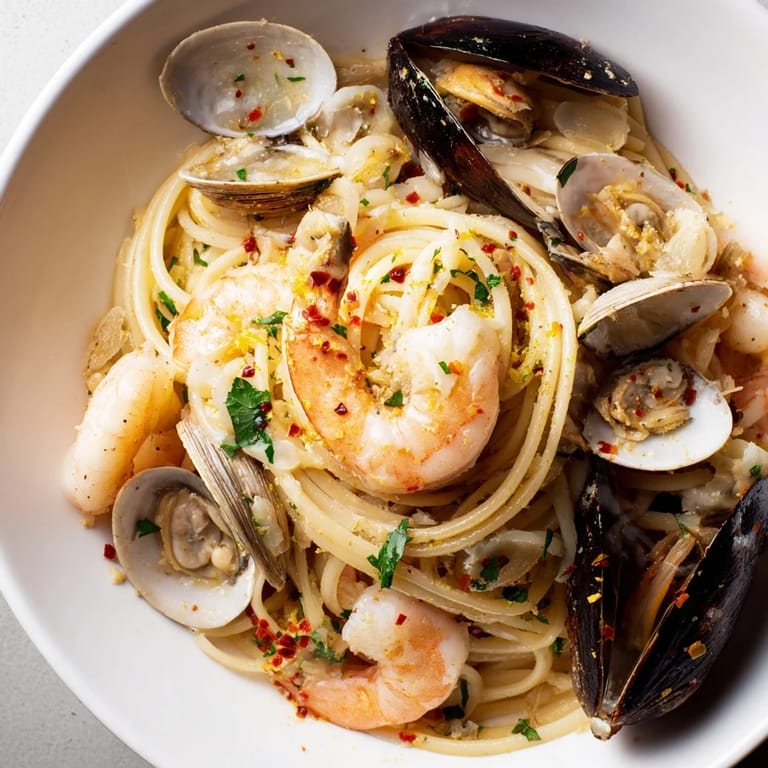
- Pour in your stock and return the shrimp to the pan, letting everything simmer gently for two to three minutes so flavors meld. Add your drained linguine along with a splash of reserved pasta water, the butter, lemon zest, and juice, then toss everything over low heat until the pasta is silky and coated.
- Finish and taste:
- Season with salt and pepper, remembering that you're adjusting rather than seasoning from scratch, and serve immediately while everything is still steaming hot and fragrant with the smell of the sea.
 Pin
Pin The first time someone asked me for seconds of this dish without even finishing their first plate, I knew I'd created something that transcended the recipe itself. It was the kind of meal that makes people slow down mid-conversation and actually taste what's in front of them, and that small moment of connection around the table reminded me why cooking matters.
Choosing Your Seafood
The secret to exceptional seafood pasta isn't complicated techniques or rare ingredients, but rather the quality and freshness of what you're buying. Visit a fishmonger or quality seafood counter rather than buying pre-packaged options, and ask questions about when the seafood arrived and where it came from. Let your senses guide you: good seafood should smell like the ocean, not fishy or ammonia-laden, and should feel firm and cold to the touch. I learned this lesson the hard way after a disappointing batch of rubbery shrimp that taught me to never settle for convenience when the whole dish depends on that one ingredient.
Timing Your Pasta and Sauce
The most common mistake I see home cooks make is finishing their sauce and then waiting around for the pasta to finish cooking, which means everything cools down and loses its magic by the time it hits the plate. Instead, time it so your pasta finishes around the same moment your shellfish opens; this requires a little practice but becomes intuitive after making the dish a few times. Start your pasta first since it has a longer cooking time, then begin your sauce about ten to fifteen minutes later so they're ready at roughly the same moment. Those few minutes of coordination transform the dish from good to genuinely restaurant-quality.
Wine and Acidity Balance
White wine does more than just add alcohol to the pan; it brings acidity that brightens the sauce and prevents the richness from feeling heavy or one-dimensional. The wine reduces slightly as it simmers, concentrating its flavors while the alcohol cooks off completely, leaving behind a sophisticated background note that elevates every bite. I used to skip this step when making quicker versions, but the difference between a sauce with wine and one without is like comparing a watercolor painting to a bold oil painting. Your guests may not consciously identify what makes it taste restaurant-quality, but they'll notice the depth.
- Choose a dry white wine you'd actually drink, as cheaper cooking wines often contain added salt and unpleasant flavors.
- The acid from the wine balances the richness of the butter and seafood, creating harmony instead of heaviness.
- If you're avoiding alcohol, substitute with additional stock plus an extra squeeze of lemon juice for brightness.
 Pin
Pin This dish reminds me that some of the most impressive meals come from respecting ingredients rather than overcomplicating them. It's proof that you don't need a long list of techniques to create something that tastes genuinely special.
Recipe FAQ
- → How do I ensure the shellfish is fresh?
Select shellfish that is tightly closed and smells fresh like the ocean. Discard any with broken shells or strong odors.
- → Can I substitute the seafood with other types?
Yes, calamari or scallops can be used as alternatives without compromising flavor.
- → What type of wine works best in the sauce?
Dry white wines such as Pinot Grigio or Vermentino pair well, enhancing the sauce's aroma.
- → How do I prevent linguine from overcooking?
Cook linguine just until al dente, then quickly drain to maintain its firmness before combining with the sauce.
- → Is it necessary to reserve pasta water?
Yes, reserved pasta water helps to emulsify and loosen the sauce, ensuring it coats the pasta evenly.