 Pin
Pin There's something about biting into warm sourdough that's been kissed with garlic and olive oil, only to hit that cloud of creamy burrata—it stops you mid-morning and makes you slow down. I discovered this combination during a sweltering July afternoon when my neighbor brought over a ball of burrata from the farmers market, and I had just enough ripe tomatoes from my sad little kitchen garden to make it work. What was meant to be a quick snack turned into the kind of meal that feels more like a moment than food.
I made this for my sister the morning after she arrived unannounced, and she ended up staying another day just because we couldn't stop talking about how the garlic scent mixed with the basil was making her nostalgic for a trip she took years ago. It became the thing she requested every time she visited, which meant I learned every little trick to make it shine.
Ingredients
- Sourdough bread: Choose slices thick enough to hold the toppings without falling apart, and look for that tangy flavor that makes the dish sing—it's the foundation everything else sits on.
- Fresh burrata cheese: This is the star, so buy it from somewhere you trust and use it the same day if possible; room temperature it slightly before serving so it's at its creamiest.
- Ripe tomatoes: Season matters here—summer tomatoes with real flavor will make you forget store-bought versions exist, and slicing them just before assembly keeps them at peak juiciness.
- Extra virgin olive oil: Don't skimp on this one; it's tasted on its own, so get something you'd actually drink a shot of.
- Garlic clove: Halving it gives you just enough punch without overwhelming the delicate burrata.
- Flaky sea salt and freshly ground black pepper: These finish the dish and deserve the same respect you'd give to any ingredient—grind the pepper fresh and use salt you can crush between your fingers.
- Fresh basil leaves: Tear them by hand instead of cutting; it bruises the leaves less and releases more oils right when you need them.
- Balsamic glaze: Optional but transformative if you find the good stuff; even a tiny drizzle adds a whisper of sweetness and tang.
Tired of Takeout? 🥡
Get 10 meals you can make faster than delivery arrives. Seriously.
One email. No spam. Unsubscribe anytime.
Instructions
- Toast until golden:
- Get your sourdough slices into a toaster or warm grill pan until they're crispy and making that satisfying crunch sound—you want a good char on the outside but still chew in the middle. This should take about 3 to 5 minutes depending on how thick your slices are.
- Rub with garlic while warm:
- The warmth of the bread is key here; it toasts the garlic slightly and mellows its bite without making it sharp. Just run that halved clove over one side of each slice like you're seasoning it.
- Drizzle with olive oil:
- Use about 1 tablespoon per slice, and watch the oil sink into the bread instead of pooling—that's the sign you've got a good porous crust. The warm bread soaks it up like it's been waiting for it.
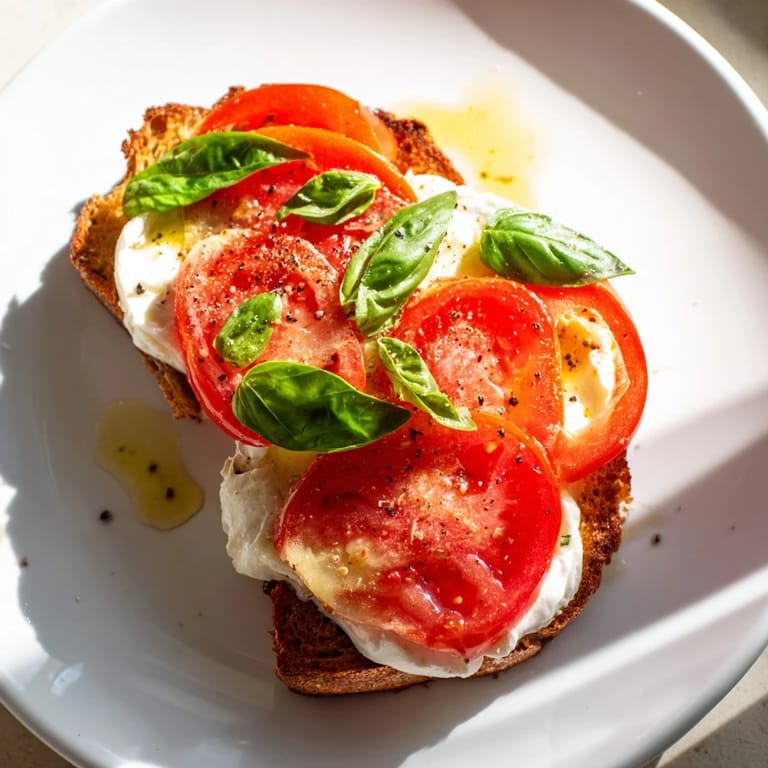
- Layer the tomatoes:
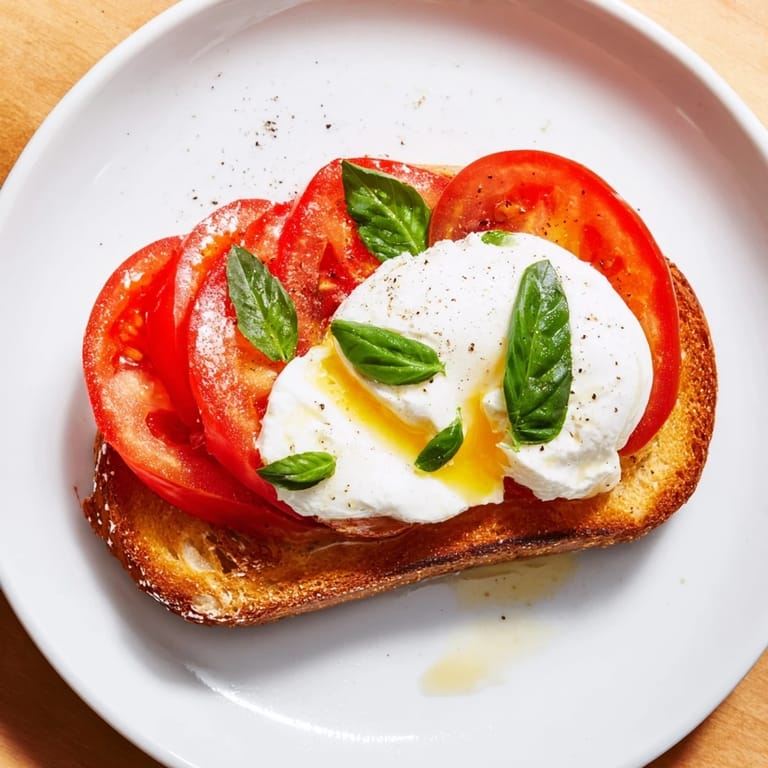
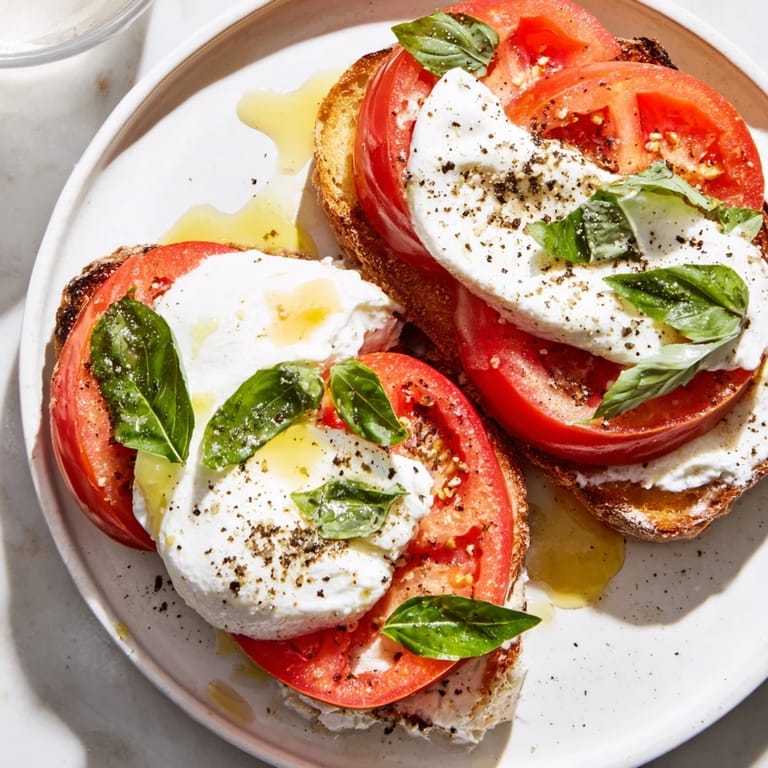
- Overlap the slices slightly so they look intentional and beautiful, then hit them with a pinch of salt and pepper right away so the seasoning clings to the moisture. Don't skip this step; it's what keeps them from tasting bland.
- Tear and place the burrata:
- Break the cheese into irregular pieces instead of neat chunks—it looks more generous and spreads more naturally over the tomatoes. Use your hands and let it fall where it wants to; rough edges are your friend here.
- Top with basil and glaze:
- Scatter the torn basil leaves over everything and finish with a thin line of balsamic if you're using it. The basil should look like it was just picked, not arranged.
- Serve right away:
- Eat this while the toast is still warm and the burrata still has that cool, creamy texture—once things get to room temperature, the magic fades.
 Pin
Pin One morning I made this for someone who claimed they didn't like burrata, and watching their face when they realized what they'd been missing made me understand that this toast is really just a vehicle for small moments of joy. It taught me that sometimes the simplest dishes are the ones that linger in memory.
Why This Toast Became My Go-To
I stopped making complicated weekend breakfasts the moment I realized this took less effort than scrambled eggs but impressed more. There's something about the combo of warm and cool, creamy and crunchy, that makes your brain light up, and you get to eat it within 15 minutes of deciding you want it. That's the sweet spot where cooking stops feeling like work.
Elevating Simple Ingredients
This dish taught me that you don't need a long ingredient list to make something memorable—you need ingredients you actually care about and the confidence to let them speak for themselves. Every component here is meant to be tasted on its own; there's no sauce hiding behind flavors or technique masking mediocre tomatoes, so each element has to carry its weight.
Small Variations That Make a Difference
Once you get comfortable with the base, it's fun to see what shifts the mood. A pinch of red pepper flakes brings heat, heirloom varieties offer visual drama and different flavor notes, and in winter when tomatoes disappoint, roasted grape tomatoes with a touch of honey add depth. The toast becomes a canvas, not a rigid rule.
- Try a whisper of fresh oregano or a fragment of red onion if you want to add another texture or sharp note.
- If burrata feels indulgent, fresh mozzarella works fine, though you'll lose some of that custard-like creaminess you came for.
- Pair this with a cold glass of something light and bubbly—Prosecco or a crisp white wine makes the whole experience feel more intentional than just breakfast.
 Pin
Pin This is the kind of meal that reminds you that sometimes the most meaningful food doesn't come from complicated recipes or hours at the stove. It comes from choosing ingredients you love and assembling them with care.
Recipe FAQ
- → What bread works best for this toast?
Crisp sourdough bread is ideal for its sturdy texture and tangy flavor, which complements the creamy burrata.
- → Can I use other cheeses besides burrata?
Fresh mozzarella can be substituted for burrata, offering a similar mild creaminess.
- → How should the tomatoes be prepared?
Use ripe medium tomatoes sliced evenly to add juicy freshness and balance the richness of the cheese.
- → What is the purpose of rubbing garlic on the toast?
Rubbing garlic on warm toast imparts a subtle aromatic depth without overpowering the other flavors.
- → Is balsamic glaze necessary?
Balsamic glaze adds a sweet, tangy finish but is optional depending on personal taste.
- → Any suggestions for seasoning?
Flaky sea salt and freshly ground black pepper enhance the natural flavors and freshness of the ingredients.