 Pin
Pin My first Turkish meze platter came together on a lazy Sunday afternoon when a friend mentioned she'd never had proper mezze at home. I pulled together whatever I could find—some chickpeas I'd soaked the night before, crumbled feta from the back of the fridge, and jarred olives that had been sitting there longer than I'd like to admit. Within an hour, the table was covered with small bowls and plates, each one a different texture and flavor, and we ended up grazing for three hours straight without ever making a proper meal of it. That's when I realized: this isn't a recipe, it's an invitation.
I made this platter for my partner's family the first time they came to visit, nervous I'd somehow misrepresent Turkish food (I'm not even Turkish, just obsessed with the cuisine). My mother-in-law tasted the hummus, raised an eyebrow, and said it tasted like home. That single moment made me realize that cooking isn't about authenticity as much as it's about respect for what you're making.
Ingredients
- Chickpeas: Use canned if you're short on time, but rinse them thoroughly—that starchy liquid is what makes hummus gluey instead of creamy.
- Tahini: This is where the magic lives; cheap tahini tastes bitter, so don't skimp here.
- Extra-virgin olive oil: Use the good stuff for drizzling at the end; the heat-sensitive polyphenols are what make it taste peppery and alive.
- Garlic: One small clove is plenty—garlic can overpower if you're not careful, and you want people tasting the other flavors too.
- Fresh lemon juice: Bottled juice tastes like sadness; squeeze it fresh and taste as you go.
- Ground cumin: Toast it in a dry pan for thirty seconds if you have the time; it wakes the spice up.
- Feta cheese: Look for the crumbly kind packed in brine, not the pre-crumbled version that tastes like cardboard.
- Beyaz peynir: This is the white cheese of Turkey, slightly tangy and perfect for a platter; if you can't find it, feta works just fine.
- Kasseri or halloumi: These are the cheeses that hold their shape when sliced; they add a salty, slightly rubbery texture that's surprisingly addictive.
- Turkish olives: The green ones are briny and crisp, the black ones are softer and more mellow—having both is the whole point.
- Cucumber and tomato: Choose ripe tomatoes that smell like tomato; mealy ones will sink your platter into sadness.
- Fresh parsley: Flat-leaf if you can get it; it's more forgiving than the curly kind.
- Pita or flatbread: Warm it just before serving so it's still steaming when it hits the table.
Tired of Takeout? 🥡
Get 10 meals you can make faster than delivery arrives. Seriously.
One email. No spam. Unsubscribe anytime.
Instructions
- Make your hummus base:
- Drain your chickpeas and give them a quick rinse under cold water. Toss them into the food processor along with tahini, olive oil, minced garlic, fresh lemon juice, cumin, salt, and pepper, then blend until the mixture goes from grainy to impossibly smooth—this takes longer than you think, usually two or three minutes of processing. Taste it and adjust the seasoning; hummus is forgiving and wants you to make it your own.
- Finish the hummus:
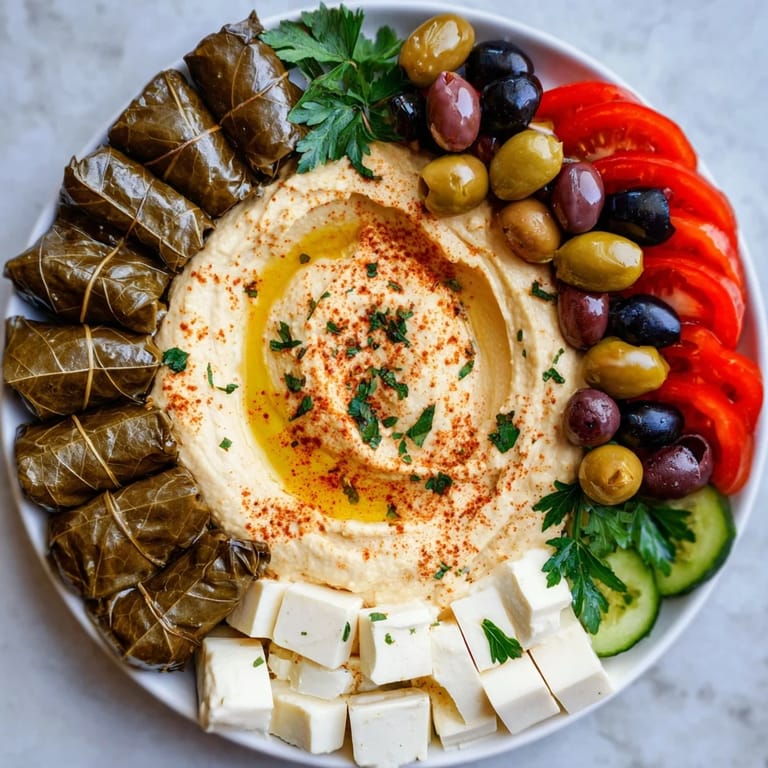
- Pour your finished hummus into a shallow serving bowl and drizzle with a little more olive oil, then dust with paprika or sumac if you have it—this isn't strictly necessary but it makes the platter look intentional rather than thrown together. Set it aside and resist the urge to taste it with your finger; that's what the bread is for.
- Arrange the dolmas:
- If you're using store-bought dolmas, simply lay them on one section of your platter in a neat little cluster—they don't need any additional preparation, just a spot of honor. If you're making them from scratch, you've got another thirty minutes of work ahead, but the principle is the same: arrange them so people want to pick one up.
- Prep your cheeses:
- Cut feta and beyaz peynir into rough cubes about the size of dice, and slice kasseri or halloumi into thin slabs—aim for pieces you can eat in one or two bites. Group them by type on the platter so there's visual variety and people can choose their favorite.
- Marinate the olives:
- Pour your mixed olives into a small bowl, drizzle with olive oil, and scatter dried oregano over top. Give it a gentle toss and let it sit for a few minutes so the oil can seep in and soften the oregano's flavor.
- Add your fresh elements:
- Slice your cucumber on the bias so the pieces look intentional rather than haphazard, cut your tomato into wedges, and squeeze your lemon into quarters. Scatter these around the platter in pockets and crevices, then shower everything with fresh chopped parsley for color.
- Warm your bread and serve:
- Just before people arrive, wrap your pita or flatbread in a clean kitchen towel and warm it in a 350°F oven for three to four minutes—it should steam gently when you unwrap it. Cut it into triangles, arrange it on a separate plate or tuck it around the edge of your platter, and let people know that's where they start.
 Pin
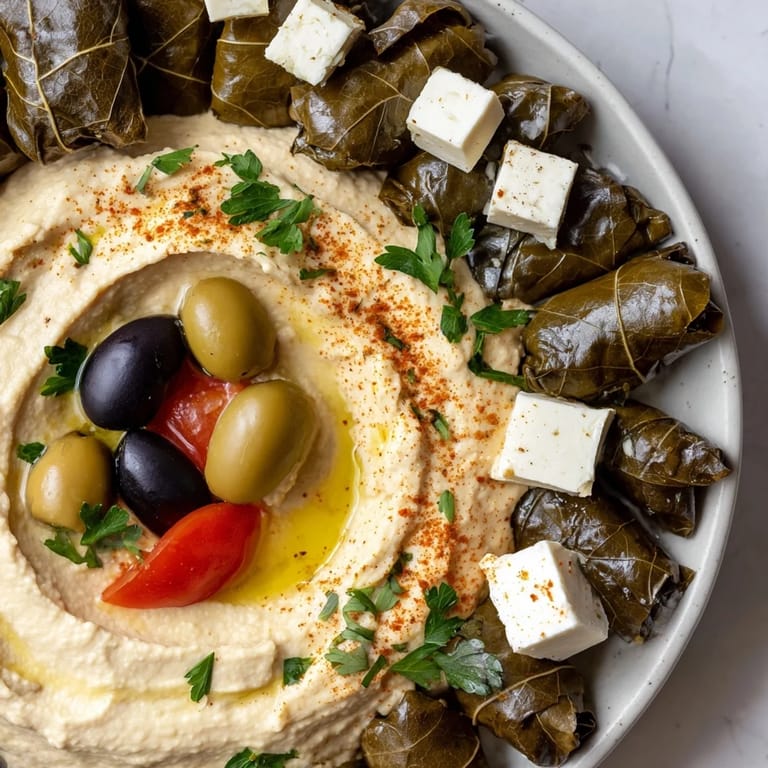
Pin There's a moment when everyone sits down and someone reaches for the hummus at the same time someone else grabs a piece of cheese, and suddenly you're watching a table full of people who didn't plan to eat much end up lingering for hours. That's the magic of a meze platter—it's not a meal, it's a conversation with food as the excuse.
Building Your Perfect Platter
The secret to a stunning meze platter isn't having fancy ingredients; it's understanding that contrast is everything. You need soft against creamy, salty against fresh, crisp against smooth. When you arrange these elements, you're not just putting food on a plate—you're creating a landscape that invites people to explore. I learned this by accident when I ran out of space on my platter and had to squeeze things in tightly; suddenly people were discovering new flavor combinations because they had to try a little bit of everything to make room for the next person.
Make-Ahead and Storage Tips
The hummus can be made a full day ahead and stored in an airtight container in the refrigerator—it actually tastes better this way because the flavors meld overnight. The olives and cheese can also sit in the fridge for a day or two, though I'd recommend bringing them to room temperature for thirty minutes before serving; cold cheese tastes muted and the olives' oil won't coat your mouth the way it should. Everything else—the fresh vegetables, the dolmas, the bread—should be prepped ahead but assembled no more than an hour before you serve.
Variations and Additions
A basic meze platter is a canvas, not a recipe set in stone. I've added roasted red peppers from a jar, grilled eggplant slices brushed with oil and herbs, spiced walnuts, fresh mint leaves, and even small bowls of yogurt for dipping. The Turkish kitchen is built on improvisation and abundance, so lean into whatever looks good at your market that day. One of my favorite versions happened when I was out of olives and grabbed some marinated artichoke hearts instead; no one missed the olives, and now I make it that way half the time.
- Roasted red peppers add sweetness and pair beautifully with creamy hummus.
- Grilled eggplant slices brushed with oil and sprinkled with sumac bring earthiness and a subtle tartness.
- Spiced walnuts add crunch and an unexpected warmth that keeps people reaching back for more.
 Pin
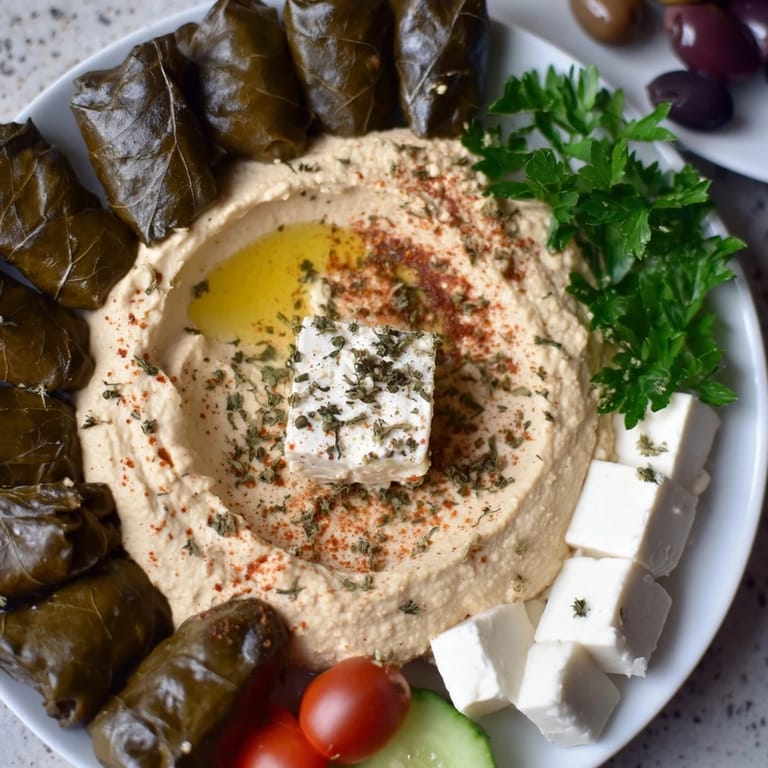
Pin A meze platter is less about following rules and more about inviting people into a way of eating that slows everything down. Make it, set it on the table, and then get out of the way and let people discover it together.
Recipe FAQ
- → What are dolmas in this platter?
Dolmas are grape leaves stuffed with a flavorful mix of rice and herbs, offering a tender and savory bite that complements the other elements.
- → How is the hummus prepared?
Hummus is made by blending chickpeas, tahini, olive oil, garlic, lemon juice, cumin, salt, and pepper until smooth and creamy.
- → Can I substitute the cheeses included?
Yes, the platter uses feta, beyaz peynir, and kasseri or halloumi, but you can choose similar textured cheeses to suit your taste.
- → How should the olives be served?
Olives are tossed with olive oil and dried oregano to enhance their flavor before being placed on the platter or in a small bowl.
- → What accompaniments finish the platter?
Fresh cucumber and tomato slices, lemon wedges, and chopped parsley add freshness and color, while warm pita or flatbread provides an ideal vehicle for enjoying the spread.
- → Can dolmas be made from scratch?
Yes, dolmas can be homemade by stuffing grape leaves with cooked rice and herbs for a fresher taste and customized filling.