 Pin
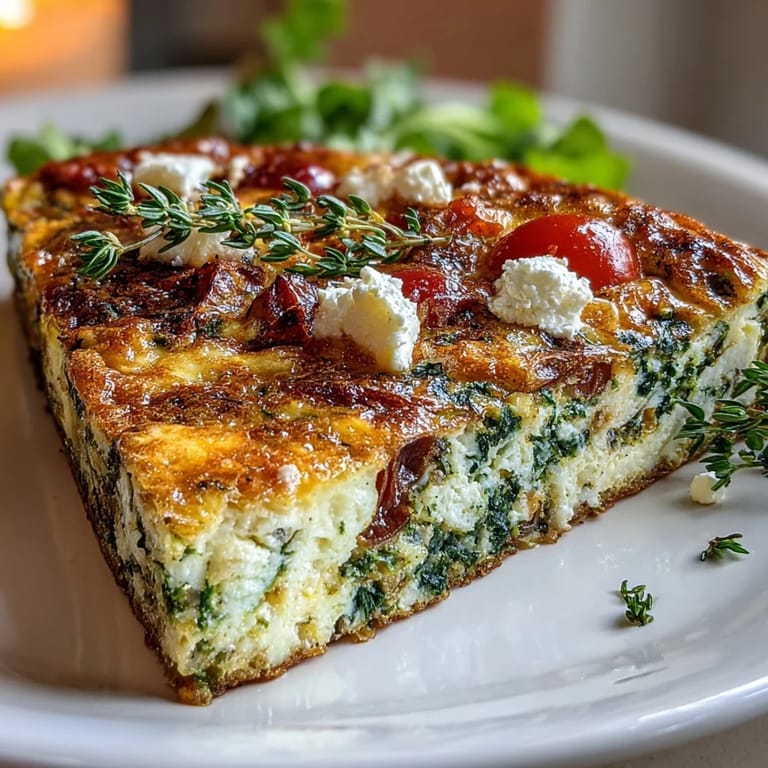
Pin There's something quietly satisfying about sliding a frittata out of the oven on a Sunday morning—that moment when you realize you've somehow turned a handful of vegetables and egg whites into something that feels both indulgent and virtuous. I discovered this particular version while trying to figure out how to make brunch feel less like a guilty pleasure and more like actual nourishment. The beauty of it is that it requires minimal fuss but tastes intentional, which honestly was the whole appeal.
I made this for my sister on a random Thursday when she was stressed about her new fitness routine, and she kept asking if she could have another slice because she genuinely didn't believe something this filling could be this light. Watching someone relax around food they thought they couldn't have anymore was its own kind of reward, and that's when I knew this frittata was onto something real.
Ingredients
- Baby spinach: Wilts down beautifully and disappears into the eggs without any grittiness if you chop it first, making the texture seamless throughout.
- Broccoli florets: Finely chop these so they cook through in the time we have and distribute evenly instead of creating tough surprises.
- Red bell pepper: Adds sweetness and color, but the key is dicing it small enough that it softens completely during both the sauté and bake.
- Zucchini: Choose medium ones if possible, since overgrown zucchini can be watery and will mess with your frittata's texture.
- Red onion: The raw sharpness mellows beautifully during cooking, adding depth that regular onion simply doesn't contribute.
- Cherry tomatoes: These go on top right before baking so they burst slightly and stay just a little jammy, which is the entire reason we use them.
- Liquid egg whites: The liquid version cooks more evenly than separating your own, and two cups gives you the right protein density without puffing up too much.
- Low-fat feta cheese: Optional but worth it if you're not avoiding dairy, since a small amount adds more flavor than you'd think, especially the saltiness.
- Fresh parsley: Chopped right before mixing, not added early, so it stays bright green and actually tastes like herbs instead of dried-out filler.
- Dried oregano: This is the secret flavor layer that makes people ask what's different about your frittata.
- Garlic powder: Gentler than fresh garlic in egg dishes, preventing that sharp bite that can overwhelm the delicate texture.
- Olive oil or nonstick spray: Either works, but if you use oil, a single teaspoon is genuinely enough and keeps the whole thing lean.
Tired of Takeout? 🥡
Get 10 meals you can make faster than delivery arrives. Seriously.
One email. No spam. Unsubscribe anytime.
Instructions
- Get your oven ready:
- Preheat to 375°F while you prep everything else. This temperature is the sweet spot where the top won't brown before the center sets, which I learned after a slightly rubbery attempt at 400°F.
- Prepare your vessel:
- Coat your 9-inch oven-safe skillet or baking dish with just enough nonstick spray or oil to prevent sticking. A little goes a long way here, and you want the frittata, not a greasy bottom.
- Start with the sturdy vegetables:
- Heat the skillet over medium heat and add your onion, bell pepper, and broccoli. Sauté for 3 to 4 minutes, stirring occasionally, until the edges of the pepper soften and the broccoli begins to look a shade darker.
- Add the quick-cooking ones:
- Toss in the zucchini and spinach, cooking for 2 to 3 minutes until the spinach completely wilts and there's no green sticking up. Pull the skillet off heat once the vegetables look balanced and tender.
- Build your egg base:
- In a large bowl, whisk together the liquid egg whites with garlic powder, oregano, black pepper, salt, and fresh parsley until everything is evenly distributed. The whisking matters because you want the seasonings throughout, not clumped in one spot.
- Combine vegetables and eggs:
- Stir the cooked vegetables gently into the egg mixture, being careful not to break the vegetables into tiny pieces. You want them to stay identifiable so people can see all the colors they're eating.
- Transfer to your baking dish:
- Pour the whole mixture into your prepared skillet or baking dish, spreading it out so it fills the bottom evenly. Don't rush this part—a few gentle tilts and stirs make sure there are no air pockets.
- Add the finishing touches:
- Scatter the halved cherry tomatoes across the top, along with crumbled feta if you're using it. These go on after pouring because they'll stay slightly firm and bright instead of getting buried and overcooked.
- Let it bake:
- Bake for 20 to 25 minutes, watching after 20 so you catch it the moment the center sets but the edges are still slightly creamy. A toothpick inserted near the center should come out clean with no liquid egg clinging to it.
- Rest before serving:
- Let the frittata cool for at least 5 minutes before slicing. This resting time firms it up just enough to cut cleanly instead of falling apart, making plating actually possible.
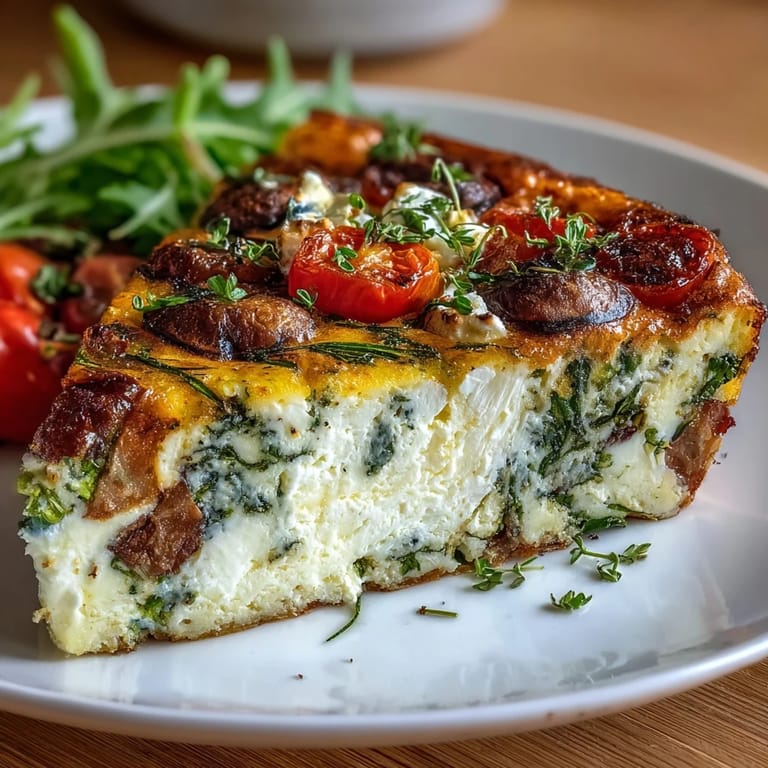 Pin
Pin There was a morning when someone took a bite and said it reminded them of a restaurant they loved, and something shifted about how I thought about cooking at home. It's not fancy, but it's thoughtful in a way that matters more than technique sometimes.
Why This Works for Brunch
Brunch exists in this weird limbo between breakfast and lunch, and what makes it work is dishes that feel special without requiring you to stand at the stove for hours. A frittata sits in that space perfectly because you do all your work on the stovetop in minutes, then the oven does the heavy lifting while you set the table or start a pot of coffee. It also holds its temperature better than scrambled eggs, which means if someone takes a while to make it to the table, their food is still warm and pleasant instead of congealing into rubber.
Customizing Your Frittata
The vegetable combination I've given you is solid, but the honest truth is that frittatas are forgiving enough to work with whatever's in your crisper drawer that day. I've made versions with mushrooms and asparagus, others with kale and sun-dried tomatoes, and they were all genuinely good because the base formula is flexible. The only rule I'd suggest following is keeping your vegetables roughly the same size so they cook at the same speed, which prevents some from being raw and others turning to mush.
Flavor Variations and Extras
Beyond swapping vegetables, there are subtle additions that change the entire personality of your frittata without adding much complexity or calories. A pinch of smoked paprika brings a depth that makes people tilt their head and wonder what it is, while red pepper flakes add a warmth that builds as you eat. Some mornings I add fresh dill with the parsley, other times a little lemon zest right at the end, and the frittata becomes something new without feeling like a completely different dish.
- Smoked paprika or chili flakes wake up the flavor profile without adding significant calories.
- Fresh herbs like dill or chives added at the very end taste brighter than ones mixed in early.
- A squeeze of lemon zest just before serving adds a sophistication that makes it feel restaurant-quality.
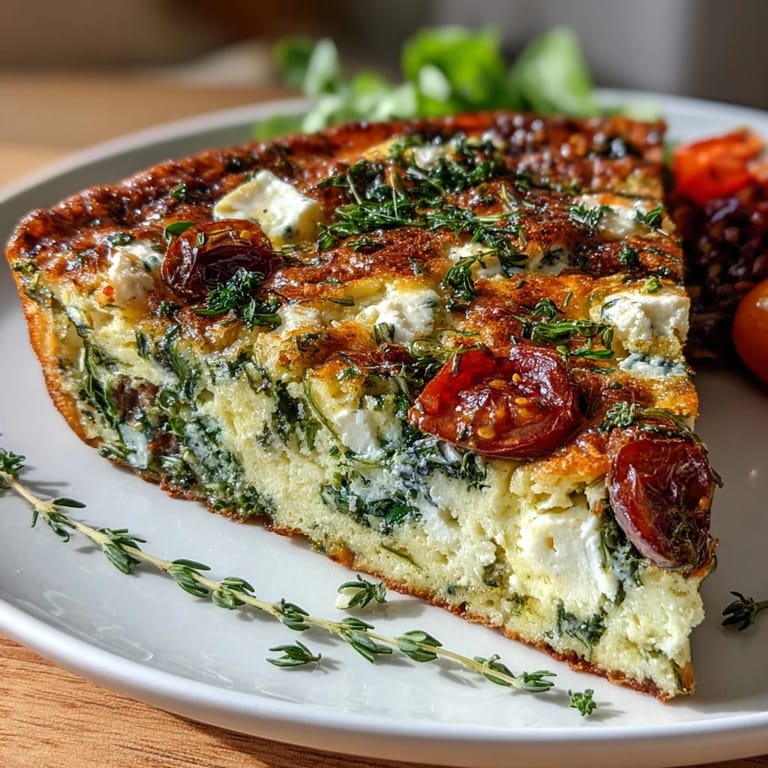 Pin
Pin This frittata has become the thing I make when I want to feel like I'm taking care of myself without it feeling like deprivation in disguise. It's the kind of food that deserves to be on your regular rotation.
Recipe FAQ
- → Can I use whole eggs instead of egg whites?
Yes, using whole eggs will make the dish richer and increase fat content. Adjust cooking time accordingly.
- → Which vegetables work best in this dish?
Leafy greens, bell peppers, zucchini, broccoli, and cherry tomatoes provide vibrant flavors and textures.
- → How to prevent the frittata from sticking to the pan?
Use a nonstick spray or lightly coat the skillet with olive oil before adding ingredients.
- → Can I prepare this ahead of time?
Yes, the mixture can be prepped in advance and baked just before serving for freshness.
- → What are good seasoning alternatives?
Smoked paprika, chili flakes, or fresh herbs like basil add unique flavors without overpowering.
- → Is this suitable for gluten-free diets?
Absolutely, all ingredients are naturally gluten-free unless cross-contamination occurs.