 Pin
Pin Last summer, I watched someone on my feed spend twenty minutes meticulously arranging a board of vegetables, cheeses, and dips, and I thought it was the most ridiculous thing I'd ever seen. Then I made one for a last-minute gathering, and suddenly I understood the appeal entirely—there's something about a board that feels both effortless and impressive, like you've cracked some secret code of hospitality.
My friend brought one of these to a picnic, and I watched people graze on it for hours while we sat in the shade talking about nothing important. By the end of the afternoon, the board was nearly empty and somehow everyone had eaten lunch without it feeling like a formal meal—just thoughtful abundance within arm's reach.
Ingredients
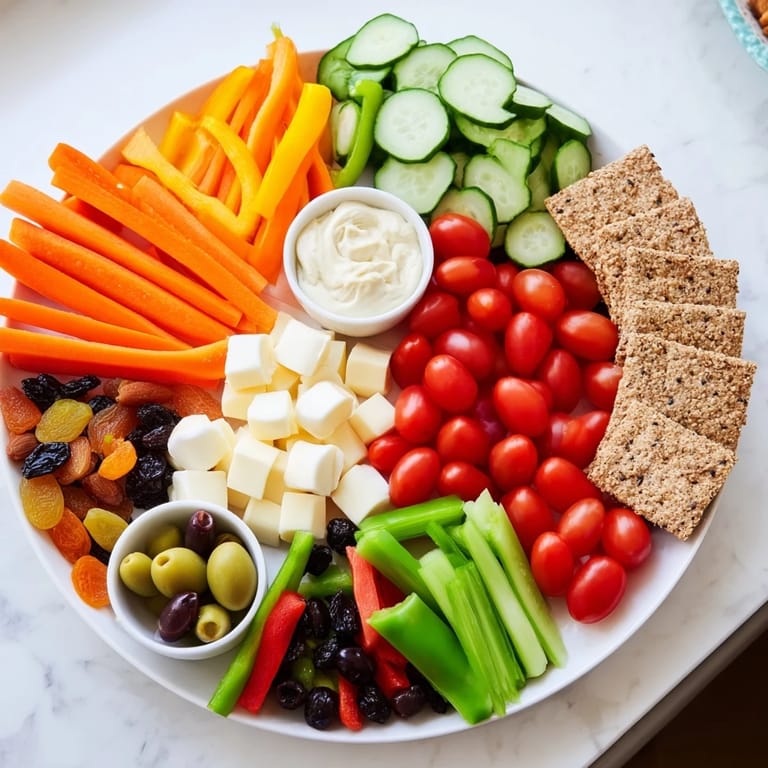
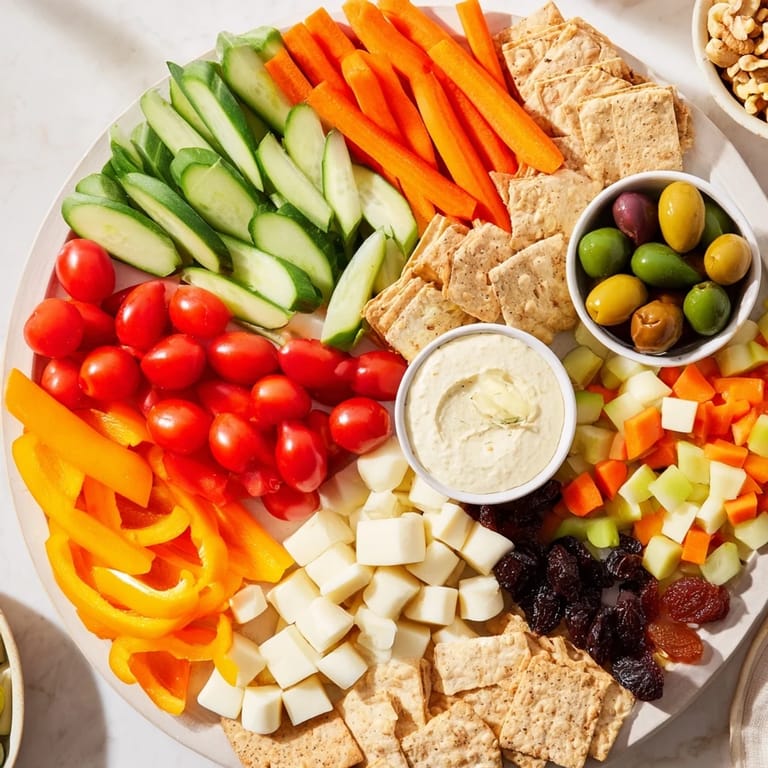
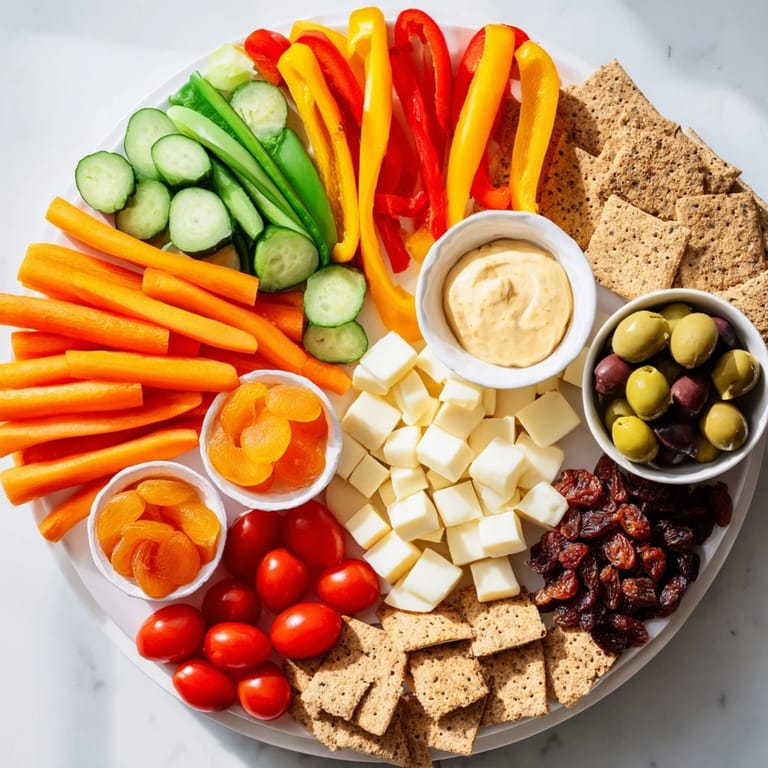
- Baby carrots: They're sweet enough raw and the size means you don't have to worry about them rolling off the board.
- Cucumber slices: Refresh your board with their cool, watery crunch—slice them right before serving so they don't get soggy.
- Cherry tomatoes: Their sweetness balances saltier elements like cheese and olives beautifully.
- Bell pepper strips: Mix colors for visual interest; the natural sweetness of red peppers is worth hunting for if you can find them.
- Sugar snap peas: People reach for these first because they're satisfying to eat and you don't feel guilty about it.
- Hummus: A creamy anchor that brings everything together—buy good quality if you can.
- Ranch dressing or Greek yogurt dip: The familiar comfort option that ensures no one leaves hungry.
- Cheddar cheese, cubed: The crowd-pleaser that needs no introduction.
- Mozzarella balls: They're small enough to pop in your mouth and feel like a treat rather than a snack.
- Gouda or Swiss cheese, sliced: This is where you add sophistication and nuttiness to the board.
- Whole grain crackers: Look for the kind that actually taste good on their own; they're the unsung hero of any board.
- Roasted nuts: They add texture and keep people satisfied longer than vegetables alone.
- Olives: A briny counterpoint that makes everything else taste better by comparison.
- Dried fruit: Sweet surprises tucked between the savory elements create little moments of delight.
Tired of Takeout? 🥡
Get 10 meals you can make faster than delivery arrives. Seriously.
One email. No spam. Unsubscribe anytime.
Instructions
- Prepare with intention:
- Wash and dry your vegetables thoroughly—wet vegetables make damp boards and soggy crackers. Slice cucumbers and peppers just before arranging so everything stays crisp and appealing.
- Start with structure:
- Arrange your vegetables in loose sections on your board, leaving space for everything else. Think of it like mapping a city rather than scattering things randomly.
- Nestle your dips:
- Set small bowls of hummus and dip in their spots, positioning them so people can reach them easily without knocking things around. Leave a small spoon or spreading knife in each bowl.
- Add cheese strategically:
- Cluster your different cheeses together so their flavors and textures complement each other. Soft mozzarella next to hard cheddar creates visual and textural variety.
- Fill the empty spaces:
- This is where your board becomes a landscape worth eating. Tuck crackers, nuts, olives, and dried fruit into the gaps, creating little pockets of flavor throughout.
- Serve or store wisely:
- If you're eating right away, bring it out immediately while everything is at its best. If not, cover it loosely with plastic wrap and refrigerate—the board will keep for several hours.
 Pin
Pin There's a particular joy in watching people discover something unexpected on a board—like the way someone's face changes when they realize the dried apricots pair perfectly with sharp cheddar, or how a quiet conversation becomes animated when there's good food right there to pick at.
The Art of Board Architecture
Building a great board is less about following rules and more about understanding balance. You want each quadrant to have vegetables, cheese, something crunchy, and access to dip, so people aren't crowding around one section while another sits lonely and untouched. Think about color—mix the orange carrots with red tomatoes and green peas so it looks abundant and intentional rather than random.
Making It Your Own
The magic of a veggie board is its flexibility—you can build a completely different board tomorrow using what's in your fridge, and it will be just as good. Some days you'll add hard-boiled eggs or sliced deli meat for more protein, other days you might swap hummus for something spicier or add roasted vegetables if you want warmth.
Timing and Pairing
A board like this works for almost any occasion, from casual office lunch to something you'd set out while friends visit. It pairs beautifully with light wines, sparkling water, or iced tea, and it's the kind of food that keeps people satisfied without weighing them down in the middle of the day.
- Make it hours ahead and refrigerate—the flavors actually blend together nicely as it sits.
- Keep your dips and any damp items separate until the last moment if you're traveling with your board.
- Always include at least one element that surprises people, whether that's an unusual cheese or a bold dip.
 Pin
Pin A good board is really just an invitation to slow down and enjoy food without ceremony. It's permission to eat at your own pace, pick what you want, and enjoy the company around you.