 Pin
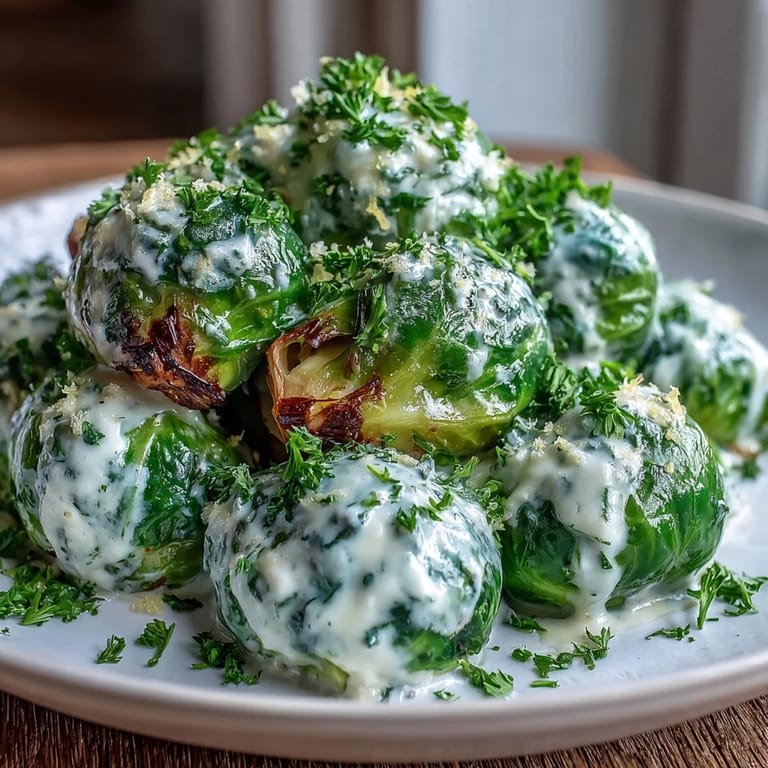
Pin My aunt in Hamburg first taught me this technique during a gray November visit, insisting that Brussels sprouts deserved better than their boiled-to-death reputation. She stood over her stove, wooden spoon in hand, explaining how the sharp Dijon cuts through the sprouts' natural bitterness while cream cheese wraps everything in comfort. The kitchen filled with butter and onion aromas, and I remember being surprised at how eagerly everyone reached for seconds. That evening changed my entire perspective on this misunderstood vegetable.
Last winter, I made this for a dinner party when my friend announced she was bringing someone who hated Brussels sprouts. I watched her take a tentative first bite, then reach immediately for seconds, asking exactly what I had done to make them taste so good. There is something deeply satisfying about watching a long-standing food prejudice crumble over a shared meal, especially when the solution is so simple.
Ingredients
- 600 g Brussels sprouts: Look for tight, bright green heads and trim the stem ends carefully so they cook evenly
- 1 small onion: Finely chopped onion builds the aromatic foundation that keeps the sauce from feeling one dimensional
- 1 garlic clove: Minced fresh garlic adds a subtle warmth that complements the mustard without overwhelming
- 150 g cream cheese: Full fat creates the silkiest sauce, though light cream cheese works if you prefer
- 2 tablespoons Dijon mustard: This is the star that cuts through and ties everything together
- 150 ml vegetable broth: Creates just enough liquid to turn the cream cheese into a pourable sauce
- 2 tablespoons butter: Essential for sautéing the aromatics and adding richness
- 1 teaspoon lemon juice: Brightens the whole dish and balances the cream
- Fresh parsley: Adds color and a fresh finish to cut through the richness
Tired of Takeout? 🥡
Get 10 meals you can make faster than delivery arrives. Seriously.
One email. No spam. Unsubscribe anytime.
Instructions
- Blanch the sprouts:
- Bring a large pot of salted water to boil and cook the trimmed Brussels sprouts for 5 to 7 minutes until they are just tender but still have some resistance when pierced with a knife. Drain them well and set aside, catching that brief moment when they are perfectly cooked but not yet mushy.
- Build your flavor base:
- In a large skillet, melt the butter over medium heat and add the chopped onion, sautéing for 3 to 4 minutes until it turns translucent and fragrant. Add the minced garlic and cook for just 1 minute more, watching carefully so it does not brown or turn bitter.
- Create the creamy sauce:
- Reduce the heat to low and stir in the cream cheese and Dijon mustard, mixing until smooth and completely combined. Gradually pour in the vegetable broth while stirring continuously, creating a silky homogeneous sauce that coats the back of your spoon.
- Season and combine:
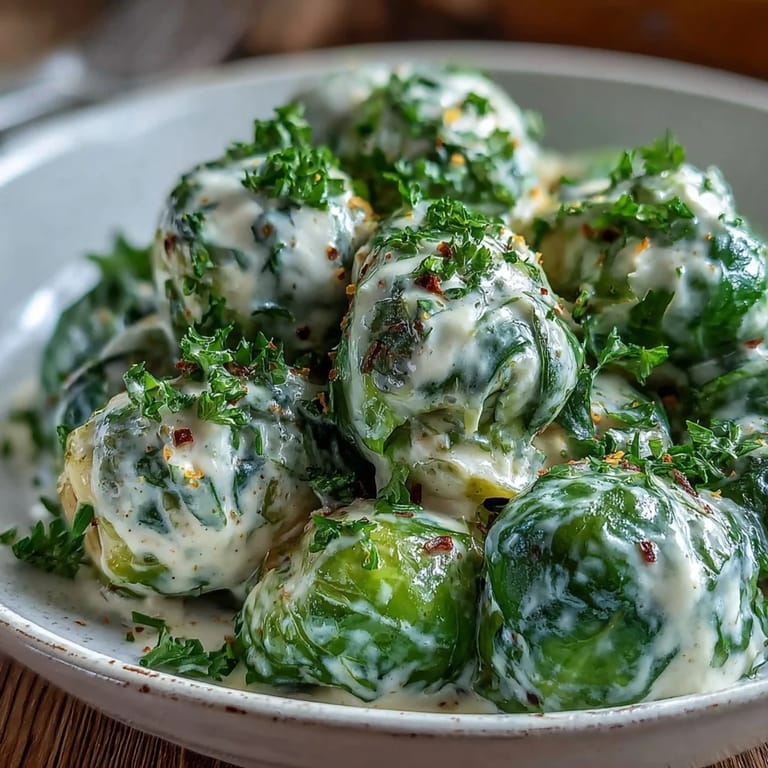
- Add salt, pepper, and lemon juice to taste, then gently fold in the cooked Brussels sprouts. Let everything heat through for 2 to 3 minutes, tossing carefully so each sprout gets evenly coated in that gorgeous mustard sauce.
- Finish and serve:
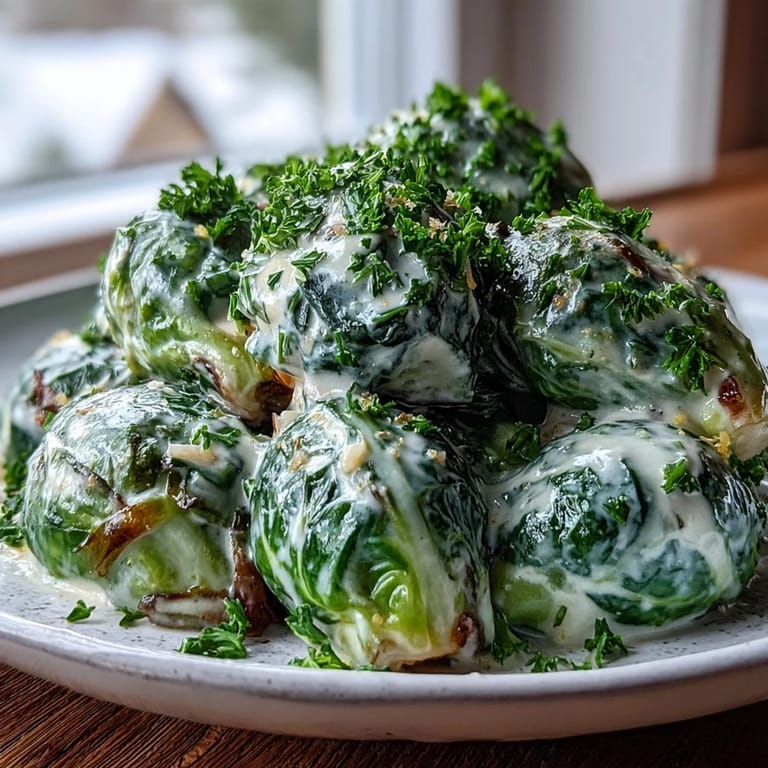
- Transfer to a serving dish and scatter fresh chopped parsley over the top for a pop of color and freshness that cuts through the richness.
 Pin
Pin This recipe has become my go to for holiday gatherings because it feels special without requiring hours of attention. My sister now makes it every Christmas, and the tradition has spread through our extended family until everyone has their own small variation. Some dishes nourish more than just your appetite.
Making It Ahead
I often blanch the sprouts and make the sauce separately the day before, storing them in different containers. When ready to serve, I gently reheat the sauce, add the sprouts, and warm everything together. This actually helps the flavors meld better, and it reduces that last minute kitchen stress when guests arrive.
Choosing Your Mustard
The quality of Dijon matters here since it is the primary seasoning. I have tried various brands and found that smoother, more traditional Dijons work better than coarse varieties. Grainy mustard can leave unexpected textures in an otherwise silky sauce, though some people enjoy that rustic element.
Serving Suggestions
This dish pairs beautifully with roasted pork loin, chicken, or even a hearty vegetarian grain bowl. The sauce is rich enough to stand alone as a main when served over crusty bread or alongside a simple green salad. Consider adding a pinch of cayenne if you enjoy subtle heat.
- Try it alongside roasted salmon for a complete meal
- The sauce doubles as an incredible spread for leftover sandwiches
- Extra fresh herbs like chives or thyme can diversify the flavor profile
 Pin
Pin Hope this recipe brings as much warmth to your table as it has to mine over the years. Some dishes become traditions for a reason.
Recipe FAQ
- → How can I ensure my Brussels sprouts are tender but not mushy?
Blanching them in salted boiling water for 5-7 minutes, then immediately draining, ensures they are tender-crisp. Avoid overcooking, as they will continue to soften slightly when tossed in the hot sauce.
- → Can I make this dish ahead of time?
Yes, this dish can be prepared ahead. Cook the Brussels sprouts and make the sauce separately. Store them refrigerated, then combine and gently reheat in a skillet over low heat just before serving. It's ideal for meal prepping.
- → What can I serve with these Brussels sprouts?
They pair wonderfully as a side with roasted meats like chicken, pork, or beef. For a vegetarian main, you can serve them alongside grains like quinoa or rice, or with a hearty lentil dish. The creamy sauce complements many savory main courses.
- → Can I adjust the level of mustard flavor?
Absolutely. Dijon mustard provides a distinct tang. You can start with 1 tablespoon and taste, then add more if you prefer a stronger mustard presence. Ensure you mix it thoroughly for an even flavor distribution.
- → Are there any substitutions for cream cheese?
For a similar creamy texture, you could try mascarpone or a plant-based cream cheese alternative. However, the flavor profile will shift slightly. Heavy cream could also be used, but it might require a thickener for a comparable sauce consistency.
- → How can I add a bit of spice to this dish?
For a touch of heat, you can add a pinch of cayenne pepper or a dash of hot sauce to the cream cheese-mustard mixture while it's simmering. Red pepper flakes can also be stirred in for a subtle kick.