 Pin
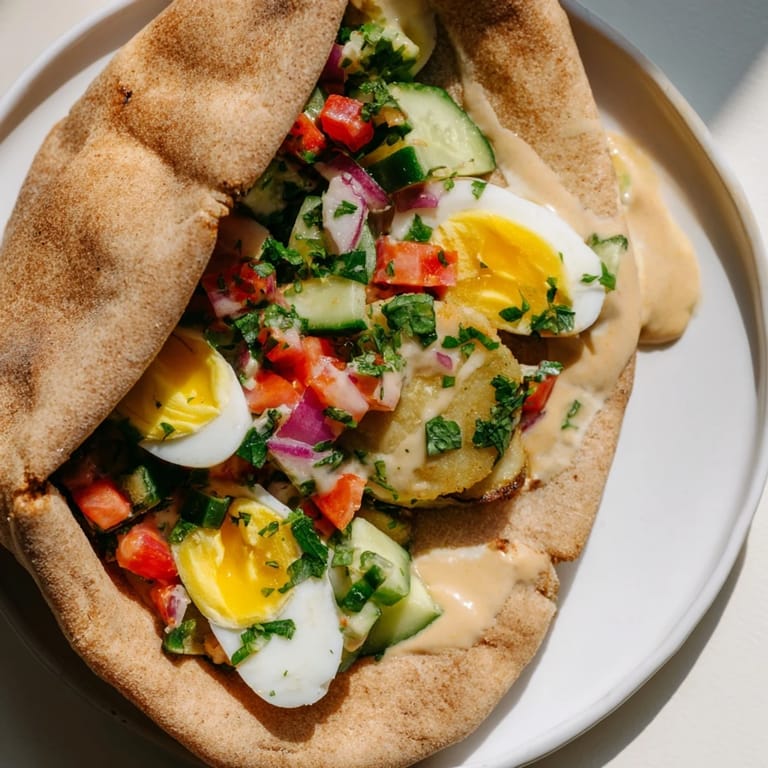
Pin The first time I bit into a sabich on a humid Tel Aviv afternoon, I didn't expect to fall in love with something so beautifully chaotic. A street vendor handed me this stuffed pita with crispy eggplant spilling out the sides, and I watched him drizzle tahini with the confidence of someone who'd made this a thousand times. It was the contrast that got me—the warm, salty fried eggplant against cool salad, creamy tahini cutting through it all. I came back to that corner three times that week.
I made this for my roommate on a Sunday when she was too tired to cook, and watching her face light up as she took that first bite reminded me why food matters. She went quiet for a moment, then asked for the recipe. Now she makes it every other week, and I feel oddly proud knowing something I learned on a dusty Tel Aviv street has become part of her routine.
Ingredients
- Eggplants (2 medium): Slice them into half-inch rounds so they're thick enough to stay crispy outside without turning mushy inside. Salting them draws out bitter moisture and helps them brown faster.
- All-purpose flour (1/2 cup): A light dredge, not a thick coating, keeps the eggplant from becoming gummy. Don't oversaturate; just a whisper of flour does the trick.
- Vegetable oil (1 cup): You need enough to shallow-fry properly, though you'll reuse it if you strain it after cooking.
- Large eggs (4): Hard-boiled eggs are traditional and add richness without overpowering the other flavors.
- Tomatoes (2 medium): Dice them small so they release their juices and flavor the salad evenly.
- Cucumber (1 medium): Use the most crisp one you can find, and add it to the salad just before serving so it stays fresh.
- Red onion (1/4 medium): Finely chopped so the sharpness distributes, not overpowers.
- Fresh parsley (2 tablespoons): Adds brightness and cuts through the richness of the tahini.
- Tahini paste (1/2 cup): Quality matters here. Stir it well before measuring because the oil separates, and buy from a place with good turnover so it's fresh.
- Pita breads (4 large): Warm them right before serving so they're pliable and don't tear when you fill them.
- Pickled mango sauce or amba (optional): This is the secret weapon. It's tangy and slightly spiced, and transforms the whole thing from good to memorable.
Tired of Takeout? 🥡
Get 10 meals you can make faster than delivery arrives. Seriously.
One email. No spam. Unsubscribe anytime.
Instructions
- Salt and rest the eggplant:
- Lay your sliced eggplant on paper towels, sprinkle with salt on both sides, and let it sit for 15 minutes. You'll watch the moisture bead on the surface, which is exactly what you want. This step prevents the eggplant from absorbing all your oil and becoming greasy.
- Dredge and fry until golden:
- Pat the eggplant dry, coat lightly in flour, and fry in hot oil until both sides turn deep golden brown, about 2-3 minutes per side. Listen for that gentle sizzle when you place each slice—it should be confident but not violent. Drain on fresh paper towels and season with a pinch of salt while still hot.
- Boil the eggs to tender:
- While the eggplant cooks, bring a saucepan of water to a rolling boil, gently add your eggs, and let them simmer for exactly 9 minutes. Too short and you'll have runny yolk; too long and they toughen. A 9-minute egg has a barely set yolk with a creamy center, which is what makes this work.
- Build the Israeli salad:
- Combine diced tomatoes, cucumber, red onion, and parsley in a bowl, then dress with lemon juice, olive oil, salt, and pepper. Toss gently and taste as you go. The salad should taste bright and punchy on its own.
- Whisk the tahini sauce:
- Combine tahini, water, lemon juice, minced garlic, and salt in a bowl, whisking until smooth. If it's too thick, add water a tablespoon at a time. The sauce should flow but not be thin—it should coat the back of a spoon. Taste and adjust salt and lemon to balance.
- Warm and split the pita:
- Heat your pita breads for just 30 seconds per side in a dry skillet or over a flame. They should be warm enough to be pliable but still hold their structure. Gently slice one side open to create a pocket.
- Assemble with care:
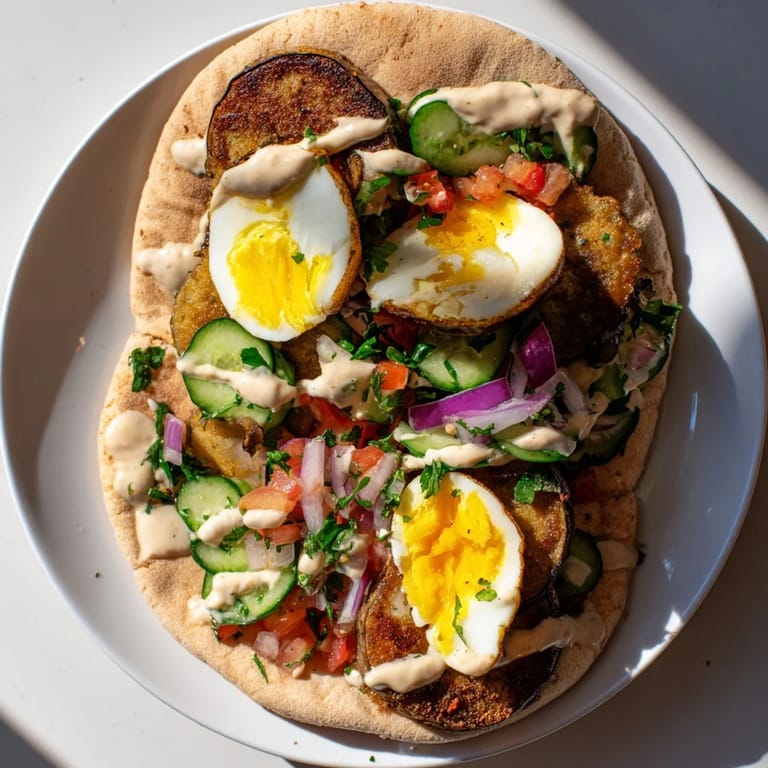
- Start with a spoonful of tahini sauce on the inside of each pita, then layer in fried eggplant, sliced hard-boiled egg, and a generous scoop of Israeli salad. Drizzle with more tahini, then add amba, pickles, cilantro, and hot sauce to taste. The order matters because tahini on the bottom helps everything stay in place.
 Pin
Pin There's a moment when everything is ready and sitting in separate bowls, and you get to watch someone build their own sabich exactly how they want it. That small act of choice—how much tahini, which toppings first, whether to add amba—somehow makes the whole meal feel less like dinner and more like an experience.
Why Eggplant Works Here
Eggplant gets a bad reputation because it absorbs everything around it without adding much of its own flavor, which sounds like a loss. But sabich proves that's exactly why it works—it becomes a neutral canvas that takes on the salt, the oil's richness, the tahini's creaminess. When you fry it properly, the exterior turns almost custardy, and that texture is irreplaceable in this sandwich. I've tried other vegetables as substitutes, and nothing else creates that same satisfying bite.
Timing and the Art of Everything Warm
The hardest part of sabich isn't the technique, it's the timing. You want everything—the pita, the eggplant, the eggs—to arrive at your plate warm or at least at the temperature you intended. I learned this by ruining my first batch by frying the eggplant, then cooking the eggs, then sitting around talking and wondering why everything tasted flat and sad. Now I work backwards: start the eggs first, prep the salad next, fry the eggplant last, and warm the pita as you're pulling the eggplant from the oil. The whole sequence takes about 25 minutes if you stay focused, but moving things around out of order adds 10 minutes of waiting.
Making It Your Own
Sabich is street food, which means it's forgiving and adaptable. The base—fried eggplant, tahini, salad, and eggs—is sacred, but everything else is negotiable. Some people add hummus, some skip the hard-boiled egg, some layer in tabbouleh instead of Israeli salad. I once made it with zhug sauce instead of plain tahini, and it was incredible. The principle is balance: you need something fried and crispy, something creamy and smooth, something fresh and bright, and something warm and soft. As long as those elements are present, you're cooking sabich.
- Amba is traditional but not mandatory—if you can't find it, a drizzle of hot sauce works fine.
- You can prep the salad and tahini sauce hours ahead, and the eggplant holds up fine in a warm oven for 15 minutes.
- If you're feeding a crowd, fry all the eggplant at once, then set up a simple assembly line and let people build their own.
 Pin
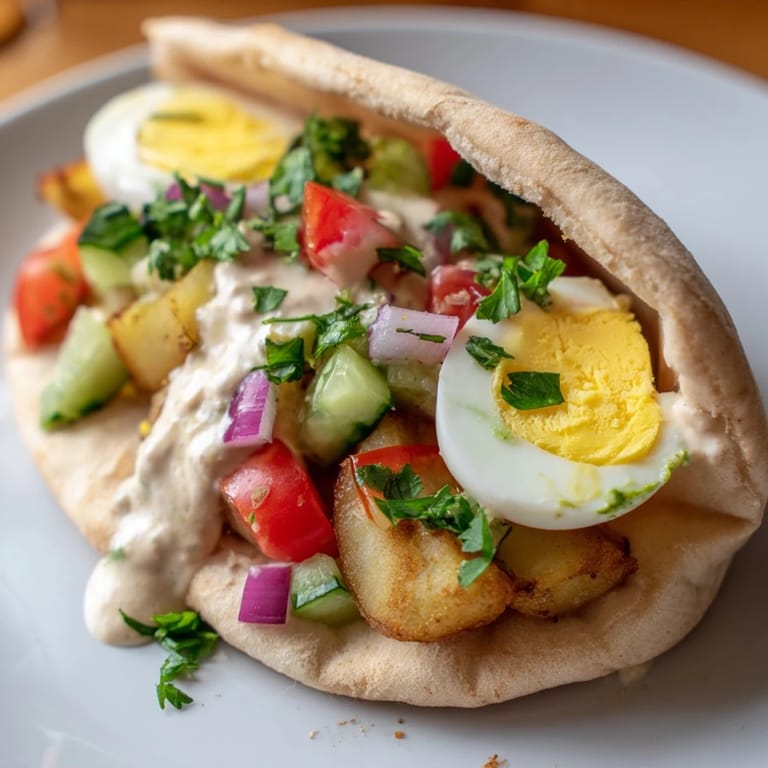
Pin When I make sabich now, I think about that vendor in Tel Aviv and how he made something so satisfying look effortless. The truth is it takes a little care and attention, but the reward is a meal that feels generous and complete on a single plate.
Recipe FAQ
- → How do I get crispy fried eggplant in Sabich?
Salt the eggplant slices for 15 minutes to draw out moisture, pat them dry, lightly dredge in flour, and fry in hot vegetable oil until golden and crisp.
- → What makes the Israeli salad fresh and vibrant?
The salad combines diced tomatoes, cucumber, red onion, fresh parsley, lemon juice, and olive oil, tossed together with salt and pepper for a bright, crisp flavor.
- → How is the tahini sauce prepared for this dish?
Whisk tahini paste with water, fresh lemon juice, minced garlic, and salt until smooth, adjusting water for desired thickness.
- → Can Sabich be made vegan?
Yes, by omitting the hard-boiled eggs or substituting them with tofu, you can enjoy a fully vegan version of this dish.
- → What traditional condiments can enhance Sabich flavors?
Adding amba (pickled mango sauce), sliced pickles, cilantro, or hot sauce provides tangy, spicy, and fresh layers to complement the fillings.