 Pin
Pin The first time I made shakshuka, I was standing in a cramped Tel Aviv kitchen on a Friday morning, watching my friend Noa crack eggs into a bubbling tomato sauce like it was the most natural thing in the world. She barely glanced at measurements, just knew by smell when the spices had cooked long enough, when the sauce had found its rhythm. I've made it countless times since, but there's still that moment of quiet satisfaction when I nestle those eggs into the red sauce and cover the pan, knowing something simple and profound is about to happen.
I remember bringing this to a Sunday dinner party once, arriving with the cast-iron still warm, the herbs bright green against the deep red sauce. My usually quiet neighbor tore into a piece of pita, soaked up that golden yolk, and just closed his eyes for a second. That's when I realized shakshuka isn't just food—it's one of those dishes that makes people slow down and actually taste what they're eating.
Ingredients
- Olive oil (2 tbsp): This is your foundation, so use something you'd actually want to eat. Good olive oil brings warmth and depth that budget versions just can't match.
- Yellow onion (1 medium, finely chopped): The sweetness matters here—red onions will work but taste a bit sharp by comparison.
- Red bell pepper (1, diced): Yellow or orange peppers add their own subtle sweetness; green ones taste grassy and won't give you the same gentle depth.
- Garlic (3 cloves, minced): Fresh garlic only—garlic powder will taste stale against the vibrant spices.
- Red chili (1 small, finely chopped): Fresh is better than dried here, and you control the heat by adjusting how much you add.
- Crushed tomatoes (1 can, 400g): San Marzano if you can find them, but any good quality canned tomato works—the acidity and sweetness balance matters.
- Fresh ripe tomatoes (2 medium, chopped): These add texture and a brightness that canned alone can't deliver; in winter, good quality canned is fine.
- Tomato paste (1 tsp): Just a small amount concentrates the flavor without making it taste overly tomatoey.
- Ground cumin (1 tsp): Toast it briefly in the pan before adding liquids to wake up its warmth.
- Sweet paprika (1 tsp): The sweet kind, not hot—it should be bright and almost fruity in aroma.
- Ground cayenne pepper (¼ tsp): Start here and add more if you want real heat; it sneaks up on you.
- Ground coriander (½ tsp): This adds a subtle citrusy note that ties everything together.
- Salt and black pepper: Taste as you go—you'll need more than you think to balance all those spices.
- Eggs (4 large): Room temperature is ideal, so they cook evenly without the whites getting rubbery while you wait for the yolks.
- Fresh parsley (2 tbsp, chopped): The herb that brings everything back to brightness.
- Fresh cilantro (2 tbsp, chopped): If you're not a cilantro person, use more parsley or even fresh dill instead.
- Feta cheese (crumbled, optional): The tangy saltiness against the soft yolk is magic, but it's genuinely optional.
Tired of Takeout? 🥡
Get 10 meals you can make faster than delivery arrives. Seriously.
One email. No spam. Unsubscribe anytime.
Instructions
- Heat your oil and build the base:
- Pour olive oil into a large skillet or cast-iron pan over medium heat. You want it to shimmer and smell warm, not smoke—this takes about a minute. If you're using cast iron, it'll retain heat beautifully and give you more even cooking.
- Soften the onion and pepper:
- Add your chopped onion and diced bell pepper, stirring every minute or so. You're looking for softness and a bit of color on the edges, which takes about 5 to 7 minutes. This is when the kitchen starts smelling incredible.
- Add the aromatics:
- Toss in your minced garlic and chopped chili, stirring constantly for just about a minute. You'll smell when it's right—that fragrant, slightly nutty aroma. Don't let it brown or it gets bitter.
- Build the sauce:
- Pour in the crushed tomatoes, add your fresh chopped tomatoes, and stir in the tomato paste. Mix everything together until the paste is dissolved and distributed. The color should be a deep, rich red.
- Season and simmer:
- Sprinkle in the cumin, paprika, cayenne if you're using it, and coriander. Add a pinch of salt and fresh black pepper. Stir well, then let it bubble gently for 10 to 12 minutes, stirring occasionally. You'll see the sauce thicken and deepen in color, and the flavors will meld into something complex and warming.
- Create the egg nests:
- Using the back of a spoon, make four small wells in the sauce, spacing them out so each egg has room. The wells should go down to the bottom of the pan so the eggs nestle properly.
- Crack and cover:
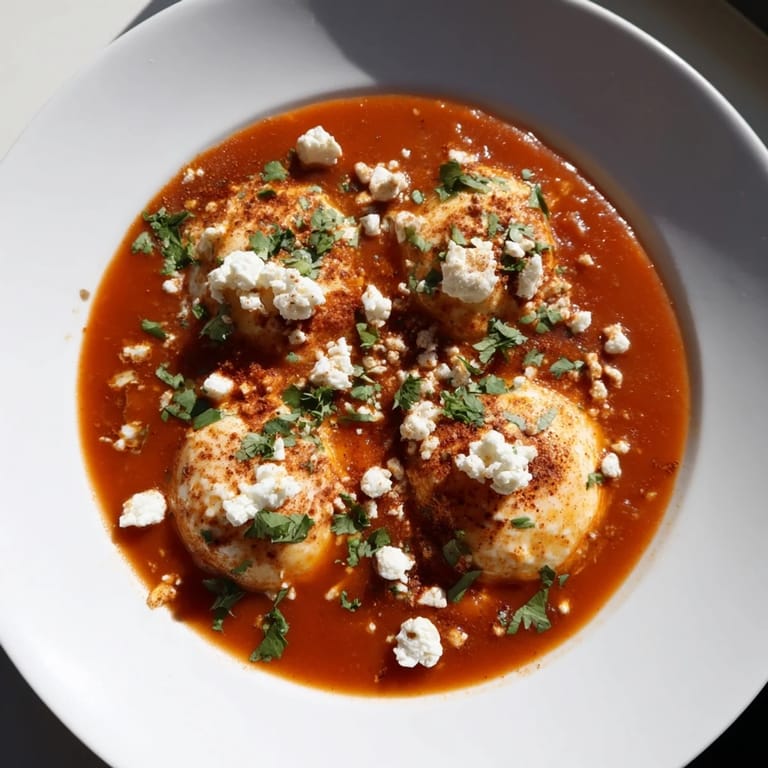
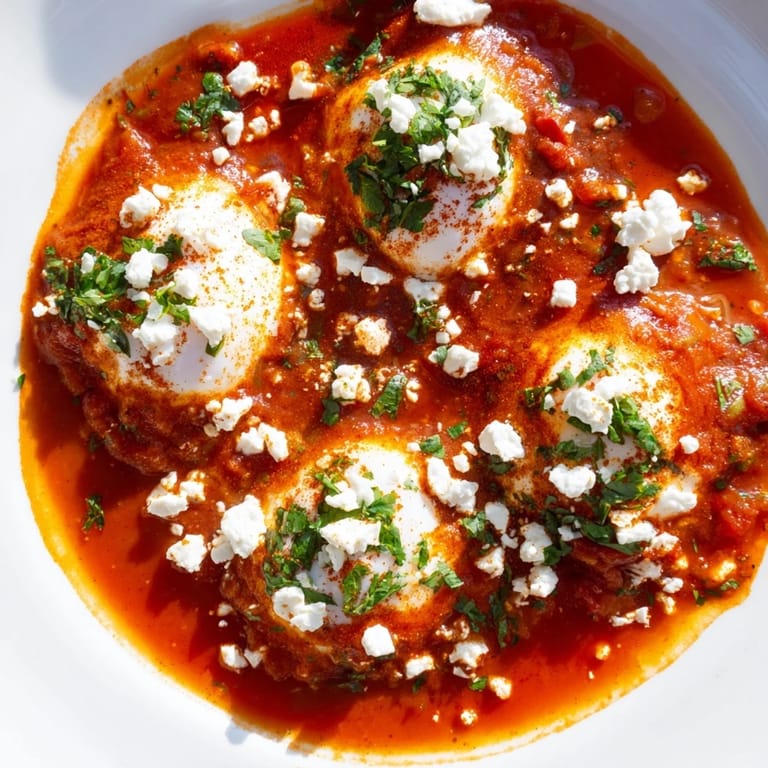
- Crack an egg into each well, keeping the yolks intact. Lower the heat to medium-low, cover the pan with a lid or even a piece of foil, and cook for 6 to 8 minutes. The whites should turn opaque and set while the yolks stay glossy and soft—this is the whole point.
- Finish with brightness:
- Remove from heat and scatter your fresh parsley and cilantro over everything. Add crumbled feta if you want that tang and creaminess. The heat from the pan will warm the herbs just enough to release their aromas without cooking them to nothing.
 Pin
Pin There was an evening when I made this for someone who said they didn't really like eggs, and halfway through watching them soak up that yolk with warm pita, something shifted. They stopped talking, just sat there eating slowly, and I realized shakshuka has this power to make you reconsider things you thought you already knew. It's humble but never boring.
What Makes This Dish Special
Shakshuka sits at this beautiful intersection of simplicity and sophistication. The spice blend isn't complicated—cumin, paprika, coriander—but they work together to create something that tastes way more complex than the ingredient list suggests. The eggs aren't just cooked; they're poached in a sauce that becomes almost part of them, warming and coating the yolk until you can't tell where one ends and the other begins. This is why it feels fancy enough for a brunch but easy enough for a tired weeknight when you want something good to eat.
Variations and Flexibility
I've made this with sautéed spinach stirred into the sauce, or roasted eggplant for earthiness, or even a handful of chickpeas for protein and texture. The sauce is forgiving enough that you can add what you have or what you're craving. Some versions use harissa for more heat, others add a splash of red wine for depth. The beauty of shakshuka is that it's a template, not a rigid rule—it invites you to play with it.
Serving and Pairing
Warm pita is the classic companion, but honestly, good crusty bread works just as well for soaking up that perfect runny yolk and spiced sauce. I've served it with labneh on the side—that thick, creamy yogurt cuts through the richness in the best way. Some people tear up soft cheese like ricotta and dollop it right into their bowl, turning it into something even more indulgent.
- If you want to meal-prep, make the sauce ahead and reheat it gently, then add the eggs fresh when you're ready to eat.
- Leftovers can be stored separately—keep the sauce in one container and eat the eggs fresh or reheat them gently, though they're best eaten the day you make them.
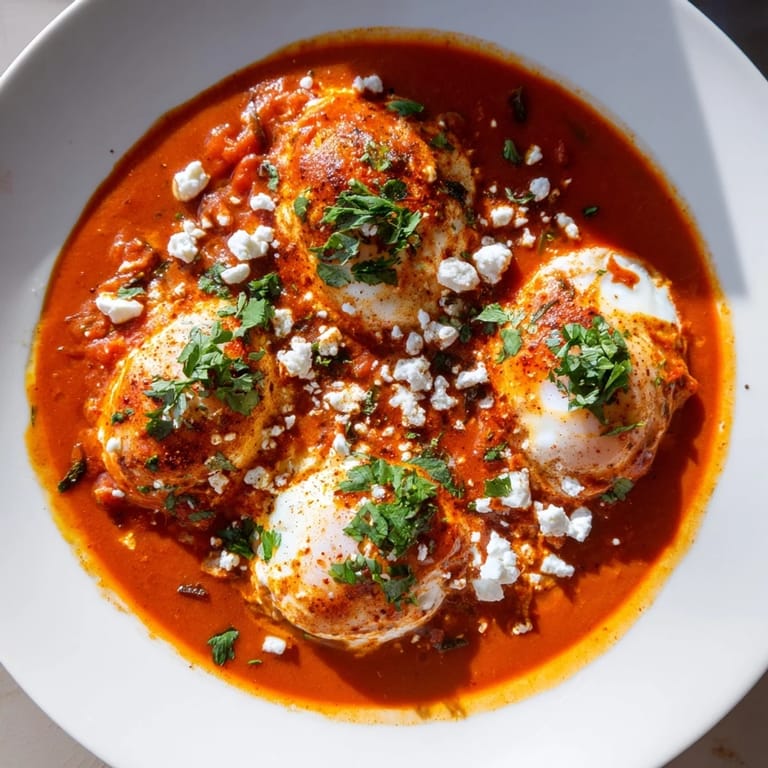
- This serves four as an appetizer or two hungry people as a full meal with bread and maybe some greens on the side.
 Pin
Pin Make this when you want to slow down, when you want people around your table to actually taste what they're eating. It's one of those dishes that tastes like care.
Recipe FAQ
- → What type of pan is best for cooking shakshuka?
A large skillet or cast-iron pan with a lid works best to allow even simmering and proper egg poaching.
- → How do I know when the eggs are perfectly cooked?
Cook until the egg whites are set but the yolks remain soft to maintain a creamy texture.
- → Can I adjust the spice level in the sauce?
Yes, modify amounts of red chili and cayenne pepper to suit your preferred heat level.
- → What sides pair well with this dish?
Warm pita bread, crusty loaf, labneh, or Greek yogurt complement the rich sauce and eggs beautifully.
- → Are there vegetarian or gluten-free considerations?
This dish is naturally vegetarian and gluten-free; just verify optional additions like feta cheese if dairy is a concern.