 Pin
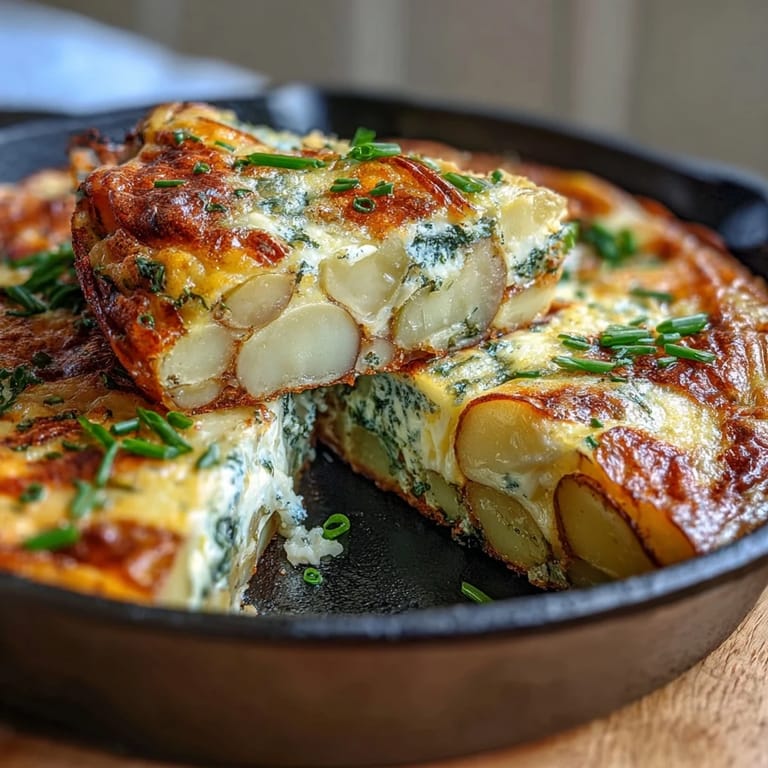
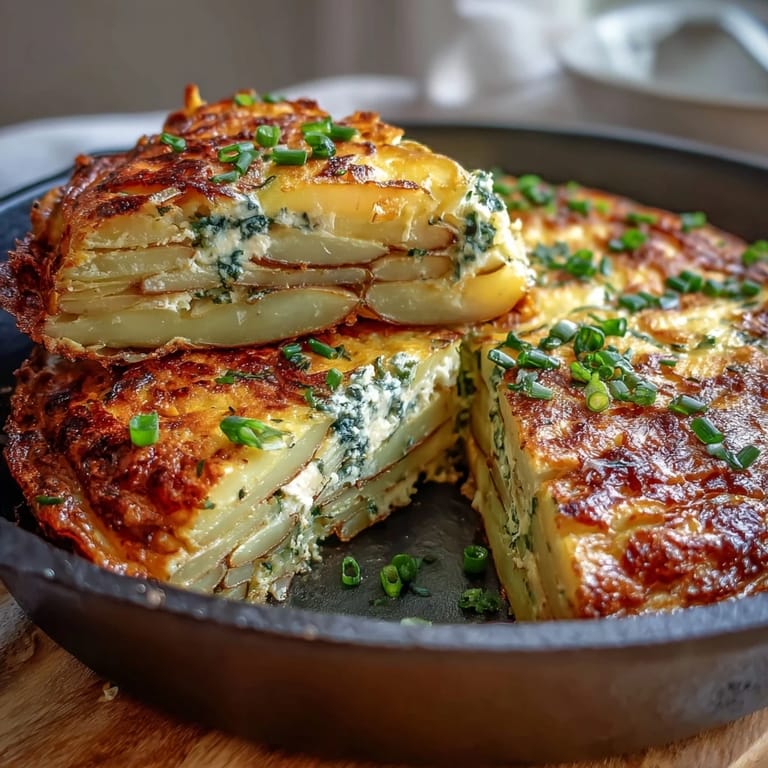
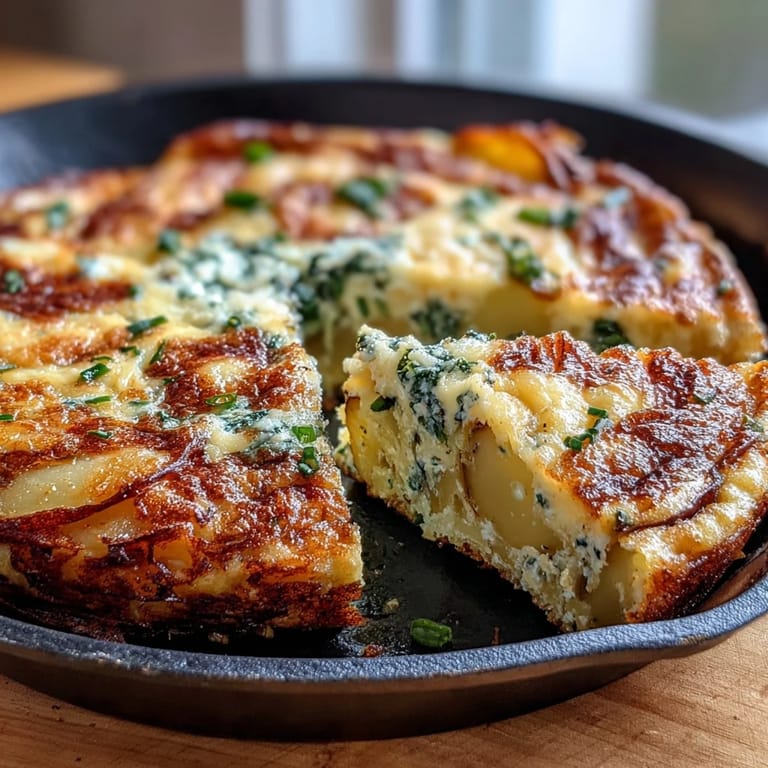
Pin My neighbor knocked on my door one Saturday morning with a basket of spring onions from her garden, insisting I do something creative with them before they wilted. I had potatoes in the pantry and eggs in the fridge, so I grabbed a skillet without much of a plan. What emerged from the oven was golden, puffy, and somehow elegant enough to feel intentional—a frittata that became my go-to when I wanted something nourishing but didn't want to fuss. That simple morning taught me that the best dishes often happen when you stop overthinking and just start cooking.
I once made this for a group of friends who'd stayed over unexpectedly, and watching them dig in while still warm, stretching melted cheese between their forks, made me realize food like this has a quiet power. It wasn't fancy or fussy, but somehow it felt generous and grounding at the same time.
Ingredients
- Waxy potatoes (300 g, about 2 medium): Slice them thin so they cook through before the eggs set; waxy varieties hold their shape better than starchy ones, keeping the frittata cohesive.
- Spring onions (4, finely sliced): Separate the white and green parts—the whites soften into the potatoes while the greens add fresh bite at the end.
- Mature Cheddar cheese (100 g, grated): Use something with real flavor; mild cheese disappears into the eggs, but mature Cheddar stays bold and present.
- Eggs (6 large): Room temperature eggs whisk more smoothly and cook more evenly, giving you that silky, just-set texture.
- Whole milk (60 ml): This keeps the frittata tender rather than dense; if you skip it, everything gets a touch rubbery.
- Olive oil (2 tbsp): Good quality matters here since it's not masked by heavy sauces.
- Salt and black pepper: Season the potatoes as they cook and then again in the eggs—it layers flavor in a way a single salt addition never does.
Tired of Takeout? 🥡
Get 10 meals you can make faster than delivery arrives. Seriously.
One email. No spam. Unsubscribe anytime.
Instructions
- Heat your oven and get your skillet ready:
- Preheat the oven to 190°C (375°F) and make sure you're using an ovenproof skillet—cast iron or a stainless steel handle works beautifully. You want the heat steady and predictable.
- Cook the potatoes until they're golden and tender:
- Pour olive oil into your skillet over medium heat, then add the thinly sliced potatoes with a pinch of salt. Stir occasionally for 8–10 minutes until the edges turn golden and a fork slides through easily; don't rush this step or you'll end up with watery centers.
- Soften the white parts of the spring onions:
- Once the potatoes are nearly done, scatter in the white sliced parts and cook for another 1–2 minutes until they're fragrant and just tender. You're building layers of flavor here.
- Whisk together your egg mixture:
- In a bowl, whisk the eggs with milk, salt, and pepper until completely combined and pale. Stir in half the grated Cheddar and all the green spring onion parts—this is where the brightness comes in.
- Combine everything in the skillet:
- Pour the egg mixture over the potatoes and gently stir to distribute everything evenly so no potato gets left behind. The whole skillet should look like a loose, veggie-studded custard.
- Top with the remaining cheese:
- Sprinkle the last of the Cheddar across the top—it'll melt into golden pockets as the frittata rises.
- Bake until puffed and set:
- Transfer to the oven for 12–15 minutes; the center should look just barely set, with a slight jiggle if you shake the skillet gently. Overbaking makes it dry, so watch carefully.
- Rest and serve:
- Let it cool for 5 minutes—this helps it hold together when you slice. Serve warm or even at room temperature; it's honestly just as good either way.
 Pin
Pin There's a moment when you pour the eggs over the potatoes and everything looks tentative and loose, like it might never come together. Then the oven does its quiet work, and ten minutes later you pull out something substantial and real.
Choosing Your Cheese Wisely
Mature Cheddar is my default because it brings a slight sharpness that doesn't fade, but I've learned that Gruyère makes everything taste like a French bistro, feta adds unexpected tanginess, and goat cheese creates a completely different personality. Each one changes the dish in ways worth exploring; there's no wrong choice, just different moods.
Why Ovenproof Skillet Matters
I once tried to transfer a frittata from a regular skillet to a baking dish, and it fell apart despite my careful efforts. Since then, I've learned that starting and finishing in the same ovenproof skillet keeps everything intact and means one less dish to wash. It also creates those golden, slightly crispy edges that make the first bite taste like you tried harder than you actually did.
Making It Your Own
The beauty of a frittata is that it welcomes additions without complaint. I've stirred in crumbled bacon, thin ribbons of smoked salmon, sautéed mushrooms, fresh herbs like dill or chives, or even roasted red peppers, and every version feels intentional rather than improvised.
- Layer in cooked vegetables or cured meats before you pour the eggs for depth.
- Add fresh herbs directly into the egg mixture so they're distributed throughout rather than just on top.
- If your skillet isn't ovenproof, finish the frittata under the broiler on high heat for 2–3 minutes, watching closely.
 Pin
Pin This frittata has become my quiet victory—something I can make without fuss that somehow always feels like I'm taking care of people. That neighbor still brings me spring onions every spring, and I always know exactly what I'm going to do with them.
Recipe FAQ
- → How do I make the potatoes tender without browning too much?
Cook the sliced potatoes over medium heat with olive oil and salt, stirring occasionally until just tender and lightly golden, about 8–10 minutes.
- → Can I use a different cheese instead of cheddar?
Yes, Gruyère, feta, or goat cheese are great alternatives that add unique flavors to the dish.
- → What is the best way to cook the spring onions in this dish?
Sauté the white parts briefly until softened, then stir the green parts into the egg mixture for freshness and color.
- → How should I serve this dish for best flavor?
Serve warm or at room temperature, paired with a simple salad and crusty bread for a complete meal.
- → Can I add extra ingredients for variety?
Yes, cooked bacon, smoked salmon, or sautéed mushrooms can be added for enhanced flavor.