 Pin
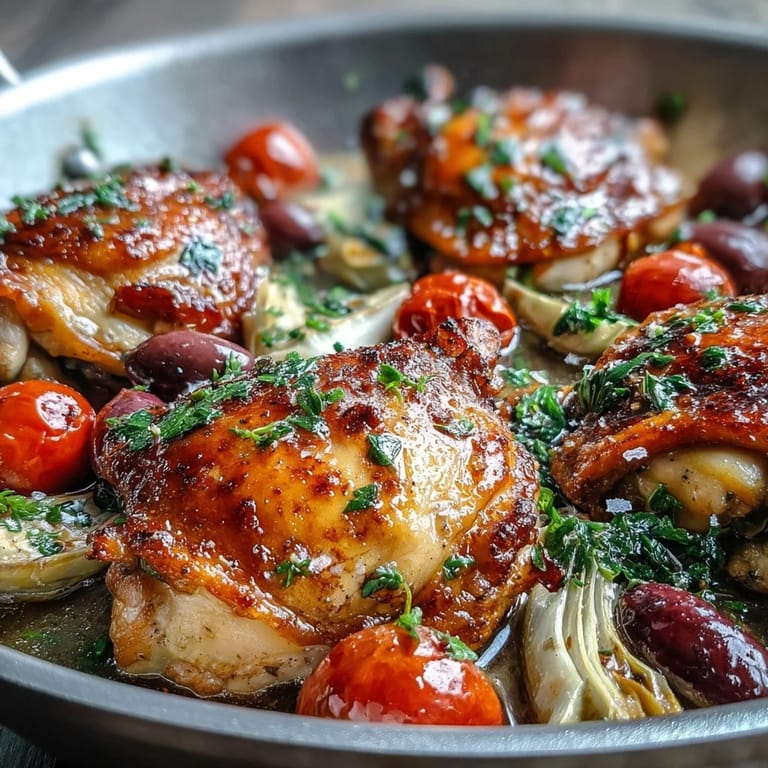
Pin There's something about the smell of chicken skin crisping in olive oil that makes me pause whatever I'm doing. Years ago, my neighbor knocked on the door mid-sear, drawn by the aroma, and we ended up cooking this together—turns out she had a can of artichokes in her pantry and suddenly we had dinner for six instead of two. That's when I realized this dish has a way of bringing people in, literally and figuratively.
My sister once made this on a random Tuesday when she was stressed about a work presentation, and she called me halfway through saying the kitchen smelled like vacation. By the time the chicken came out of the oven, she'd already forgotten what she was worried about. Food does that sometimes—it sneaks past your defenses when you're not looking.
Ingredients
- Bone-in, skin-on chicken thighs: Don't skip the bones and skin—they're not fancy, they're functional, keeping the meat tender while the skin goes golden and crispy under the broiler heat.
- Red onion and bell pepper: They soften just enough to lose their bite but keep their shape, creating little pockets of sweetness that balance the briny olives.
- Garlic cloves: Two is enough—more turns bitter as it roasts, but two meld into the oil like they belong there.
- Artichoke hearts: Canned works beautifully here because you want them tender enough to break apart with your spoon, not firm like fresh would be.
- Cherry tomatoes: Halved so they burst slightly in the heat, releasing juice that becomes part of your sauce without any thickener needed.
- Kalamata olives: These briny little gems are the secret weapon—they season everything around them, so resist the urge to add extra salt.
- Extra virgin olive oil: This is where quality matters because it's not cooked long—use something you'd actually taste straight from a spoon.
- Dried oregano, thyme, and smoked paprika: The oregano and thyme do the heavy lifting for Mediterranean flavor, while the paprika adds a whisper of smokiness that makes people ask what your secret ingredient is.
- Chicken broth: Low-sodium lets you control the salt story—the olives are already salty enough.
- Lemon zest and juice: The zest goes on top at the end so it stays bright and punchy, while the juice mingles with everything below, tying it all together.
- Fresh parsley: A handful, chopped just before serving, because dried parsley is mostly regret.
Tired of Takeout? 🥡
Get 10 meals you can make faster than delivery arrives. Seriously.
One email. No spam. Unsubscribe anytime.
Instructions
- Get your oven ready and season the star:
- Preheat to 400°F and pat your chicken thighs completely dry with paper towels—this is the move that gets you golden skin, not steamed skin. Season both sides generously with salt, pepper, oregano, thyme, and paprika, letting the seasonings stick to the slightly damp surface.
- Sear the chicken until it's gorgeously browned:
- Heat olive oil in your large ovenproof skillet over medium-high heat until it shimmers. Place chicken skin-side down and listen for that immediate sizzle—you want it loud. Let it sit undisturbed for 4 to 5 minutes, resisting the urge to fuss, then flip and cook the other side for 2 minutes. Transfer to a plate.
- Build your flavor base:
- In the same skillet, toss in your sliced red onion, bell pepper, and minced garlic. Sauté for 2 to 3 minutes, scraping up those golden-brown bits stuck to the bottom—that's where all the flavor lives. You want everything just softened, not mushy.
- Add the Mediterranean ensemble:
- Stir in the drained artichoke hearts, halved cherry tomatoes, and Kalamata olives. Cook for 2 minutes, just enough to warm them through and let everything get acquainted.
- Create your sauce:
- Pour in the chicken broth and lemon juice, scraping the pan bottom one more time. The liquid should look abundant but not swimming—you're creating a light sauce, not a stew.
- Reunite the chicken with everything:
- Nestle the chicken thighs back in, skin-side up, and scatter the lemon zest over the top. The skin should peek above the surface so it can stay crispy in the oven.
- Let the oven do the work:
- Transfer the whole skillet to your preheated oven and bake for 25 minutes, until the chicken reaches 165°F at the thickest part of the thigh. You'll know it's ready when the skin looks deeply golden and pulls away from the meat slightly.
- Finish with fresh brightness:
- Pull from the oven, scatter fresh parsley over everything, and let it rest for a minute while you gather plates and maybe grab some crusty bread for soaking up the pan juices.
 Pin
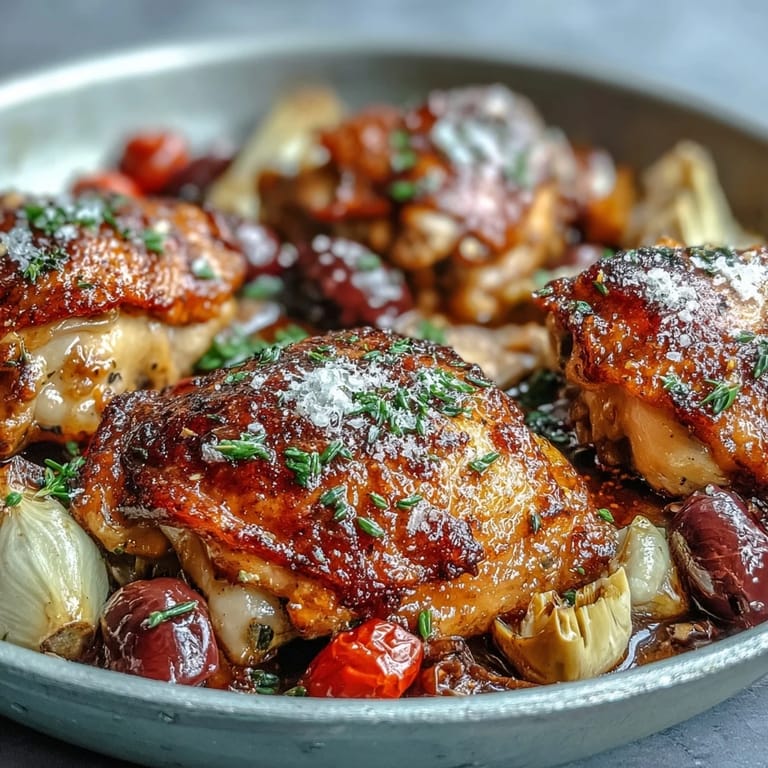
Pin I made this for my daughter's friend who said she doesn't like chicken, and she came back three days in a row hoping we were making it again. Sometimes it's not about the ingredient—it's about how you treat it.
Why One Skillet Changes Everything
The magic isn't just about fewer dishes, though that's genuinely wonderful on a weeknight. When everything cooks together in one pan, the flavors knit themselves together in ways they never could separately. The chicken fat seasons the vegetables, the tomatoes break down into the broth, the olives whisper saltiness to every corner. By the time you plate it, it feels like a unified dish instead of chicken plus stuff.
Swaps and Flexibility
I've made this with boneless chicken breasts when that's what was in the freezer, and honestly, it works—you'll just cook it 5 to 7 minutes less and watch more carefully so it doesn't dry out. I've also thrown in capers when I had them, added a pinch of red chili flakes because I was feeling it that day, and once swapped half the olives for sun-dried tomatoes because a friend had them. The framework is solid enough to handle your tweaks and preferences.
The Bread Question
Serve this with something to soak up the pan sauce—crusty bread, couscous, or roasted potatoes all work beautifully. My favorite pairing is honestly just warm bread because you get to be a little messy, wiping the plate clean and not feeling bad about it. That sauce is too good to leave behind.
- A squeeze of extra lemon just before eating brightens everything and makes it feel even more Mediterranean.
- Leftovers reheat gently in a 300°F oven, covered, so the skin doesn't turn rubbery.
- Make this on Sunday and you've got lunch components ready for the rest of the week.
 Pin
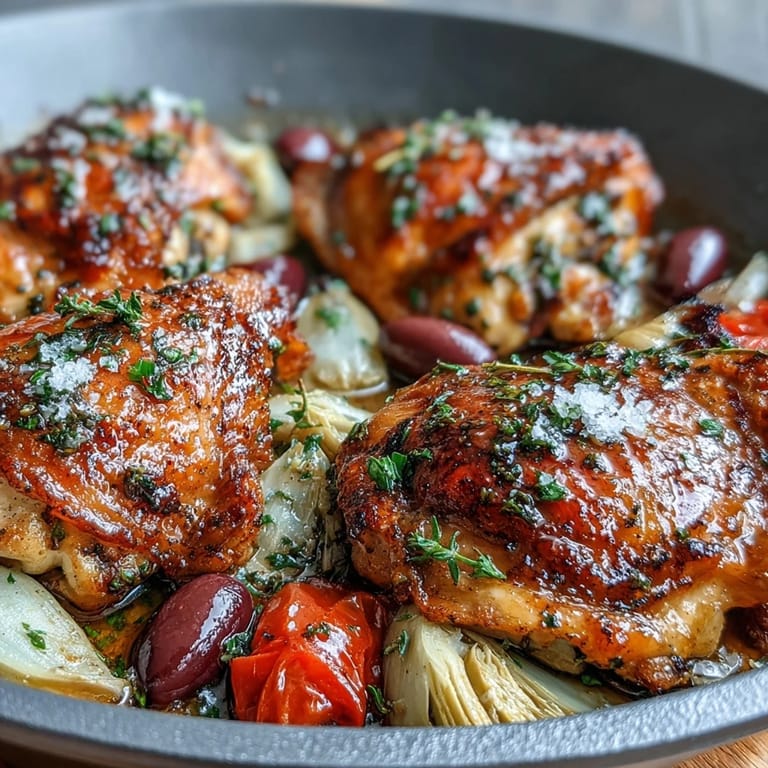
Pin This dish taught me that weeknight cooking doesn't have to feel rushed or forgettable—sometimes the simplest things, done with attention, become the meals people remember. That's worth the small effort it takes.
Recipe FAQ
- → Can I use boneless chicken breasts instead of thighs?
Yes, boneless skinless chicken breasts work well in this dish. Reduce the baking time by 5-7 minutes since breasts cook faster than thighs. The internal temperature should still reach 165°F for safe consumption.
- → What can I substitute for Kalamata olives?
You can use other briny olives like black olives, green olives, or Niçoise olives. Capers also work beautifully for a similar briny element without the olive texture.
- → How do I store and reheat leftovers?
Store leftovers in an airtight container in the refrigerator for up to 3 days. Reheat gently in a 350°F oven for 10-15 minutes or microwave until heated through. The flavors often develop even more overnight.
- → Can I freeze this Mediterranean chicken?
Yes, this dish freezes well. Cool completely, then transfer to freezer-safe containers for up to 3 months. Thaw overnight in the refrigerator before reheating. The texture may soften slightly but the flavor remains excellent.
- → What sides pair well with this dish?
Crusty bread for soaking up the pan juices, fluffy couscous, roasted potatoes, or simple quinoa all complement the Mediterranean flavors. A crisp green salad with lemon vinaigrette balances the rich chicken beautifully.
- → Can I make this dairy-free?
This dish is naturally dairy-free as written, using only olive oil for fat and no cheese or cream. It's also gluten-free, making it suitable for various dietary needs.