 Pin
Pin The first time I made kabsa, my hands were shaking a little as I opened the container of loomi my neighbor had brought back from Riyadh. She'd pressed it into my palms and said, "You'll know when it's right," which terrified me in the best way. That black lime, pierced and waiting, somehow held the promise of an entire cuisine I was about to unlock. What started as an attempt to recreate a dinner I'd had years ago became something more—a ritual of layering spices, watching meat turn golden, and learning that good food isn't about perfection; it's about showing up with intention.
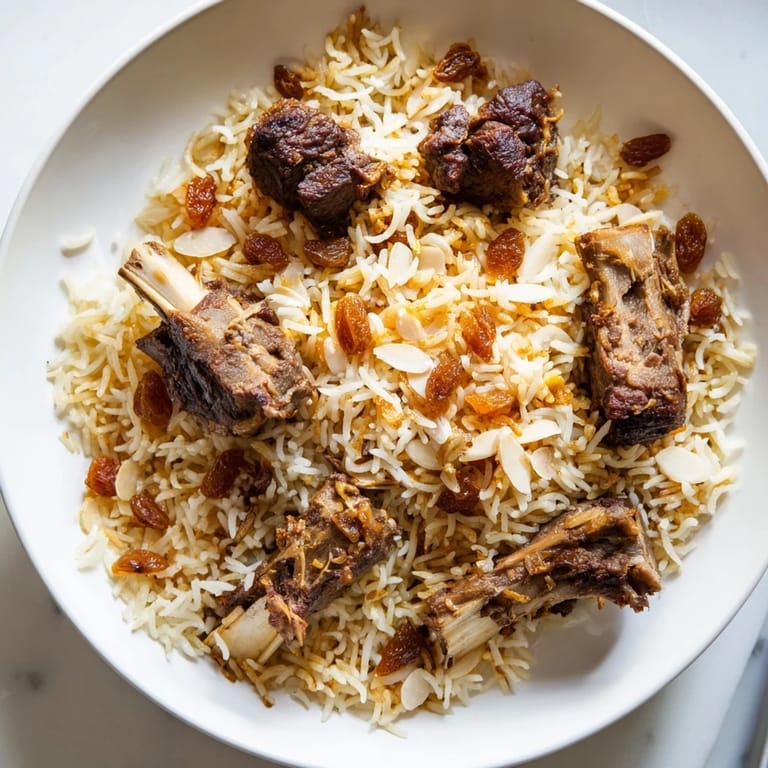
I made this for my sister's engagement dinner, and I remember being terrified that the timing would fall apart. But as the rice absorbed the spiced broth and the kitchen filled with that unmistakable cardamom-and-cinnamon cloud, even my skeptical brother-in-law came to hover by the stove. When I plated it and those toasted almonds caught the light, my mom squeezed my hand and whispered, "This is perfect." It was the first time I truly felt like I'd cooked something that mattered.
Ingredients
- Bone-in lamb or chicken pieces (1 kg): The bones release collagen into the broth, creating a silky mouthfeel that boneless meat never quite achieves; if using chicken, it'll cook faster, so watch the timing carefully.
- Vegetable oil (1 tbsp): Just enough to build flavor without heaviness; ghee is traditional and absolutely worth it if you have it.
- Large onion, finely sliced (1): This forms the flavor base—don't rush it, let it turn a deep caramel gold for maximum sweetness.
- Garlic, minced (3 cloves): A quick minute of cooking blooms the flavor so it doesn't taste raw or sharp.
- Ground cumin (2 tsp): The earthy backbone; too little and the dish loses its soul.
- Ground coriander (2 tsp): Brings brightness and a subtle citrus note that keeps everything from feeling too heavy.
- Ground cinnamon (1½ tsp): The secret ingredient that makes people pause and ask what they're tasting.
- Ground black pepper (1½ tsp): Use fresh pepper if possible; pre-ground loses its bite quickly.
- Ground turmeric (1 tsp): Adds warmth and a deep golden hue to the finished rice.
- Ground cardamom (1 tsp): Use a spice grinder on whole pods if you can; the difference is remarkable.
- Ground cloves (½ tsp): A whisper is enough; cloves can easily overpower everything else.
- Ground allspice (½ tsp): Rounds out the spice blend with a subtle warmth.
- Dried bay leaves (2): Remember to remove these before serving—I learned that the hard way.
- Dried black lime or loomi, pierced (1): This is optional but honestly, it's where the magic lives; order it online if your store doesn't carry it.
- Medium tomatoes, chopped (2): They break down and create body in the sauce, adding natural acidity and sweetness.
- Medium carrot, grated (1): Grating it means it dissolves into the broth, adding subtle sweetness without chunks.
- Basmati rice, rinsed and soaked (3 cups): Rinsing removes excess starch so the grains stay separate; soaking helps them cook evenly and taste less starchy.
- Chicken or lamb stock (5 cups): Homemade is best, but good quality store-bought works; avoid bouillon cubes if you can.
- Golden raisins (½ cup): They plump up and add pockets of sweetness throughout; regular raisins work but taste less delicate.
- Slivered almonds, toasted (½ cup): Toast them yourself in a dry pan for 2–3 minutes until fragrant; it makes an enormous difference.
- Fresh parsley, chopped (¼ cup, optional): A bright finishing touch that cuts through the richness and adds color.
- Salt, to taste: Taste as you go; the stock might already be salted, so adjust carefully.
Tired of Takeout? 🥡
Get 10 meals you can make faster than delivery arrives. Seriously.
One email. No spam. Unsubscribe anytime.
Instructions
- Get your mise en place ready:
- Slice your onion, mince the garlic, chop the tomatoes, grate the carrot, and measure out all your spices into a small bowl so you're not scrambling once the heat is on. Rinse your rice and soak it for 20 minutes while you do everything else.
- Build your flavor base with onion:
- Heat oil in your heavy pot over medium-high heat, then add the sliced onion. Let it cook undisturbed for a few minutes until the bottom layer starts to caramelize, then stir and repeat. You're aiming for a deep golden color, about 8–10 minutes total—this is where the dish's sweetness comes from.
- Add garlic and bloom it quickly:
- Once the onion hits that golden stage, add minced garlic and let it cook for exactly one minute, stirring constantly. You want it fragrant, not brown.
- Brown the meat on all sides:
- Increase heat slightly and add your meat pieces, spreading them out so they touch the bottom of the pot. Don't move them for a minute or two—you want that gorgeous crust to develop. Turn and repeat until all sides are golden and caramelized, about 8 minutes total.
- Toast the spices and aromatics:
- Pour in your spice blend along with bay leaves and the pierced loomi. Stir constantly for 1–2 minutes; you'll smell the spices wake up and transform from raw to toasted and fragrant. This matters—don't skip it.
- Add tomatoes and carrot, then simmer:
- Stir in chopped tomatoes and grated carrot. Let everything bubble together for 4–5 minutes, then pour in your stock. Bring to a rolling boil, then reduce heat to low, cover, and simmer gently. If you're using chicken, it'll be tender in 35–40 minutes; lamb needs closer to 60 minutes.
- Remove meat and prepare the rice:
- Once the meat is falling-off-the-bone tender, carefully lift it out and set it on a plate to stay warm. Stir the soaked rice and salt into the hot broth, then nestle the meat back into the rice.
- Add sweetness and finish cooking:
- Scatter the raisins over the top, cover the pot, and lower the heat as much as it will go. Cook for 25–30 minutes until the rice is fluffy and all the liquid has been absorbed. You'll know it's done when you don't hear any bubbling from under the lid.
- Finish with brightness and crunch:
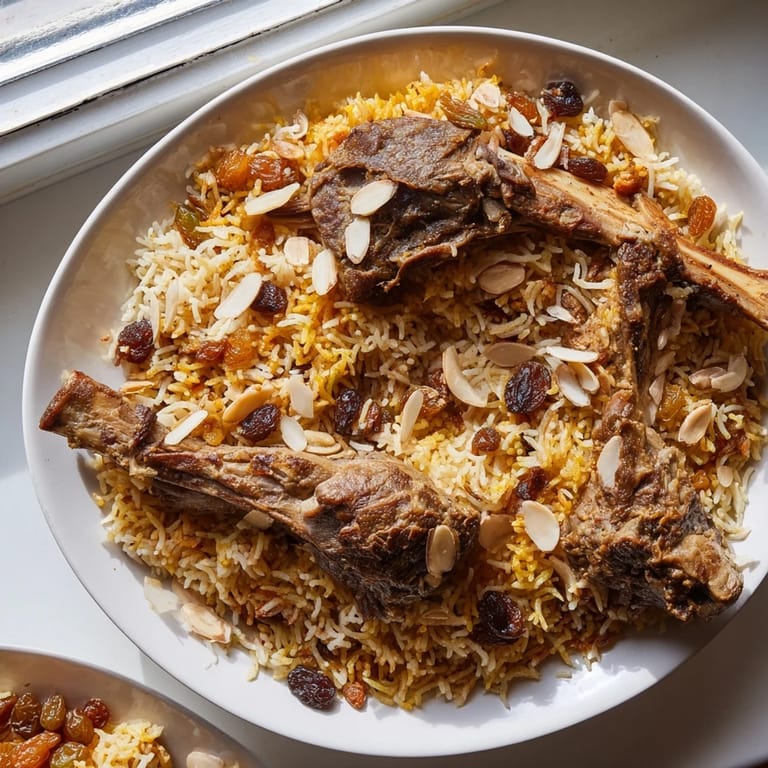
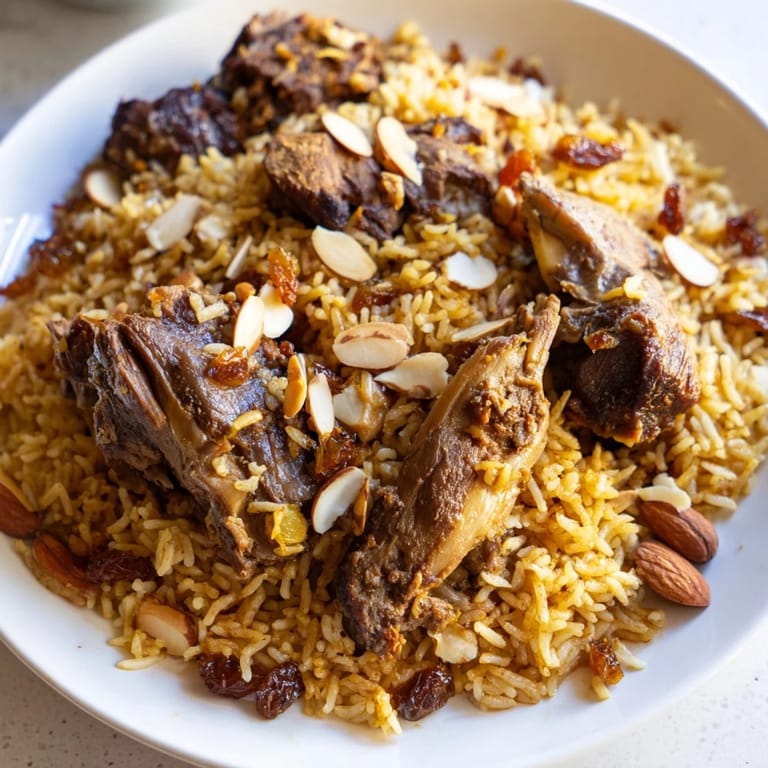
- Discard the bay leaves and loomi, gently fluff the rice with a fork to separate the grains. Transfer everything to a serving platter and scatter toasted almonds and fresh parsley over the top.
 Pin
Pin The moment that changed everything was when my friend Fatima tasted it and just closed her eyes. She didn't say anything for a few seconds, and then she smiled and said, "You got it." That's when I realized kabsa isn't just about feeding people—it's about creating a moment where everyone at the table feels like they're part of something bigger, something that connects them to a place and a people.
The Magic of Loomi
That dried black lime is optional in the way that salt is optional—technically true, but it changes everything. It adds a subtle bitterness and earthiness that you can't replicate with lemon or lime juice; the flavor is deeper, more muted, like it's been concentrated by time. If you can't find loomi at your local Middle Eastern market, order it online—it costs almost nothing and keeps forever in your spice cabinet. Once you understand what it does, you'll start adding it to other rice dishes and stews.
Meat Selection and Timing
Lamb is traditional and worth it for the richer, more luxurious flavor, but chicken is lighter and works beautifully if that's what you prefer. The real decision is cooking time: chicken pieces will be done in 35–40 minutes, while lamb needs a full hour. Beef falls somewhere in the middle. The bone matters because it releases gelatin into the broth, creating that silky texture that makes the whole dish feel special rather than just good.
Beyond the Basics
Kabsa is generous and forgiving—it's meant to be the centerpiece of a meal, often served with a bright tomato-cucumber salad and cool yogurt on the side to balance the warmth of the spices. Some families add a drizzle of ghee over the top before serving, and others scatter toasted pine nuts instead of almonds. The foundation is sacred, but the flourishes are yours to play with.
- Toast whole spices in a dry pan before grinding them if you want the deepest flavor possible.
- If your rice still has some broth pooling at the bottom after cooking, uncover and cook for another 5 minutes over slightly higher heat.
- Make extra—it reheats beautifully and tastes even better the next day.
 Pin
Pin This dish is about more than rice and meat; it's an invitation to slow down and cook intentionally. Make it for people you want to feed well.
Recipe FAQ
- → What type of meat works best for Saudi Kabsa?
Bone-in lamb or chicken pieces are ideal, providing tender, flavorful results when simmered slowly.
- → How do the spices influence the dish?
Aromatic spices like cumin, coriander, cinnamon, and cardamom create a warm, fragrant base that defines the dish's distinctive flavor.
- → What is the purpose of the dried black lime (loomi)?
Loomi adds a subtle tangy and earthy depth to the broth, enhancing the overall aroma, but it’s optional if unavailable.
- → How should the rice be prepared before cooking?
Rinse and soak basmati rice for about 20 minutes to remove excess starch and ensure fluffy, separate grains.
- → What garnishes complement Saudi Kabsa well?
Toasted slivered almonds and golden raisins provide sweetness and crunch, while fresh parsley adds a bright finish.