 Pin
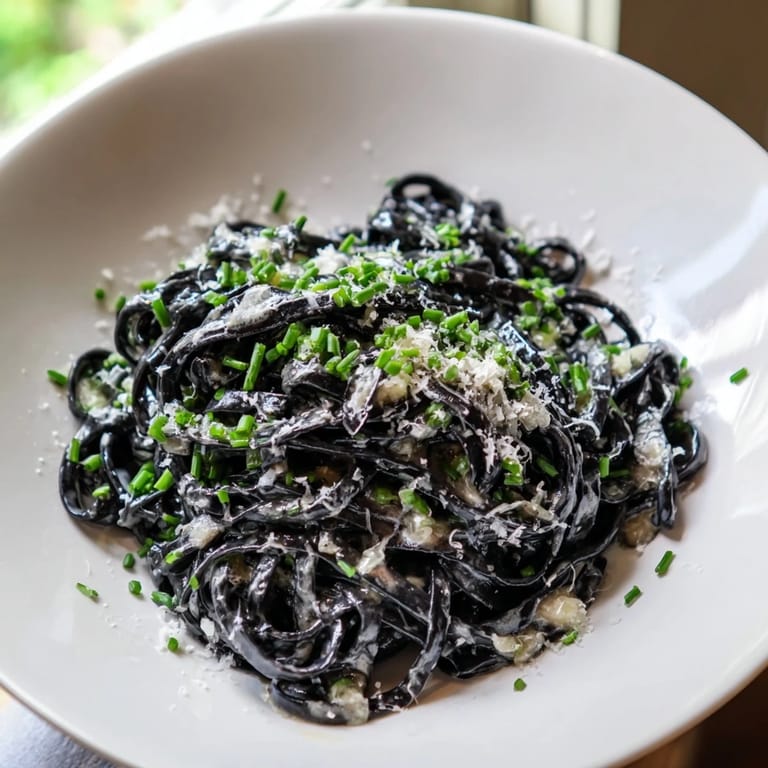
Pin There was this dinner party where everything felt slightly off—the wine was corked, the appetizers were underwhelming—until I decided to gamble on something dramatic. A box of squid ink pasta had been sitting in my pantry for months, waiting for the right moment. I melted butter, added garlic and a good splash of white wine, then poured in cream and watched it transform into this silky, obsidian sauce that looked like something from a fancy restaurant. The moment I plated it, the whole evening shifted. People stopped mid-conversation to ask what it was.
I learned this particular technique from watching a friend who grew up in Liguria make pasta one afternoon. She wasn't precious about it—just moved with this unhurried confidence, tasting as she went, adjusting the salt without measuring. When I finally tried making it myself, I kept waiting for something to go wrong, but the formula is actually forgiving once you understand that the pasta water is your secret weapon. That day, I made it for someone I was trying to impress, and they asked for the recipe twice before leaving.
Ingredients
- Squid ink pasta (400g): The star ingredient that gives this dish its striking black color and subtle briny depth; buy dried or fresh depending on what your market has, though fresh will cook slightly faster and taste more delicate.
- Unsalted butter (2 tablespoons): This is your foundation—use real butter, not margarine, because it emulsifies the sauce and gives it that silky texture you're after.
- Shallot (1 small, finely chopped): More subtle than onion and worth the extra care to mince it small so it melts into the sauce instead of leaving chunks.
- Garlic (2 cloves, minced): Don't skip this step or use garlic powder; fresh garlic blooms when you cook it in butter and transforms the entire flavor profile.
- Dry white wine (150 ml): The alcohol burns off but leaves behind acidity and complexity that makes the cream taste more interesting; Pinot Grigio or Sauvignon Blanc both work beautifully.
- Heavy cream (250 ml): Use real heavy cream, not whipped or ultra-pasteurized if you can find it, because it actually thickens and creates body instead of just adding fat.
- Lemon zest (1 teaspoon): This bright note cuts through the richness and prevents the dish from tasting heavy or monotonous.
- Salt and freshly ground black pepper: Always taste as you season; the squid ink pasta itself is already slightly salty, so go easy at first.
- Parmigiano-Reggiano (50g, grated): Grate it fresh just before serving because pre-grated cheese has additives that make it gritty and won't melt smoothly into the warm pasta.
- Chives (1 tablespoon, finely chopped): A whisper of onion flavor and bright green color that looks beautiful scattered on top; fresh parsley works if you don't have chives on hand.
Tired of Takeout? 🥡
Get 10 meals you can make faster than delivery arrives. Seriously.
One email. No spam. Unsubscribe anytime.
Instructions
- Start the water and get organized:
- Fill a large pot with salted water—enough to let the pasta swim freely—and bring it to a rolling boil. While you wait, set out all your ingredients because once you start the sauce, things move quickly and you don't want to be hunting for things.
- Cook the pasta to al dente:
- Add the squid ink pasta and cook according to package directions, usually around 8–10 minutes. You're looking for it to still have a slight resistance when you bite it, not soft all the way through. Right before you drain it, scoop out about half a cup of that starchy cooking water and set it aside—this is liquid gold for adjusting your sauce consistency.
- Build the flavor base:
- In a large skillet over medium heat, melt the butter until it's foaming but not browning. Add your minced shallot and let it soften and turn translucent, about 2–3 minutes; you'll smell the sweetness coming out of it. Quickly add the garlic and cook just until you can smell it, maybe 30 seconds, being careful not to let it brown or it will taste bitter.
- Add brightness with wine:
- Pour in the white wine and let it bubble for 2–3 minutes. You're simmering away the raw alcohol taste and letting the liquid reduce slightly, concentrating all that tangy flavor. Tilt the pan and smell—when the harsh wine smell fades and you get something more mellow, you're ready for the next step.
- Create the silky sauce:
- Lower the heat to medium-low and slowly pour in the heavy cream, stirring gently. Add your lemon zest and let everything warm through for about 2–3 minutes, stirring occasionally until the sauce thickens just slightly and coats the back of a spoon. Taste and season with salt and pepper—remember, you can always add more but you can't take it back.
- Bring it all together:
- Add the drained pasta to the skillet and toss everything until the pasta is completely coated in that glossy, dark cream. If the sauce looks too thick or clumpy, add a tablespoon or two of that reserved pasta water and keep tossing until it looks silky and luxurious again.
- Plate and serve right away:
- Divide the pasta among warm bowls and top each one with freshly grated Parmigiano-Reggiano and a scatter of chives. If you like, squeeze a small wedge of lemon over the top for extra brightness, but taste it first to make sure it needs it.
 Pin
Pin I made this once for someone's birthday dinner when everything else had fallen through—no reservations, no backup plans. By the time they took the first bite and looked up with actual surprise on their face, I realized that sometimes the simplest act of cooking something that takes real attention feels like a gift in itself. It's become the dish I make when I want someone to know I was thinking about them while I cooked.
Why Black Matters Here
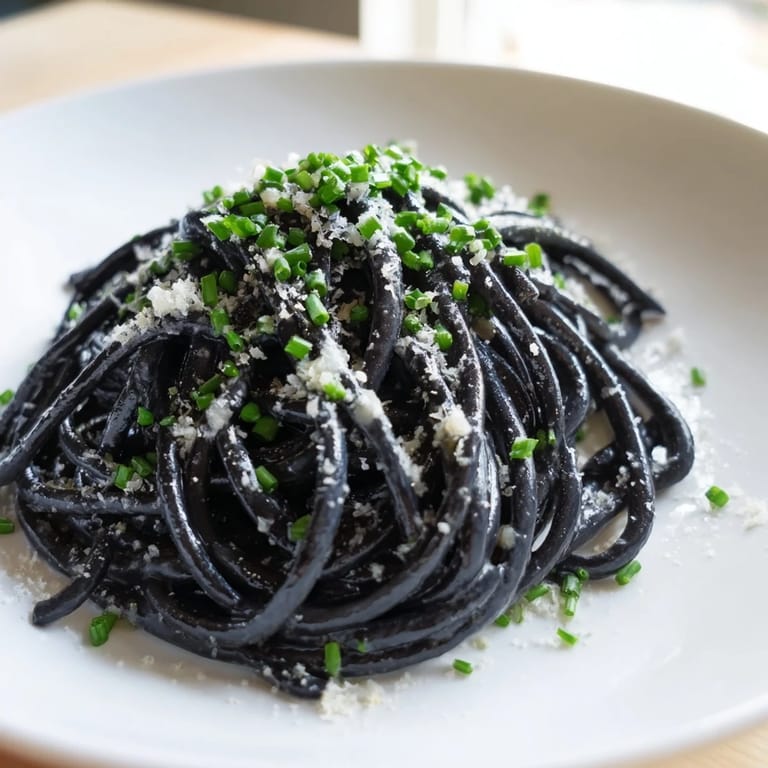
The visual drama of squid ink pasta isn't just for show—it actually signals to your guests that something interesting is happening. The black absorbs light in a way that makes the cream sauce look even more luxurious and silky by contrast. I've noticed that plating matters more with this dish than with most others; a simple white bowl transforms it into something that looks almost architectural.
The Wine Question
Cooking wine and drinking wine are not the same thing, but what you choose to cook with matters more than the bottle cost. A crisp, dry white wine lifts the whole dish, while a sweet or oaky wine will make the sauce taste muddy. I've made this with Pinot Grigio, Sauvignon Blanc, and even a simple dry prosecco, and all three worked beautifully. If you don't drink alcohol, use a splash of vegetable broth mixed with a teaspoon of lemon juice instead; you'll lose some complexity but the sauce will still be delicious.
Variations and Additions
This sauce is a canvas, and once you understand how it works, you can build on it. Some nights I add a handful of small shrimp or diced calamari, cooking them quickly in the butter before the shallots so they're tender and sweet. Other times I stir in a small handful of fresh spinach or peas at the very end for color and something to chew on. The beauty is that nothing fights with the squid ink flavor—it's dark and deep enough to hold its own against almost any addition you want to make, turning a simple pasta dinner into something that feels a little more personal and intentional.
- Try adding sautéed shrimp, calamari, or diced scallops for a more luxurious seafood version.
- A handful of fresh spinach or early peas stirred in at the end adds color and texture without overwhelming the sauce.
- If you want to go richer, add a small splash of dry sherry or a touch of mascarpone right before serving.
 Pin
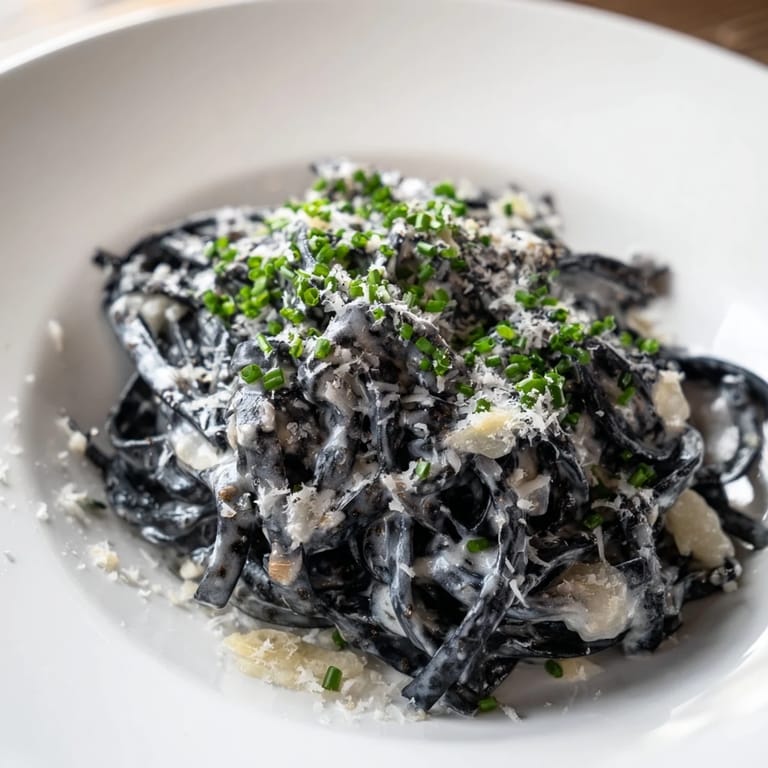
Pin This is the kind of dish that reminds you why home cooking matters. It looks dramatic enough to feel celebratory, but it's simple enough that once you've made it once, you'll keep coming back to it.
Recipe FAQ
- → How do I cook squid ink pasta properly?
Bring salted water to a boil and cook the pasta until al dente, following package instructions. Reserve some cooking water for adjusting sauce consistency.
- → What adds creaminess to the sauce?
Heavy cream combined with butter creates a smooth, rich texture that coats the pasta beautifully.
- → Can I substitute ingredients in the sauce?
Yes, fresh parsley can replace chives for garnish, and sautéed seafood like shrimp can be added for extra flavor.
- → How should the sauce consistency be adjusted?
If too thick, add reserved pasta cooking water a tablespoon at a time until it reaches a silky, glossy finish.
- → What wine pairs best with this dish?
A crisp Italian white wine like Pinot Grigio complements the creamy, briny flavors well.