 Pin
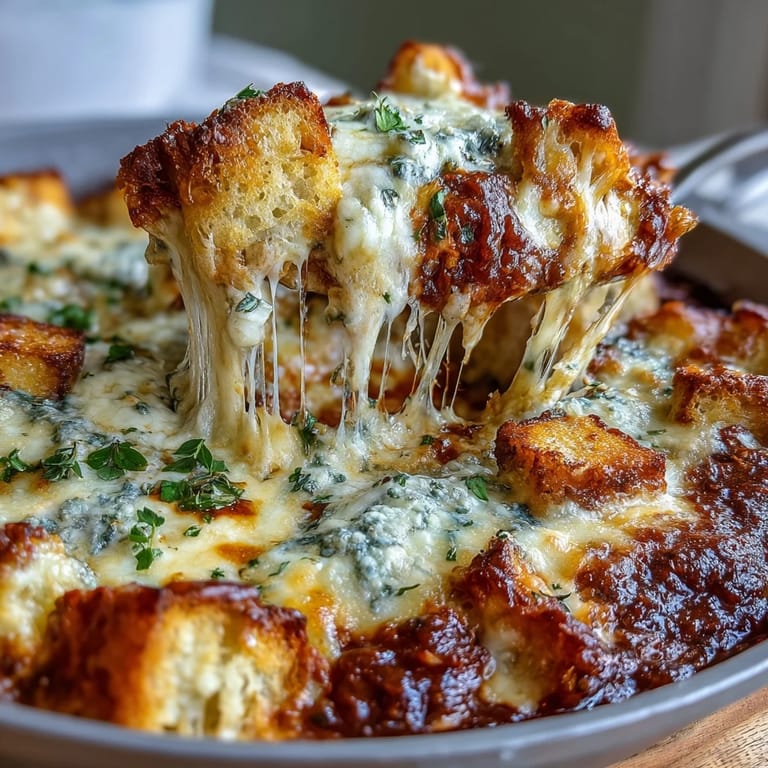
Pin My cast-iron skillet sat on the counter one Sunday afternoon, and I found myself staring at a half-empty jar of marinara and leftover baguette from the farmers market. What if I stopped treating lasagna like it needed a baking dish? The idea hit me suddenly: layer everything right there in the skillet, toast those bread cubes with garlic butter, and let it all meld into something that tasted like both comfort foods at once. The first time I pulled it out of the oven, the cheese was bubbling at the edges and the kitchen smelled like garlic, herbs, and melted mozzarella colliding in the best way possible.
I made this for friends who showed up unannounced on a chilly October evening, armed with a bottle of wine and zero expectations. When I set that sizzling skillet down on the table, everyone went quiet for a moment. Someone said it looked like garlic bread and lasagna had merged in the best possible way, and honestly, that's exactly what happened. We ended up talking until midnight, scraping the last bits of cheese from the corners of the pan.
Ingredients
- 1 large baguette or Italian loaf, cut into 2-inch cubes: This is your structure and texture—the bread should be sturdy enough to hold the sauce without dissolving, so day-old bread works beautifully.
- 4 tbsp unsalted butter, melted: Butter browns better than oil and gives those bread cubes a golden, almost toasted quality that makes people pause before taking the first bite.
- 3 cloves garlic, minced (for the bread): Fresh garlic scattered through melted butter transforms simple bread into something that smells like an Italian bakery.
- 2 tbsp fresh parsley, chopped: This adds a green brightness that cuts through the richness—don't skip it or use dried unless you absolutely must.
- 1/4 tsp salt: Just enough to wake up the flavors without making anyone reach for water.
- 1 lb ground beef: Use a mix with a little fat content so it browns properly, or substitute Italian sausage for deeper flavor, or mushrooms if you're keeping it vegetarian.
- 1 small onion, diced: Dicing small means it softens completely and disappears into the sauce, adding sweetness rather than texture.
- 2 cloves garlic, minced (for the filling): This garlic goes into the sauce where it becomes mellow and integrated rather than sharp.
- 1 (24 oz) jar marinara sauce: Use a brand you actually like eating straight from a spoon, because you'll taste every bit of it.
- 1 tsp dried oregano: It ties the whole thing to Italy, even if everything else is happening in a cast-iron skillet.
- 1/2 tsp black pepper and 1/2 tsp salt: Season the meat sauce deliberately, not as an afterthought.
- 1 cup ricotta cheese: This becomes creamy pockets throughout the dish when you dollop it between layers.
- 1 large egg: It binds the ricotta so it doesn't separate as everything heats through.
- 1/4 cup grated Parmesan cheese: The sharpness cuts through all that richness with just enough attitude.
- 2 cups shredded mozzarella cheese: Good melting cheese is non-negotiable here—it's what holds the whole thing together literally and emotionally.
Tired of Takeout? 🥡
Get 10 meals you can make faster than delivery arrives. Seriously.
One email. No spam. Unsubscribe anytime.
Instructions
- Preheat and prepare:
- Set your oven to 375°F and get a 12-inch cast-iron skillet ready on the counter. Cast iron holds heat beautifully, which means your bottom layer gets toasted just right.
- Coat the bread cubes:
- In a bowl, whisk together melted butter, minced garlic, parsley, and salt, then toss the bread cubes until every piece is kissed with the garlic mixture. You'll smell it immediately, which is how you know it's working.
- Brown the meat:
- Heat the skillet over medium heat and add your beef or sausage with the diced onion, breaking it apart as it cooks for about 5 to 6 minutes. When the meat is browned and the onion has softened into translucence, drain off any excess fat.
- Build the sauce:
- Stir in the minced garlic, marinara sauce, oregano, pepper, and salt, then let it bubble gently for 5 minutes. This short simmer lets everything know each other before layering begins.
- Make the ricotta mixture:
- In another bowl, whisk together ricotta, egg, and Parmesan until it's smooth and creamy. This becomes the creamy binding throughout the dish.
- Create the first layer:
- Remove half the meat sauce from the skillet and set it aside, leaving roughly half in the bottom. Layer half your garlic bread cubes over that sauce, then dollop half the ricotta mixture, and sprinkle with 1 cup of mozzarella cheese.
- Build the second layer:
- Spoon the reserved meat sauce over the cheese layer, then top with remaining bread cubes, the rest of the ricotta mixture, and the remaining mozzarella. The layers should feel intentional, not haphazard.
- Bake with a cover:
- Cover the skillet loosely with foil and bake for 20 minutes so the inside gets creamy without the top burning. The foil creates a gentle steam that helps everything meld.
- Finish golden:
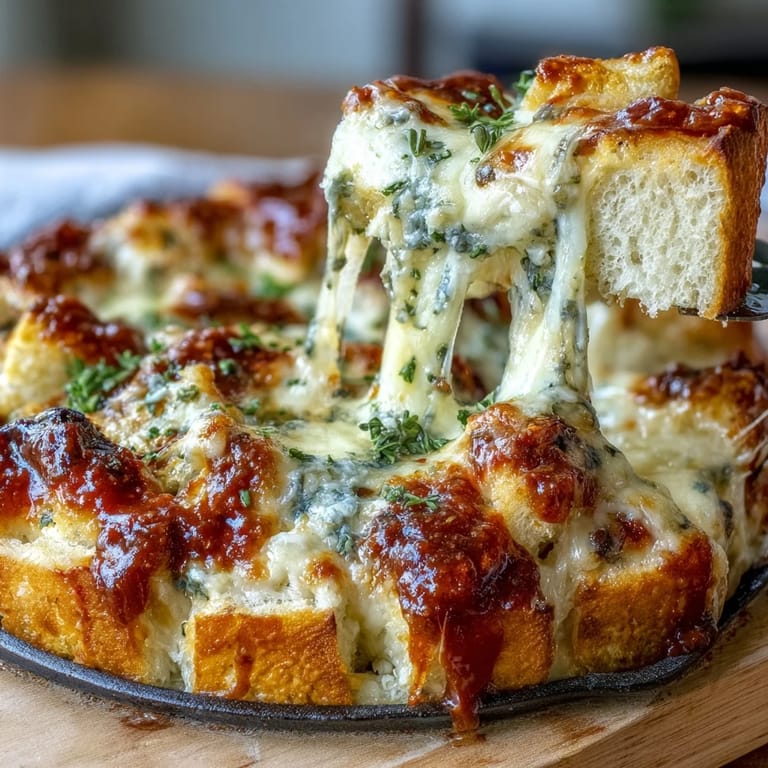
- Remove the foil and bake another 10 to 15 minutes until the cheese is bubbling at the edges and the top has turned golden. You'll see the color shift and know it's done.
- Rest and serve:
- Let it cool for 10 minutes before serving so the layers set slightly and you don't end up with a spoon when you wanted a slice. A sprinkle of fresh parsley on top makes it look like you meant to do all of this.
 Pin
Pin There's a moment during the last few minutes of baking when you open the oven to check on things, and the smell hits you in a way that makes you stand there longer than necessary just breathing it in. That's when you know this dish has become something bigger than the sum of its parts. It's when garlic bread and lasagna stopped being two separate ideas and became one complete thought.
Why Cast-Iron Matters Here
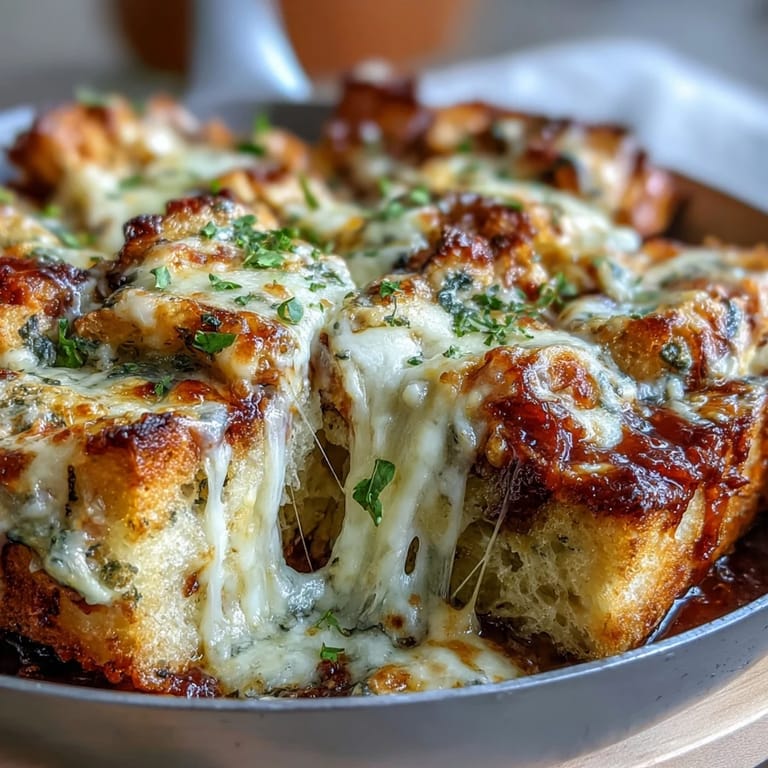
Cast iron isn't just romantic; it actually does something. The heat distributes evenly, so your bottom layer gets toasted while your top layer bubbles, and you end up with different textures in the same bite. Plus, bringing it straight to the table makes people feel like you've done something more impressive than you actually have, which is the best kind of dinner magic. If you don't have cast-iron, a 9x13 ceramic baking dish works, but you'll miss some of that crispy-bottomed charm.
Making It Your Own
This dish is flexible enough to bend with what you have and what you're craving. Add red pepper flakes if heat is your thing, or stir some sautéed mushrooms into the meat sauce for earthiness. Some people press spinach into the ricotta layer, others add a handful of fresh basil at the very end. The core idea stays solid no matter what you decide to change.
Serving and Storage
Serve this with a crisp green salad and a glass of red wine—the acidity cuts through the richness in a way that makes you want another bite. Leftovers actually improve after a day in the fridge as the flavors settle and deepen, so make it ahead without worry.
- Let the skillet cool slightly before storing so condensation doesn't water down the cheese layer.
- Reheat gently in a 350°F oven covered with foil for about 15 minutes so it warms through without drying out.
- This feeds 6 people generously, or 4 people if everyone's extra hungry and wants seconds.
 Pin
Pin This skillet brings together everything people love about both dishes in a way that feels effortless once it's assembled. Make it once, and you'll find yourself thinking about it on random Tuesday afternoons.
Recipe FAQ
- → Can I make this vegetarian?
Yes, simply replace the ground beef with plant-based meat alternative or sautéed mushrooms. The rest of the ingredients work perfectly for a vegetarian version.
- → Can I prepare this ahead of time?
Assemble everything in the skillet up to 24 hours ahead, cover tightly, and refrigerate. When ready to bake, let it sit at room temperature for 20 minutes before baking as directed.
- → What type of bread works best?
A sturdy baguette or Italian loaf holds up well during baking. Avoid very soft bread as it may become too mushy when layered with the sauce and cheeses.
- → Can I freeze leftovers?
Yes, portion leftovers into airtight containers and freeze for up to 3 months. Thaw overnight in the refrigerator and reheat in a 350°F oven until warmed through.
- → How do I know when it's done baking?
The dish is ready when the cheese is bubbling vigorously and the top layer of bread cubes turns golden brown. If the top browns too quickly, cover loosely with foil.
- → Can I use a different type of cheese?
You can substitute provolone or fontina for the mozzarella. The ricotta mixture helps bind everything together, while Parmesan adds salty depth to the layers.