 Pin
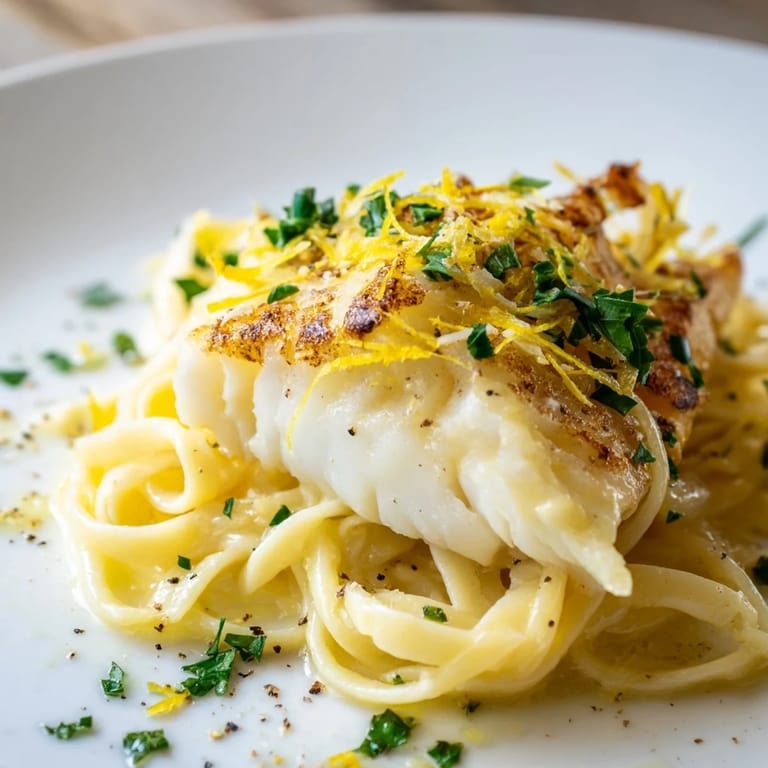
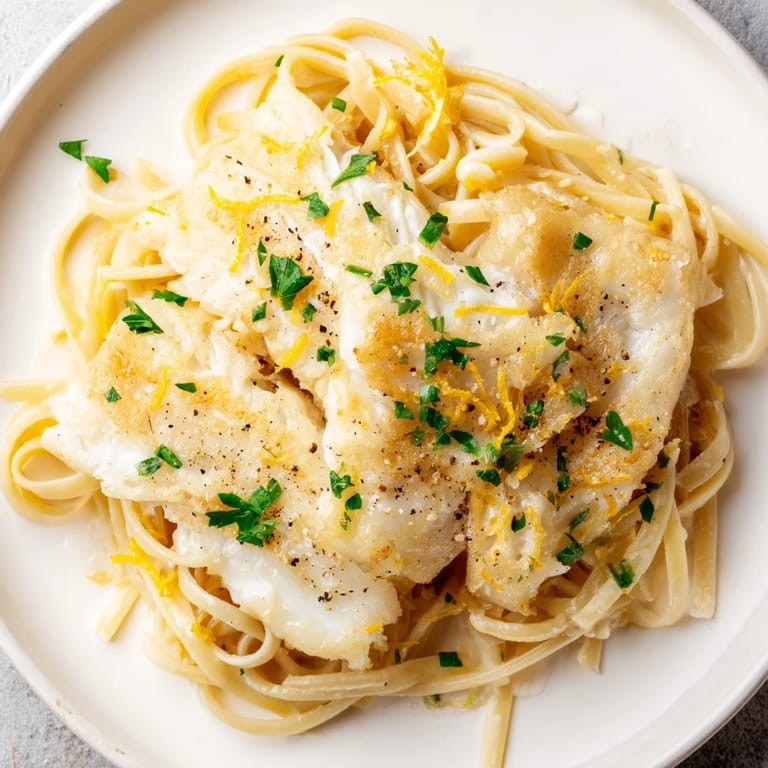
Pin There's a particular Thursday evening I think about whenever I make this—my neighbor Marco had just returned from the coast with stories about a small trattoria where the chef would pan-fry the catch of the day and toss it into warm pasta with barely anything else. The simplicity of it stayed with me, and I spent weeks chasing that memory in my own kitchen, tweaking proportions and timing until golden flakes of fish and silky pasta came together on my plate. This is what I landed on: pure, bright, and finished in less than forty minutes.
I made this for my partner on a night when neither of us had energy to think about dinner, and somehow the smell of garlic and lemon filling the kitchen turned the whole evening around. We sat at the kitchen counter eating straight from the pan—something we almost never do—and halfway through, they asked me to write down the recipe because they wanted to make it for their own friends. That's when I knew it had stuck.
Ingredients
- Firm white fish fillets (cod, haddock, sea bass): Look for fillets that smell clean and have firm flesh; they'll hold together beautifully when you're flaking them, and any white fish works equally well.
- All-purpose flour: This thin coating crisps up in the pan and creates a delicate golden shell that keeps the fish moist inside.
- Sea salt and black pepper: Season boldly before dredging—the flour will mute the seasoning slightly, so don't hold back.
- Olive oil (for cooking): Use regular olive oil for cooking the fish so you can take the heat higher without worrying about smoking.
- Spaghetti or linguine: Long, thin pasta works best because it tangles beautifully with the fish flakes and catches all the buttery sauce.
- Unsalted butter: This is where the richness comes from, but keep it to two tablespoons so the dish stays balanced and bright.
- Garlic: Chop it finely so it melts into the sauce and flavors every bite without being harsh.
- Lemon zest and juice: The zest adds a fragrant bite that lingers on your palate; the juice keeps everything fresh and prevents the dish from feeling heavy.
- Fresh parsley and chives: These aren't just garnish—they're folded in at the end so their bright, grassy flavor runs through every bite.
- Chili flakes: Optional but worth it; they add a gentle warmth that makes people pause and ask what's in there.
- Extra virgin olive oil: This goes in at the very end for a silky finish and a peppery background note.
Tired of Takeout? 🥡
Get 10 meals you can make faster than delivery arrives. Seriously.
One email. No spam. Unsubscribe anytime.
Instructions
- Get the pasta water ready:
- Bring a large pot of water to a rolling boil and salt it generously—it should taste like the sea. The starch in that reserved pasta water will tie everything together later, so don't skip this step.
- Cook the pasta:
- Add your spaghetti or linguine and cook until al dente, that tender-but-still-firm moment when you bite into a strand and feel no chalky core. Reserve half a cup of water before draining.
- Prepare the fish:
- While the pasta cooks, pat your fillets completely dry with paper towels—moisture is the enemy of crispiness. Season them generously with salt and pepper, then dredge lightly in flour, shaking off any excess so you have just a delicate coating.
- Crisp the fish:
- Heat olive oil in a large skillet over medium-high heat until it shimmers. Lay the fillets in gently and let them sit undisturbed for three to four minutes until they develop a golden, crispy exterior, then flip and cook the other side. You should hear a satisfying sizzle when they hit the pan.
- Build the sauce foundation:
- In the same skillet, reduce the heat to medium and add butter and finely chopped garlic. Listen for the garlic to start crackling softly, then stir in the lemon zest and chili flakes if using, letting the aromatics bloom for about a minute.
- Bring it all together:
- Add the drained pasta to the skillet and toss it gently to coat with the buttery garlic mixture. Pour in the lemon juice, then add reserved pasta water gradually—just enough to create a light, glossy sauce that clings to the pasta without making it soupy.
- Fold in the fish and herbs:
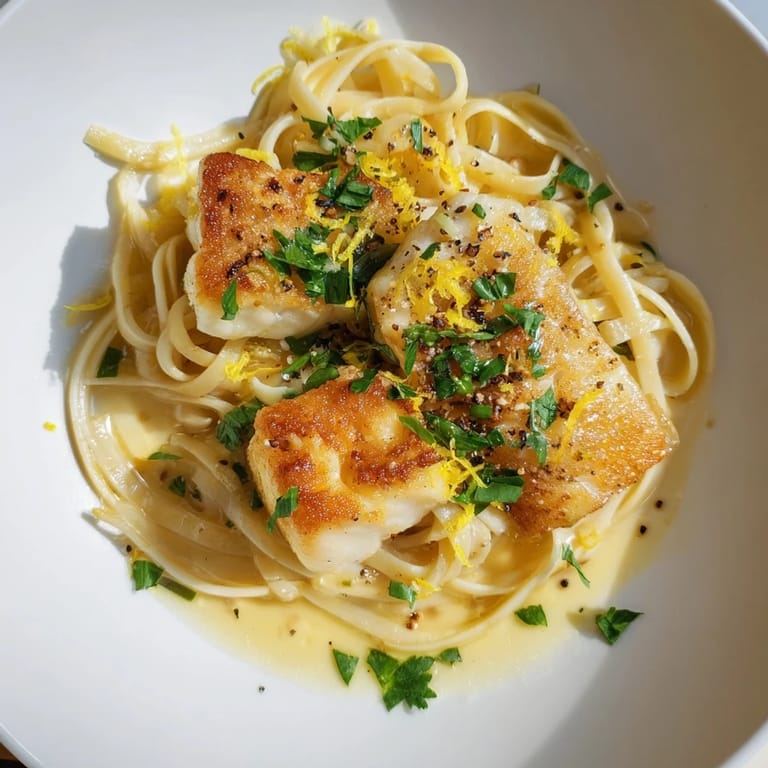
- Gently fold in the flaked fish and the parsley and chives, tossing very lightly so you keep those tender flakes intact. Finish with a drizzle of extra virgin olive oil and taste for seasoning.
- Serve immediately:
- Divide among bowls while everything is warm and steaming, and scatter extra herbs, cracked black pepper, and lemon wedges on top.
 Pin
Pin There was one night when a friend came over saying they'd sworn off pasta because it always left them feeling sluggish, and I made this knowing the brightness and protein would change their mind. Watching them go quiet after the first bite, then come back for seconds, felt like a small victory in the kitchen.
Choosing Your Fish
Any firm white fish will work here, but I've learned a few things about which ones shine. Cod is forgiving and widely available; haddock is slightly sweeter and a little more delicate; sea bass has a buttery quality that needs almost no help. I once made this with tilapia because it was what the market had, and it was just as good—what matters most is that you choose something that doesn't fall apart in the pan.
Building Flavor Without Heaviness
The secret to this dish is knowing when to stop adding richness. Butter is there for depth, not dominance; lemon juice and zest are what make people come back for more. I used to add a splash of cream thinking it would improve things, but it only muffled all those bright, fresh flavors I was trying to capture. Now I trust the simplicity, and the dish is better for it.
Making It Your Own
Once you've made this a few times, you'll start seeing room to play. A handful of capers adds a salty, briny pop that some people find addictive; arugula wilted in at the end brings a peppery freshness; a pinch of fennel pollen once transformed it into something completely new. The pasta water keeps everything cohesive no matter what you add, which is why getting that technique right matters so much.
- For a gluten-free version, substitute all-purpose flour with cornstarch or a gluten-free blend—the coating will be just as crispy.
- If butter isn't in your diet, extra virgin olive oil alone will give you a silky finish without losing flavor.
- A dry Sauvignon Blanc or Pinot Grigio poured alongside transforms dinner into something that feels almost fancy, despite how simple it all is.
 Pin
Pin This is the kind of meal that tastes like effort but demands almost none, which is why I find myself making it over and over. It's become my answer to the question, What's for dinner? when I want something that feels bright and nourishing without spending my whole evening in the kitchen.
Recipe FAQ
- → What type of fish works best for this dish?
Firm white fish like cod, haddock, or sea bass are ideal. These hold up well to pan-frying and flaking.
- → How can I ensure the fish stays crispy when combined with the pasta?
Cook the fish until golden and let it rest before flaking gently into the pasta to preserve crispness without breaking it down.
- → Can I substitute the herbs used in this dish?
Yes, fresh parsley and chives provide brightness, but you can also try basil, dill, or cilantro depending on preference.
- → What is the purpose of reserving pasta water?
Reserved pasta water helps loosen the sauce and ensures the pasta coating is silky and well combined with the lemon and oil.
- → Are there any optional ingredients to adjust flavor?
Chili flakes add a mild heat, and additions like capers or arugula offer extra zest and freshness.