 Pin
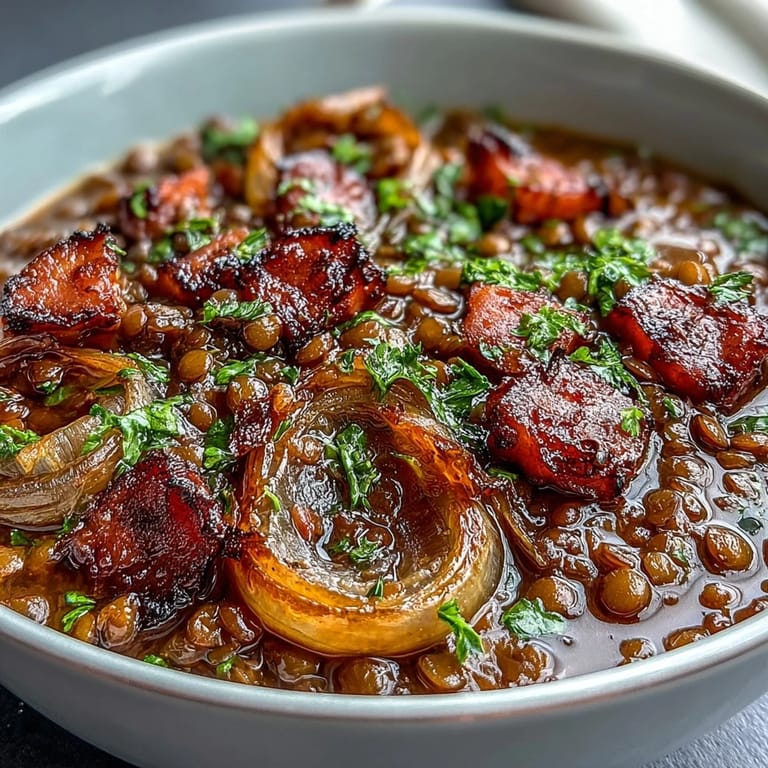
Pin My neighbor stopped by on a cold Tuesday evening with a pot of something steaming, and I caught the unmistakable smell of ham and thyme drifting from her kitchen. She'd made this stew on a whim when her daughter came home from university, and somehow it became the dish that made everyone linger at the table longer than expected. That first spoonful—smoky, warm, deeply satisfying—taught me that the best meals don't require fussy techniques or rare ingredients, just honest flavors and time.
I made this for my sister during one of those stretches where life felt chaotic, and she sat at my kitchen counter with a bowl cradled in both hands, finally quiet for the first time in weeks. There's something about a stew that signals care without needing to announce it, and watching her shoulders relax as she ate told me everything about why this recipe had stayed in my rotation for years.
Ingredients
- Cooked ham, diced (250 g): The smoky backbone of this stew—use good quality ham if you can, as the flavor carries the whole pot; a smoky variety makes all the difference.
- Dried brown or green lentils, rinsed (250 g): These hold their shape beautifully during the long simmer and become creamy without turning to mush if you don't overcook them.
- Medium onions, finely chopped (2): They soften into the stew and create a sweet undertone that balances the saltiness of the ham.
- Medium carrots, diced (2): A touch of natural sweetness and bright color that reminds you vegetables are doing most of the heavy lifting here.
- Celery stalks, diced (2): Often overlooked, but it adds an earthy depth that makes people say the flavor is more than the sum of its parts.
- Garlic cloves, minced (3): Don't skip the garlic cook-out step—that one minute is when the raw bite transforms into something mellow and aromatic.
- Low-sodium chicken or vegetable stock (1.2 L): The canvas everything else paints on; taste your stock first because some are surprisingly salty and will throw off the balance.
- Bay leaf (1): It slides into the pot quietly and does its work without showing off, then you fish it out at the end.
- Dried thyme (1 tsp): Earthy and slightly peppery, this is the flavor that makes people ask what herb you used.
- Smoked paprika (½ tsp): A whisper of smoke that echoes the ham throughout, layering flavors rather than competing with them.
- Salt and freshly ground black pepper, to taste: Always taste before seasoning; the ham and stock already contribute salt, so you'll likely need less than you'd think.
- Fresh parsley, chopped (2 tbsp, optional): A bright, grassy finish that wakes up the palate just before you take another spoonful.
- Olive oil (1 tbsp): Just enough to coat the pot and prevent the initial sauté from sticking.
Tired of Takeout? 🥡
Get 10 meals you can make faster than delivery arrives. Seriously.
One email. No spam. Unsubscribe anytime.
Instructions
- Start the flavor foundation:
- Heat olive oil in your pot over medium heat, then add onions, carrots, and celery for 6 to 8 minutes, stirring occasionally until the vegetables soften and the kitchen starts smelling like home cooking. You're looking for them to lose their raw edge and begin caramelizing slightly at the corners.
- Wake up the garlic:
- Add minced garlic and cook for exactly one minute—no more, or it turns bitter and acrid. You'll smell when it's ready, that sudden intense aroma that makes you want to keep smelling it.
- Introduce the ham:
- Stir in the diced ham and let it toast for about 2 minutes, which releases its smoky oils into the oil and onions already coating the pot. This is layering flavor, not just adding ingredients.
- Build the stew:
- Add rinsed lentils, bay leaf, thyme, smoked paprika, stock, and a modest pinch of salt and pepper, stirring everything together so the lentils are mostly submerged. Bring the whole pot to a boil—you'll see it transition from calm to actively bubbling.
- Let time do the work:
- Drop the heat to low, cover partially, and simmer for 35 to 40 minutes, stirring every 10 minutes or so to prevent sticking and ensure even cooking. The lentils will gradually soften, the liquid will reduce slightly, and everything will smell increasingly irresistible.
- Finish and taste:
- Fish out the bay leaf, then taste a spoonful—now is when you adjust seasoning because salt and pepper are the only things that can still change the story. Add either generously or sparingly depending on what your palate tells you.
- Serve with intention:
- Ladle the stew into bowls, top with fresh parsley if you have it, and bring everything to the table while it's still steaming. Crusty bread alongside is not optional.
 Pin
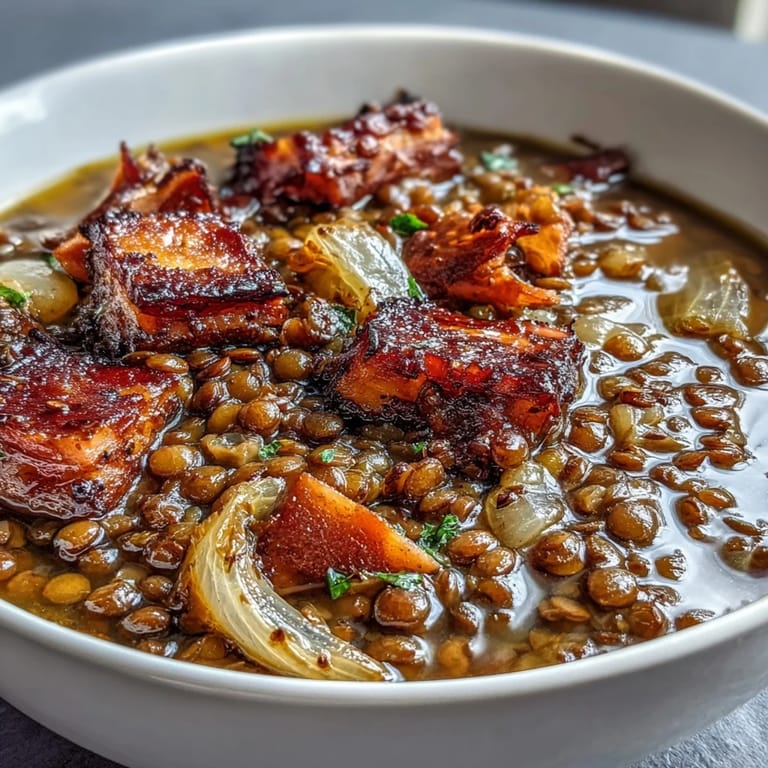
Pin Once, I made this stew and left it on the stove while I went to pick up my daughter from school, returning to find my husband had invited two neighbors over because they'd smelled it from their driveway and couldn't resist asking what was cooking. That's when I realized this dish is more than nourishment—it's an unintentional welcome, a quiet way of saying you're cared for.
The Magic of One-Pot Cooking
There's a particular peace that settles over the kitchen when everything happens in one vessel. You're not juggling multiple pans, watching for splashes, or debating which burner gets which pot. The stew develops a coherent flavor because each ingredient touches the bottom and sides of the pot, mixing with the olive oil and ham fat in ways that wouldn't happen if everything were separate. It's also honest cooking—no pretense, just layers building on each other until something greater emerges.
Why Lentils Matter in This Stew
Lentils are often overshadowed by beans in the legume world, but they're the secret ingredient in stews like this one. They cook faster than beans, so you're not waiting hours for dinner. More importantly, they have a delicate earthiness that plays beautifully with ham and thyme rather than competing for attention. Their texture when cooked is almost creamy on the inside with a slight firmness that keeps them from disappearing into the broth—they stay present in every spoonful.
Serving Suggestions and Storage Wisdom
This stew is a magnificent standalone meal, but it becomes legendary with crusty bread for soaking up every drop of broth. A simple green salad alongside cuts through the richness perfectly, and honestly, a glass of wine and good company are the only other requirements. Leftovers keep for four days refrigerated and freeze beautifully for up to three months, though I've rarely had enough left to freeze.
- Reheat gently on the stovetop rather than nuking it, which can make the lentils tough and separate.
- If the reheated stew seems too thick, add a splash of stock or water to loosen it back to the right consistency.
- Cold stew makes an unexpectedly satisfying lunch the next day if you're the type to eat hearty food in summer.
 Pin
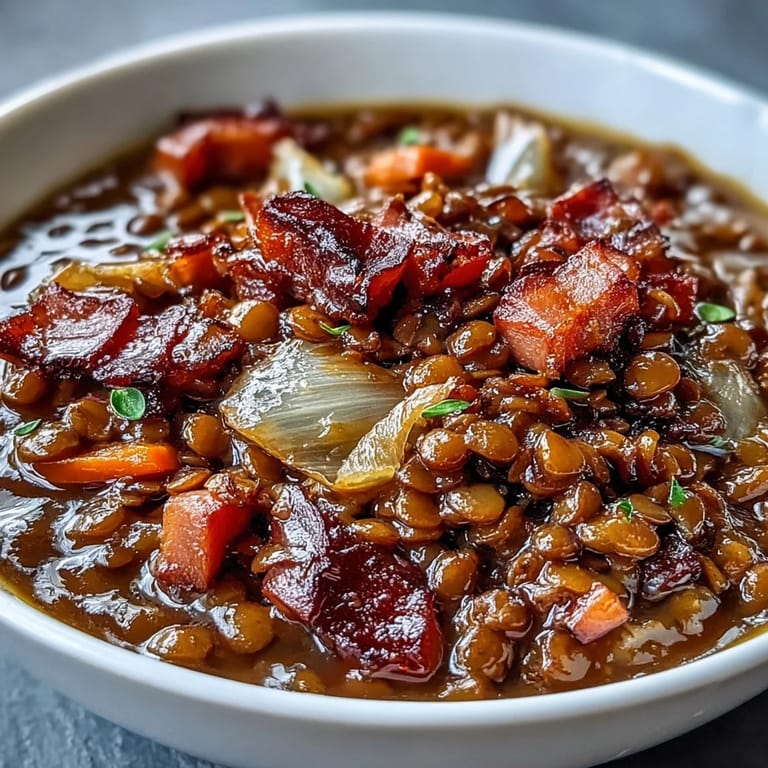
Pin This stew has a way of becoming someone's go-to comfort food, the thing they remember when they're tired or homesick. That's the real recipe here—not the measurements or techniques, but the care embedded in serving something warm and honest to the people you love.
Recipe FAQ
- → What type of lentils works best?
Brown or green lentils are ideal as they hold shape well during simmering and absorb flavors nicely.
- → Can I make it vegetarian?
Yes, omit the ham and increase vegetables or substitute with smoked tofu for a similar smoky richness.
- → How long should I simmer the stew?
Simmer for 35–40 minutes until the lentils are tender and the flavors are well combined.
- → What spices enhance the stew's flavor?
Bay leaf, thyme, and smoked paprika add aromatic and smoky notes that complement the ham and lentils.
- → What is a good serving suggestion?
Serve hot, garnished with fresh parsley and accompanied by crusty bread to soak up the flavorful broth.