 Pin
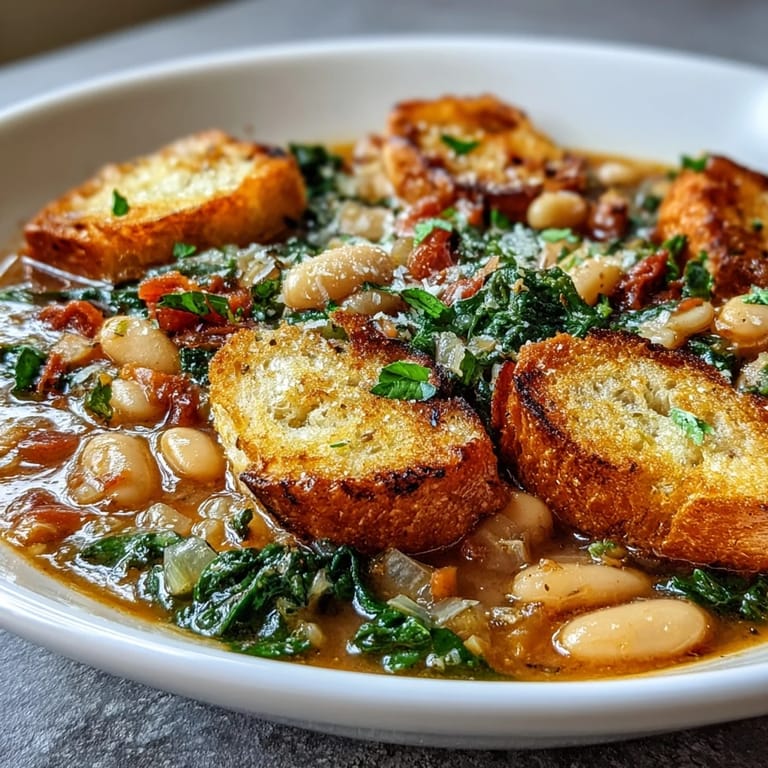
Pin There's something about a bowl of ribollita that stops time. Years ago, I was wandering through a market in Florence on a grey afternoon, ducking between vendor stalls, when the smell of simmering beans and tomatoes pulled me into a tiny osteria. An older woman was ladling soup into bowls, and when she topped mine with golden sourdough croutons and a generous pour of green olive oil, I understood why this humble peasant soup has survived centuries. It wasn't fancy, but it felt like being held.
I made this for my sister during her first winter living alone in a new city, and watching her face as that first spoonful hit—the soft beans, the crispy bread, the richness of it all—reminded me that comfort food isn't about impressing anyone. It's about showing up with something warm and saying, you're going to be okay.
Ingredients
- Extra-virgin olive oil: Use the good stuff here; it's what transforms this soup from good to memorable.
- Yellow onion, carrots, celery: This holy trinity is your flavor foundation, so don't rush chopping them.
- Garlic cloves: Mince them small so they melt into the broth rather than sitting as chunks.
- Fennel bulb: Optional, but it adds a subtle sweetness that makes people ask what that lovely note is.
- Zucchini: Diced small so it softens completely and adds body without overpowering.
- Tuscan kale (cavolo nero): This is the soul of the soup; its earthy bitterness balances the beans perfectly.
- Yukon gold potato: It breaks down slightly and naturally thickens the broth as it cooks.
- Diced tomatoes: Use canned with their juices; they're actually more consistent than fresh in winter.
- Cannellini beans: Drain and rinse them well to remove the starchy liquid that can cloud your soup.
- Vegetable broth: Quality matters; taste it first and go unsalted if possible so you control the final seasoning.
- Bay leaf, thyme, oregano: These dried herbs need time to bloom in the simmering liquid, so don't add them at the end.
- Red pepper flakes: Just a whisper unless you want heat to be the main character.
- Day-old sourdough bread: Stale bread is essential; it won't fall apart and will crisp up beautifully in the oven.
- Parmigiano-Reggiano: The real thing, freshly grated, makes all the difference in the final bowl.
Tired of Takeout? 🥡
Get 10 meals you can make faster than delivery arrives. Seriously.
One email. No spam. Unsubscribe anytime.
Instructions
- Build your flavor base:
- Pour olive oil into your Dutch oven and let it warm over medium heat until it shimmers slightly. Add the diced onion, carrots, celery, and fennel, then settle in and let them soften for 8 to 10 minutes, stirring now and then so nothing catches on the bottom.
- Wake up the garlic:
- Once the vegetables are tender and the kitchen smells amazing, add your minced garlic and cook for just one minute—you want it fragrant, not browned.
- Add the greens and potatoes:
- Toss in the zucchini, potato, and kale, stirring gently for a few minutes until the kale begins to wilt and soften.
- Bring it all together:
- Pour in the tomatoes with their juices, add your drained beans, broth, bay leaf, thyme, oregano, and red pepper flakes if using. Season generously with salt and pepper, then bring everything to a boil before turning the heat down to low.
- Let time do the work:
- Simmer uncovered for 35 to 40 minutes, stirring occasionally and partially mashing some of the beans and vegetables with the back of your spoon to thicken the broth. You want it creamy but still rustic, with distinct pieces of vegetables visible.
- Make your croutons:
- While the soup simmers, preheat your oven to 400°F and toss sourdough cubes with olive oil on a baking sheet. Bake for 10 to 12 minutes, turning halfway through, until they're golden and crisp all over.
- Finish the croutons with garlic:
- While the bread is still warm from the oven, rub each crouton with the cut side of a garlic clove so the warmth helps release its oils.
- Final taste and serve:
- Remove the bay leaf, taste the soup, and adjust your seasoning if needed. Ladle into bowls and crown each one with croutons, a drizzle of excellent olive oil, and grated cheese if you like.
 Pin
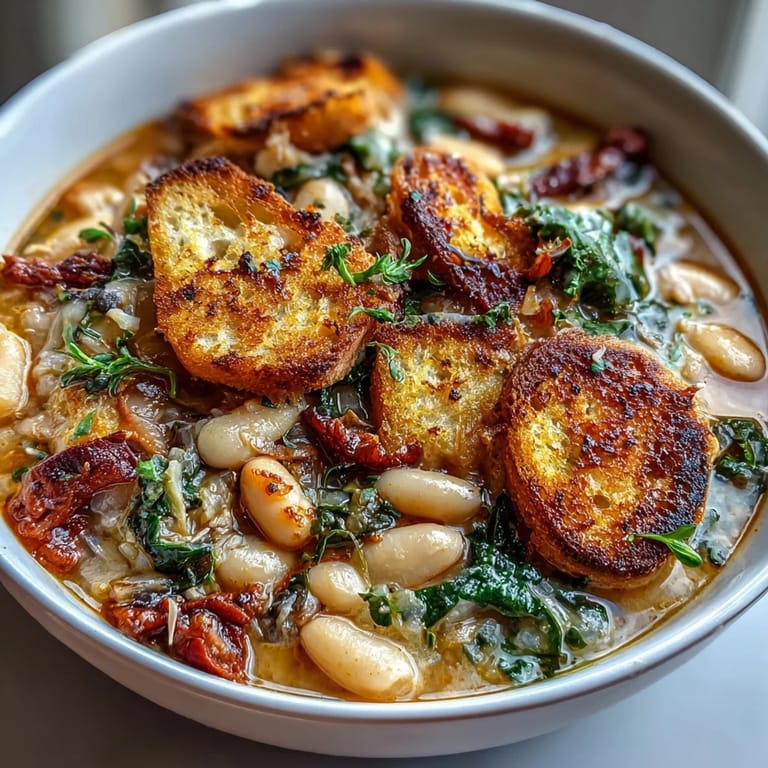
Pin There was an evening when a friend who doesn't usually cook asked to learn this recipe, and as we worked side by side, chopping and stirring, the kitchen filled with the kind of warmth that has nothing to do with the stove. By the time we sat down to eat, it felt less like cooking and more like creating a small moment of peace together.
Why This Soup Endures
Ribollita exists because of necessity and ingenuity—it's a peasant's way of turning yesterday's bread and leftover vegetables into something nourishing and profound. The Italians understood something we sometimes forget: limitations breed creativity, and the simplest ingredients, treated with respect and time, often become the most satisfying meals.
Variations That Work
I've made this soup with Swiss chard when kale wasn't available, and honestly, it was just as beautiful. The bones of the recipe are flexible enough to work with what you have, which is kind of the whole point. Some cooks add a parmesan rind to simmer with the broth for extra depth, and I've done that too—it's a small luxury that whispers through the entire pot.
The Rhythm of Serving
This soup wants to be eaten slow, with good bread alongside and maybe a glass of Chianti if that's your thing. It's the kind of meal that settles in and asks you to pause, to actually taste what you're eating instead of rushing through it. The croutons soften slightly as they sit in the warmth, becoming almost bread-like again, but with that crispy exterior still holding on—it's the perfect textural journey in one spoon.
- Make the soup a day ahead if you can; the flavors deepen and meld beautifully overnight.
- Toast your croutons fresh the day you serve, just before eating, so they stay crisp.
- If you're cooking for a crowd, double the batch and watch how quickly it disappears.
 Pin
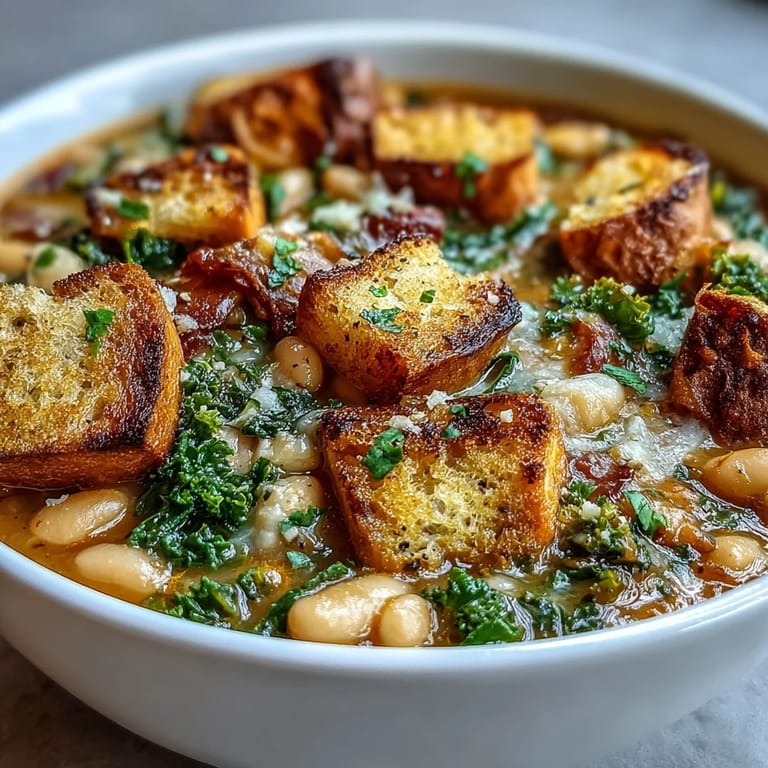
Pin This is the soup I make when I want to feel like I'm taking care of someone, or when I need to take care of myself. It asks for just enough attention to feel intentional, then rewards you with a bowl that's honest and full.
Recipe FAQ
- → What is the best way to prepare the sourdough croutons?
Toss cubed day-old sourdough with olive oil, bake at 400°F for 10-12 minutes until golden, then rub with halved garlic while warm for extra flavor.
- → Can I substitute kale in the soup?
Yes, Swiss chard or spinach can be used as alternatives to Tuscan kale without losing the soup’s hearty texture.
- → How do I achieve a thicker texture in this soup?
Partially mash some of the beans and vegetables during simmering to create a naturally thickened broth.
- → What herbs enhance the flavor of this soup?
Dried thyme, oregano, and a bay leaf add aromatic depth, balancing the vegetables and beans in the broth.
- → Is there a way to add more savory richness?
Adding a parmesan rind while simmering enriches the broth with subtle umami, removed before serving.