 Pin
Pin My first encounter with imam bayildi happened in a cramped Istanbul kitchen during a sweltering July afternoon, watching my friend Ayşe's grandmother work with eggplants as if they were precious silk. She moved with such unhurried confidence, peeling those purple halves and coaxing them open, explaining that the name itself—meaning the imam fainted—was a joke about how good it tastes. I was skeptical until the aroma hit: caramelized onions, garlic, and tomatoes melding with olive oil in a way that made the whole room smell like summer itself. That dish changed how I understood what vegetables could become.
Years later, I made this for a dinner party where I was nervous about cooking for people who actually knew Turkish food. I remember standing at my stove with two skillets going, onions softening in one and eggplants frying in the other, thinking I'd completely messed up the timing and everything would be cold by dinner. Instead, when I pulled those halves out of the oven golden and bubbling, my guest leaned over the baking dish and went quiet for a moment—the kind of quiet that means you've done something right.
Ingredients
- Eggplants (4 medium, about 250 g each): Medium ones cook evenly without drying out; too large and the skin gets tough before the insides soften.
- Extra virgin olive oil (120 ml): This is not the time to skimp—good oil carries all the flavor in this dish.
- Onions (3 medium, thinly sliced): Slice them thin so they melt into the filling rather than staying chunky; they become the backbone of everything.
- Tomatoes (4 ripe, peeled and diced): Fresh tomatoes matter here; canned will work in winter but the dish tastes noticeably different.
- Garlic cloves (4, minced): Don't hold back—garlic softens and sweetens in the oven, not sharpen.
- Green bell peppers (2, seeded and finely chopped): They add sweetness and body to the filling; the finer you chop them, the better they distribute.
- Flat-leaf parsley (1 bunch, chopped): Add this at the very end of cooking so it stays bright green and fresh.
- Water (120 ml): This steams the eggplants from below, keeping them tender.
- Lemon juice (½ lemon): A squeeze of acid balances all that richness and lifts the whole dish.
- Sea salt (1½ tsp, plus more to taste): Salt the eggplants first to draw out bitterness; it's an old trick that actually works.
- Sugar (1 tsp): Just enough to round out the tomato's edge without making anything sweet.
- Black pepper (½ tsp) and paprika (1 tsp optional): Paprika is not essential but adds a gentle warmth that makes people wonder what you did differently.
Tired of Takeout? 🥡
Get 10 meals you can make faster than delivery arrives. Seriously.
One email. No spam. Unsubscribe anytime.
Instructions
- Get Your Oven Ready:
- Preheat to 180°C (350°F) so it's waiting for you.
- Prepare the Eggplants:
- Wash them, then peel off alternating lengthwise stripes so they look striped—this isn't just for show, it helps them cook evenly. With a sharp knife, cut a slit lengthwise down each eggplant, stopping before you reach either end, leaving maybe a centimeter of flesh at the top and bottom so they stay intact.
- Draw Out the Bitterness:
- Sprinkle the eggplants generously with salt and leave them on a cutting board for 20 minutes; you'll see beads of moisture appear on the surface. This is the bitterness leaving. Rinse them gently under cold water and pat completely dry with paper towels.
- Build the Filling:
- Heat half the olive oil in a large skillet over medium heat and add the sliced onions. Let them cook slowly for about 8 minutes, stirring occasionally, until they're soft and starting to turn golden—don't rush this; the slower they cook, the sweeter they become. Add the minced garlic and chopped bell peppers, cook for 3 more minutes until fragrant.
- Finish the Filling:
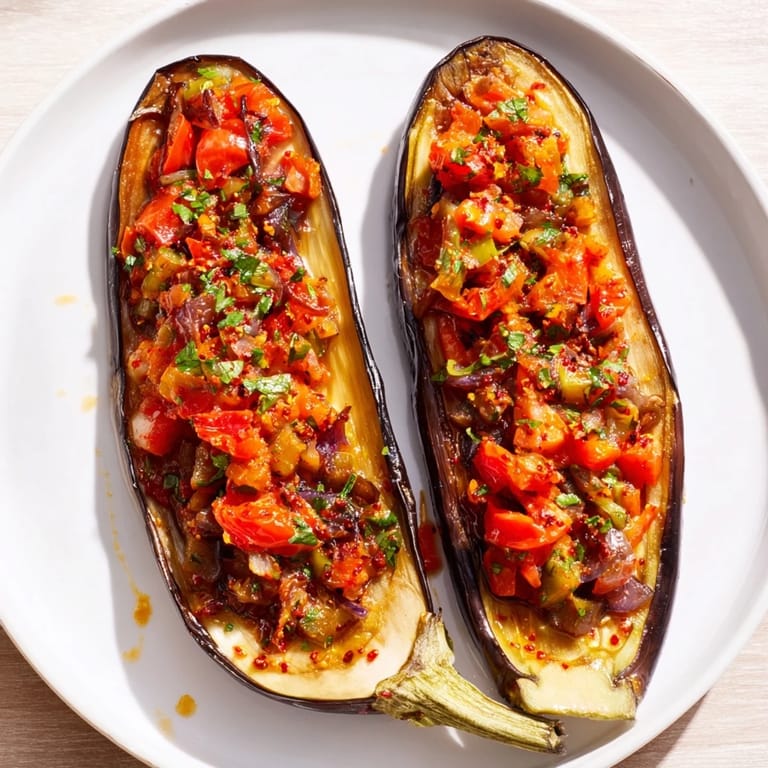
- Stir in the diced tomatoes, sugar, salt, pepper, and paprika if you're using it. Simmer everything together for about 10 minutes, stirring now and then, until the mixture thickens and the tomatoes break down into a loose sauce. Remove from heat and stir in the chopped parsley, which should stay bright against the deep red filling.
- Fry the Eggplants:
- In a clean skillet, heat the remaining olive oil over medium-high heat. Working gently, fry the eggplants on all sides for about 8 minutes total until they're lightly browned and starting to soften—they won't be fully cooked yet, just beginning to give under pressure. This step flavors them and makes them less likely to stick when you stuff them.
- Stuff and Arrange:
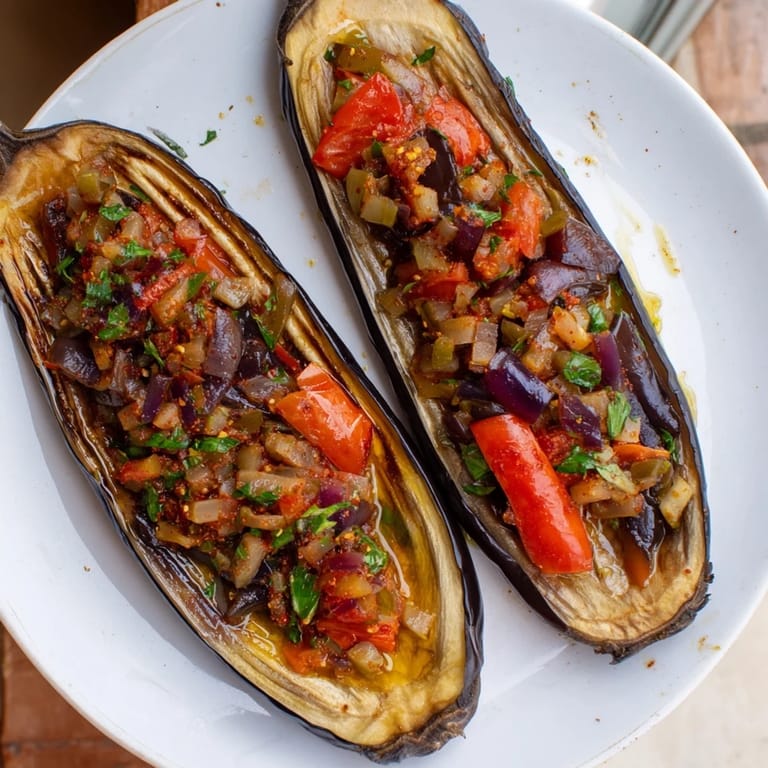
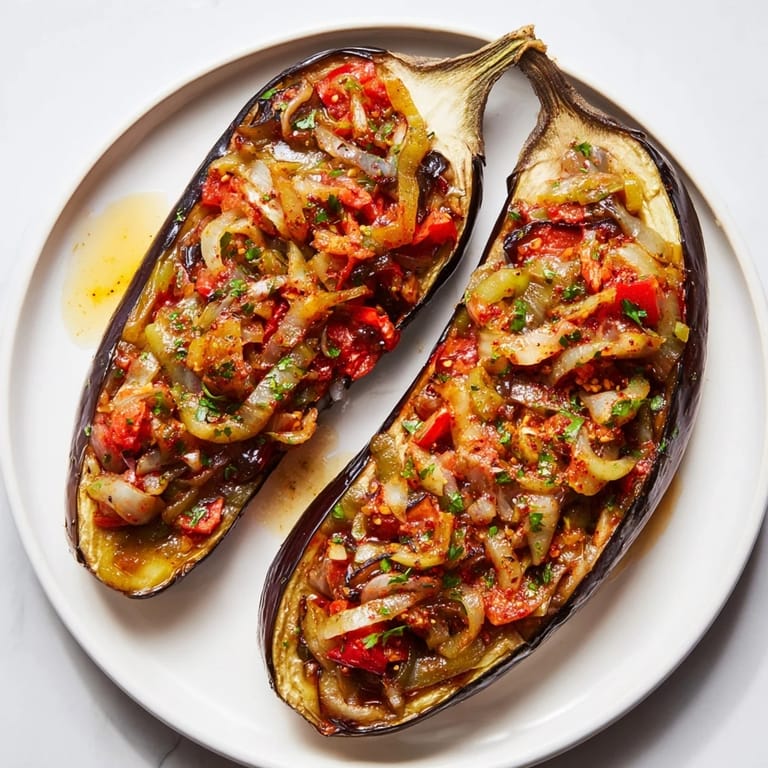
- Place the fried eggplants in a baking dish where they fit snugly but aren't forced. Carefully open the slit in each one, using your fingers or a small spoon to widen the cavity without tearing the sides. Divide the filling evenly among them, piling it generously into the center; don't worry about it overflowing slightly.
- Add Liquid and Cover:
- Drizzle lemon juice over the stuffed eggplants and pour water around them (not on top of them, around them). Cover the entire dish tightly with aluminum foil and slide it into the oven.
- Bake Covered, Then Uncover:
- Bake for 35 minutes covered, which steams the eggplants gently. Remove the foil and bake for another 10–15 minutes until the eggplants are completely tender when pierced with a fork and the filling is bubbling at the edges.
- Cool Before Serving:
- Remove from the oven and let the dish cool to room temperature; imam bayildi is traditionally served warm or at room temperature, never straight from the oven. This also lets all the flavors settle and marry together.
 Pin
Pin I served this at a potluck where I didn't know many people, and a woman came back for seconds with her plate piled high, then came back a third time just to stand near the baking dish and eat small bites standing up. She asked for the recipe and I realized then that sometimes a dish becomes a bridge between strangers.
Why This Dish Matters
Imam bayildi is one of those dishes that traveled the Ottoman Empire, showing up in different forms across Greece, Turkey, and the Levant, each version slightly different based on what grew locally. The name is a story itself—the legend says an imam (a religious leader) was so overcome with emotion upon tasting this dish that he literally fainted, hence the name meaning the imam fainted. Whether that actually happened doesn't matter; what matters is that people loved this enough to make it their own, to pass it down, to argue about whose version was better.
Making It Your Own
This recipe is sturdy enough to take variation without falling apart. Some cooks add a pinch of cinnamon or allspice to the filling for a hint of warmth, which shifts the whole dish toward something more complex and slightly sweet. Others slip a chopped green chili into the mix for heat, or add toasted pine nuts and raisins if they want it to feel more special-occasion. The base stays the same, but you're building something personal each time.
Serving and Storage
Serve this with crusty bread for soaking up the oil and juices, or alongside rice pilaf if you want something more substantial. A dollop of cool yogurt on the side is traditional and essential—the acidity and coolness cut through the richness beautifully. Leftover imam bayildi keeps for three days in the refrigerator and actually tastes better as the eggplants absorb more of the filling's flavor, so don't hesitate to make it ahead.
- Warm it gently on the stovetop with a splash of water or serve it cold straight from the fridge.
- If you're making it for guests, prepare it the day before and reheat just before serving so the filling is hot and the eggplant is tender.
- This freezes well for up to a month if you need to make it further ahead.
 Pin
Pin There's something deeply satisfying about a dish that feels fancy enough for company but simple enough to make on an ordinary Thursday night. Imam bayildi is that dish—it asks for time and attention but not technical skill, and it rewards you with something that tastes like it took far more effort than it actually did.
Recipe FAQ
- → What is the best way to prepare the eggplants?
Peel alternating stripes lengthwise and slit each eggplant while keeping the ends intact. Salt them to remove bitterness, rinse, dry, and then gently fry in olive oil until softened and lightly browned.
- → How long should the filling be cooked?
Sauté the onions until soft, then add garlic, bell peppers, and tomatoes. Simmer the mixture for about 10 minutes until it thickens and the flavors meld together.
- → Can this dish be served cold or at room temperature?
Yes, Imam Bayildi is traditionally enjoyed warm or at room temperature, allowing the flavors to fully develop and meld.
- → Are there any optional spices to enhance the flavor?
Adding a pinch of cinnamon or allspice to the filling can provide extra warmth and depth. Paprika is also an optional addition for subtle smokiness.
- → What are good serving suggestions with this dish?
Serve with crusty bread or rice and a side of yogurt to complement the silky textures and rich flavors.
- → Is Imam Bayildi suitable for specific diets?
This dish is vegetarian, vegan, and naturally gluten-free, making it suitable for a variety of dietary preferences.