 Pin
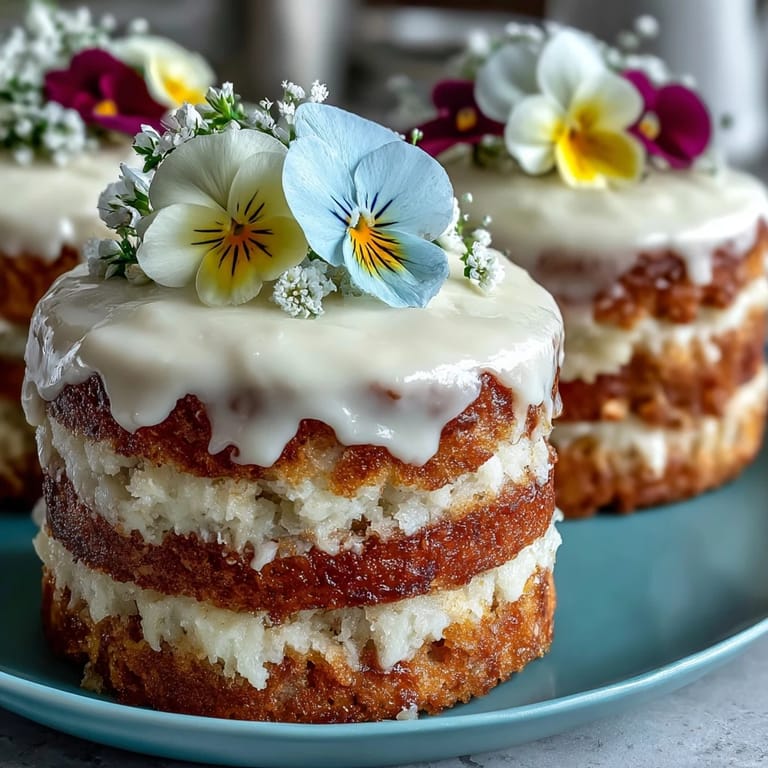
Pin My sister called me three weeks before her birthday asking if I could make something special—not just a cake, but something that felt like spring itself on a plate. I was standing in my kitchen, still in my pajamas, when she mentioned how she'd always admired those delicate mini cakes with flowers at fancy cafés. That afternoon, I tested my first batch, and watching those little rounds come out of the oven golden and perfect felt like I'd unlocked a secret. These mini layer cakes became my answer to her wish, and honestly, they've become my favorite way to celebrate anyone who deserves something genuinely beautiful.
I'll never forget assembling these cakes for my best friend's surprise birthday gathering—I was nervous the buttercream would be too soft in my warm kitchen, so I kept the layers in the fridge between coatings. When we brought them out, the colors were so soft and pretty that everyone stopped talking for a moment. That's when I knew this recipe worked, not just because of how they tasted, but because of the pause they created.
Ingredients
- All-purpose flour (1 1/4 cups): Use a lighter hand when measuring—spoon it into your cup and level it off rather than scooping directly from the bag, or you'll end up with dense little cakes.
- Baking powder (1 tsp): Check your pantry and make sure it's not been sitting there for two years; stale leavening agents are why some homemade cakes turn out flat.
- Unsalted butter (1/2 cup for cake, 3/4 cup for frosting): Room temperature butter creams properly, so pull it out of the fridge about an hour before you start—cold butter will fight you.
- Granulated sugar (3/4 cup): This is what gives the cake its tender crumb and helps it brown evenly in the oven.
- Eggs (2 large, room temperature): Bring them to room temperature so they incorporate smoothly into the batter and help create lift.
- Vanilla extract (1 tsp) and lemon zest (1/2 tsp): The combination keeps things bright and sophisticated rather than one-note sweet.
- Whole milk (1/2 cup, room temperature): Alternating flour and milk creates a tender crumb and ensures proper hydration without overworking the batter.
- Powdered sugar (2 cups, sifted): Always sift it first—lumps in your frosting are frustrating and visible on these small, delicate cakes.
- Edible flowers (1 cup): Source these from specialty baking suppliers or farmers markets that specifically sell them for consumption—regular florist flowers are treated with chemicals you don't want to eat.
Tired of Takeout? 🥡
Get 10 meals you can make faster than delivery arrives. Seriously.
One email. No spam. Unsubscribe anytime.
Instructions
- Prepare your pan and preheat:
- Set your oven to 350°F and line a 9x13 inch baking sheet with parchment—this makes lifting your finished cake layers so much easier. A lightly greased sheet ensures nothing sticks, even if you're a little worried about it.
- Mix your dry ingredients:
- Whisk the flour, baking powder, and salt together in a medium bowl until evenly combined. This distributes the leavening throughout so you get an even rise.
- Cream butter and sugar:
- Beat them together for about three minutes until the mixture looks pale and fluffy, almost mousse-like. This traps tiny air bubbles that make your cakes light and tender rather than dense.
- Add eggs and flavorings:
- Add each egg one at a time, beating well after each addition so it fully incorporates—you should see the mixture become smooth and slightly lighter between additions. Then add the vanilla and lemon zest and mix until just combined.
- Alternate flour and milk:
- Add half the flour mixture, stir gently, then add the milk, then the remaining flour. Don't overmix; stop as soon as you don't see streaks of flour anymore, because overworking the batter develops gluten and makes the cake tough.
- Spread and bake:
- Pour the batter onto your prepared sheet and spread it evenly with an offset spatula or the back of a spoon until it's about half an inch thick. Bake for 18 to 22 minutes, until a toothpick inserted in the center comes out clean and the cake is pale golden—don't overbake or it'll be dry.
- Cool and cut:
- Let the cake cool completely on the pan, then use a 2.5 to 3 inch round cutter to cut out 12 circles. If you have scraps, gently gather them and re-roll once—overworking them makes them tough, but one gentle re-roll is fine.
- Make the buttercream:
- Beat the softened butter until it's creamy, then gradually add the sifted powdered sugar a little at a time, beating as you go so you don't end up with powdered sugar clouds everywhere. Add vanilla, a pinch of salt, and 1 tablespoon of milk, then beat until light and fluffy—if it seems too stiff, add a touch more milk until it spreads smoothly.
- Add color if you like:
- Pastel food coloring looks beautiful on these little cakes—add just a tiny drop at a time and beat well, because the color deepens as you mix. If you want multiple colors, divide the buttercream and tint separate portions.
- Assemble your mini cakes:
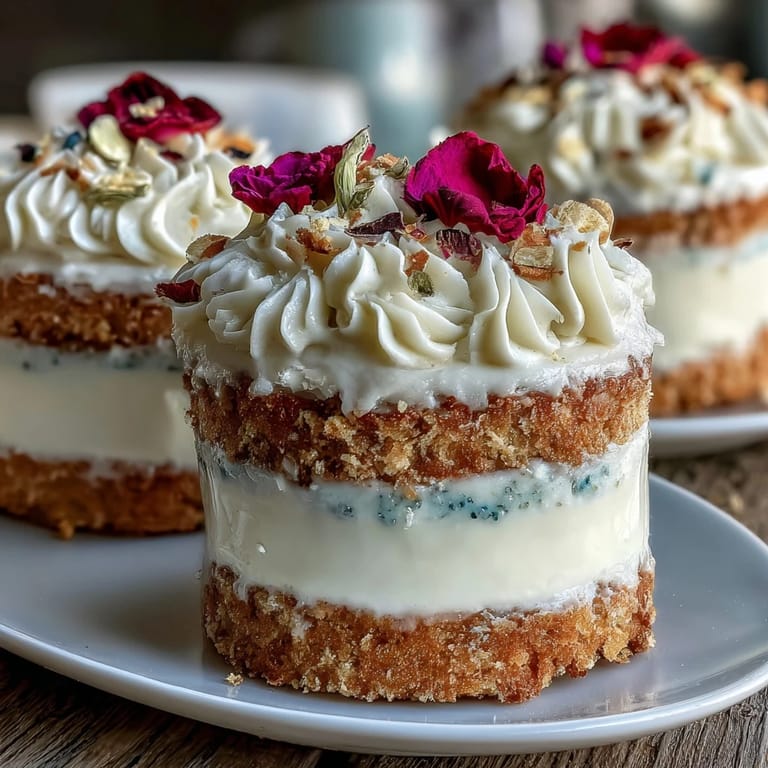
- Place one cake round on your serving plate, spread a thin layer of buttercream on top, then place a second round on top and add another thin layer of frosting. The buttercream acts like glue, so you don't need much.
- Frost and decorate:
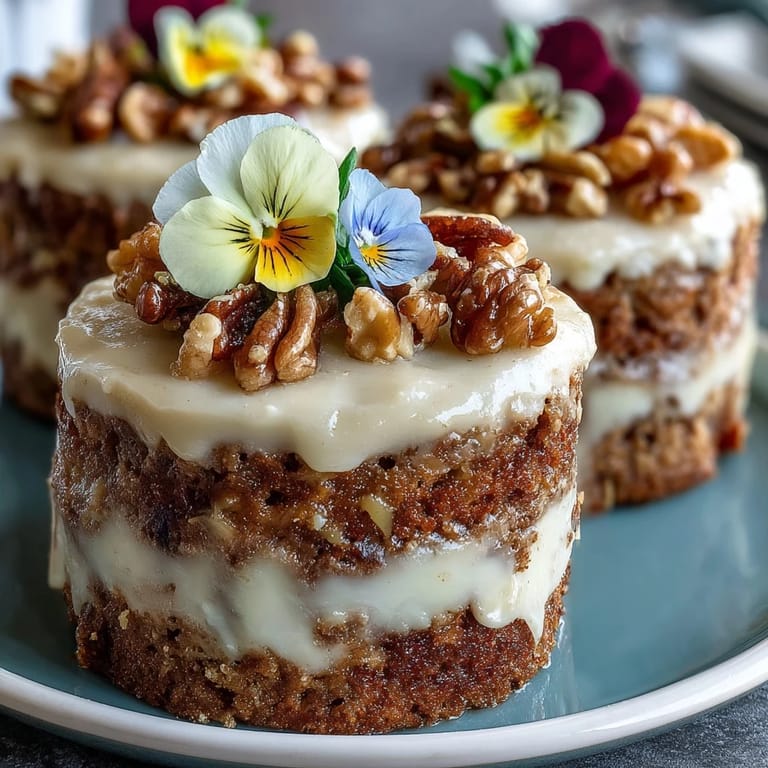
- Spread a little more buttercream on the top of each assembled cake, then arrange your edible flowers on top in a way that feels natural to you—a few scattered blooms looks more elegant than cramming them all on. Repeat until all six mini cakes are assembled and decorated.
- Chill before serving:
- Pop them in the fridge for at least 15 minutes so the buttercream firms up slightly and the cake layers set—this gives you the best texture when people bite into them.
 Pin
Pin There's something magical about watching someone's face when they pick up their own individual cake, topped with a real flower that's both beautiful and edible. My friend's partner actually gasped when she saw hers, which made every minute of careful assembly worth it.
Why These Little Cakes Work for Spring Birthdays
Spring is a time when people crave things that feel light and fresh, and these cakes deliver exactly that mood. The lemon zest runs through the cake itself, not just the frosting, so every single bite has that brightness—it's not hiding in a glaze or a drizzle on top. The edible flowers aren't just decoration; they signal that someone took genuine time and care to make something special.
The Science of Small Cakes
Baking mini cakes on a flat sheet instead of in individual molds is genuinely smarter than it sounds. You get more even heat distribution than you would in muffin tins, which means the cakes bake more uniformly and don't brown too much on the edges. Cutting them out afterward gives you perfectly uniform layers that stack nicely, and you can adjust the size slightly if your cutter is a bit bigger or smaller than expected.
Making These Ahead (and Other Practical Thoughts)
I've made these cakes the day before an event and stored them in an airtight container, and they stay moist and fresh. The buttercream can be made two days ahead and kept covered in the fridge, then brought to room temperature and re-whipped for a few seconds to loosen it up before you use it. Assembly and decoration should happen the day of or a few hours before serving so the flowers look their absolute best.
- If you're worried about the buttercream being too soft, keep it in the fridge between piping and just work with one or two cakes at a time.
- Leftover cake scraps are perfect for making cake pops or crumbling into a parfait, so nothing goes to waste.
- These cakes look as stunning on a simple white plate as they do on a fancy cake stand—the flowers do most of the visual work for you.
 Pin
Pin These little cakes have become my go-to celebration dessert because they're beautiful enough to feel fancy but approachable enough that I'm not stressed in the kitchen. Every birthday table deserves something this thoughtful.
Recipe FAQ
- → What type of flowers are safe for cake decoration?
Use only edible flowers like violas, pansies, or nasturtiums that are pesticide-free and sourced from reliable suppliers.
- → How can I achieve pastel colors in the buttercream?
Add a small amount of food coloring to the buttercream and blend gently until you reach the desired pastel shade.
- → Can I prepare the cakes ahead of time?
Yes, the cakes can be baked and cooled in advance, then assembled and decorated on the day of serving for best freshness.
- → What is the best way to keep the cakes moist?
Brushing the layers with a light citrus syrup before assembly helps maintain moisture and adds extra flavor.
- → How long should the cakes be chilled before serving?
Chill the assembled cakes for about 15 minutes to set the buttercream and enhance texture before serving.