 Pin
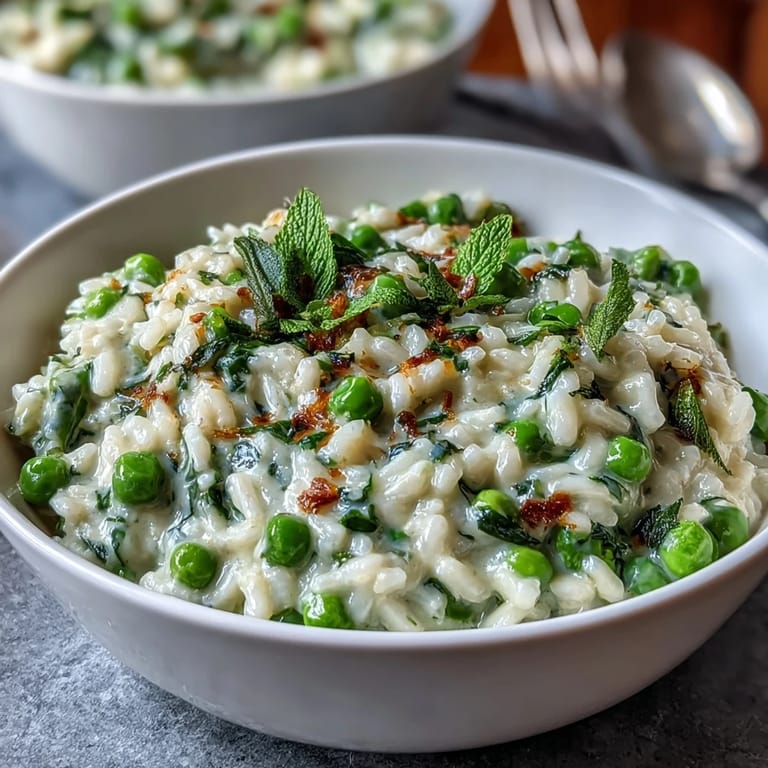
Pin A friend texted me from her garden last spring asking if I knew what to do with a glut of fresh peas she'd just picked. I drove over that afternoon, and we ended up making this risotto together while sitting on her porch, tasting it between stirrings and adding more mint because neither of us could resist. The kitchen smelled incredible—buttery, green, alive. Since then, I make it whenever I want to feel like spring showed up on my plate.
I made this for a dinner party in April, and my neighbor came over early to help chop vegetables. She kept sneaking tastes of the warm stock from the ladle, and by the time we served it, she'd already decided to make it for her own dinner the following week. There's something about risotto that makes people feel cared for—maybe it's because you have to stand there and pay attention to it.
Ingredients
- Fresh or frozen green peas (1 cup): Use fresh in spring if you can—they're sweeter and cook down less. Frozen works beautifully too and honestly takes the stress out of prep.
- Small onion, finely chopped: The dice matters here because you want it to disappear into the risotto and add sweetness without texture.
- Garlic cloves, minced (2): Mince them small so they distribute evenly and don't overpower the delicate flavors.
- Arborio rice (1 1/2 cups): This rice has the right starch content to create creaminess without turning to mush—don't substitute unless you enjoy disappointment.
- Warm vegetable stock (4 cups): Keep it warm in another pot so it doesn't shock the rice and interrupt the cooking process.
- Dry white wine (1/2 cup): A wine you'd actually drink, not some cooking wine that tastes like sadness.
- Unsalted butter, divided (3 tbsp): The first 2 tablespoons go in at the start, and the final tablespoon at the end creates that silky finish.
- Freshly grated Parmesan cheese (1/2 cup): Grate it yourself if you can—the pre-grated stuff has anticaking agents that interfere with the creaminess.
- Fresh mint leaves (1/4 cup): Chop these just before serving so they stay fragrant and don't turn dark.
- Fresh flat-leaf parsley (2 tbsp): Optional, but it adds a subtle earthiness that rounds out the mint.
- Lemon zest: This is the secret that makes everything taste fresher—don't skip it.
- Salt and freshly ground black pepper: Taste as you go because you'll need more than you think.
Tired of Takeout? 🥡
Get 10 meals you can make faster than delivery arrives. Seriously.
One email. No spam. Unsubscribe anytime.
Instructions
- Build your flavor base:
- Melt 2 tablespoons of butter in a large saucepan over medium heat. Add the chopped onion and let it become soft and translucent, which takes about 4 minutes—you'll know it's ready when it stops being sharp and gets sweet. Stir in the minced garlic for another minute, and your kitchen will suddenly smell like possibility.
- Toast the rice:
- Add the Arborio rice to the pan with the butter and aromatics, stirring constantly for about 2 minutes. You're looking for the grains to turn slightly translucent at the edges and smell a bit nutty—this is how you build flavor into risotto.
- Deglaze with wine:
- Pour in the white wine and stir until it's mostly absorbed, which happens quickly. The wine adds acidity and depth that balances all the richness coming next.
- Add stock patiently:
- Begin adding the warm vegetable stock one ladle at a time, stirring constantly and waiting until most of the liquid is absorbed before adding more. This process takes 18 to 20 minutes and feels meditative—your arm will get a little tired, but don't rush it or you'll end up with rice soup instead of risotto.
- Introduce the peas:
- During the last 5 minutes of cooking, stir in the peas so they stay bright green and tender instead of turning to mush. Taste a grain of rice—it should be creamy on the outside but still have a slight firmness at the center.
- Finish with grace:
- Remove the pan from heat and stir in the remaining 1 tablespoon of butter, the Parmesan, fresh mint, parsley if using, lemon zest, and a pinch of salt and pepper. Mix gently until everything is cohesive and creamy—this is where the magic happens.
- Taste and adjust:
- Always taste before serving and adjust the seasoning—the Parmesan and salt levels depend on your stock, so trust your palate.
 Pin
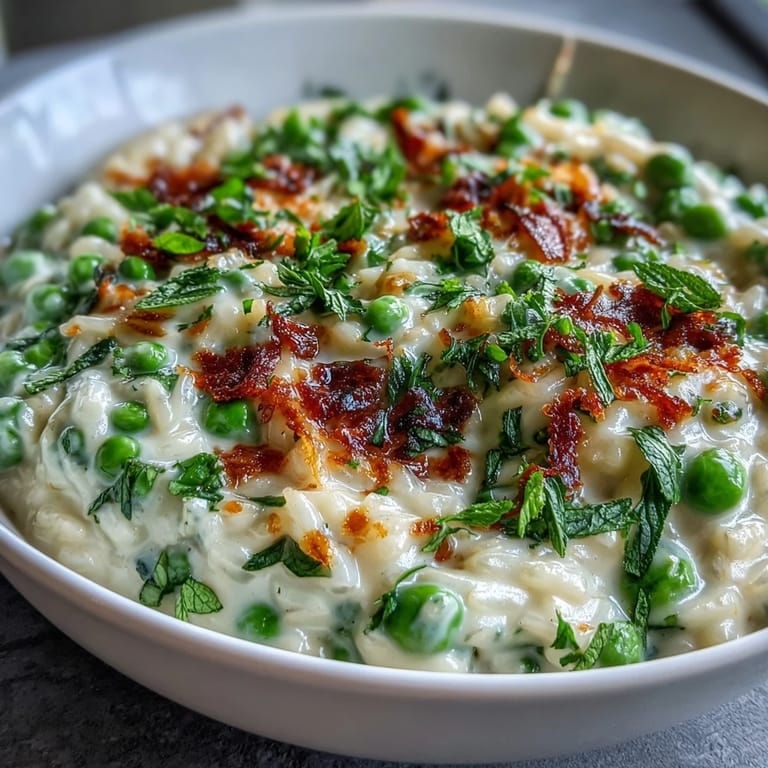
Pin A family member who usually picks around the peas in everything asked for seconds, which felt like winning an award. That's when I realized risotto isn't just about the technique—it's about how you treat the ingredients with respect.
Choosing Your Vegetables
Spring peas are a gift when you can get them, but I've learned not to feel guilty about frozen peas. They're picked at peak ripeness and frozen immediately, so they're often fresher than the fresh ones that have been traveling and sitting in stores. I thaw them slightly before adding them so they heat through gently instead of getting shocked into submission by the hot risotto.
The Parmesan Decision
I learned this the hard way after buying pre-grated Parmesan for a dinner party and watching it turn the risotto gritty instead of silky. Now I keep a block in the fridge and grate it on the microplane right before I need it. The difference is subtle but real, and guests always comment that it tastes richer than they expected.
Making It Your Own
This recipe is forgiving enough to welcome your instincts. Some cooks add a splash of good olive oil at the end for extra richness, while others finish with a tiny knob of truffle butter if they're feeling fancy. I've made it with asparagus instead of peas, added crispy sage on top, or swapped the mint for basil depending on what's growing and what mood I'm in.
- A crisp white wine like Sauvignon Blanc or Pinot Grigio pairs beautifully because the acidity cuts through the richness.
- If you're making this for someone with dietary restrictions, check that your Parmesan is made without animal rennet.
- Leftovers can be gently reheated with a splash of stock, though risotto is really best eaten fresh.
 Pin
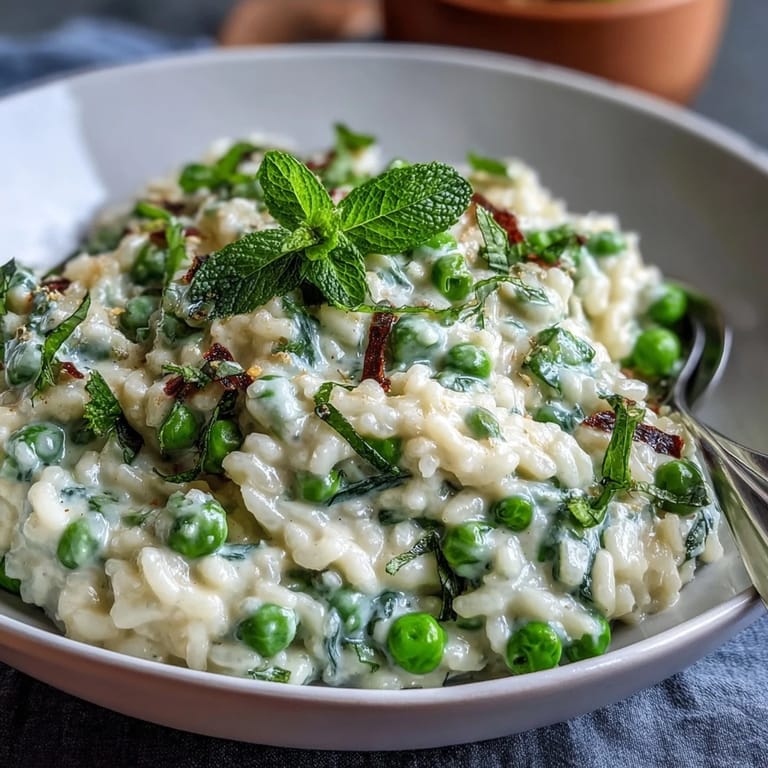
Pin This dish reminds me that some of the best meals come from paying attention to simple, fresh ingredients and not rushing the process. Make this when you want to feel like you're cooking with someone beside you.
Recipe FAQ
- → What type of rice is best for this dish?
Arborio rice is ideal due to its high starch content, which creates the creamy texture typical of this dish.
- → Can I use frozen peas instead of fresh?
Yes, frozen peas work well and can be added just like fresh ones during the last few minutes of cooking.
- → How do I achieve the perfect creamy consistency?
Stir frequently while slowly adding warm vegetable stock, allowing the liquid to absorb before adding more, ensuring a smooth texture.
- → What wine pairs well with this dish?
Crisp white wines like Sauvignon Blanc or Pinot Grigio complement the fresh and creamy flavors beautifully.
- → Can herbs like parsley be omitted?
Parsley is optional and adds a fresh note, but the dish works well with just mint and lemon zest for brightness.