 Pin
Pin There's something quietly magical about a pot of soup that smells like it's been simmering for hours when you've really only started cooking. My first attempt at this roasted garlic and onion soup happened on a gray autumn afternoon when I'd overcommitted to dinner plans and needed something that felt both impressive and forgiving. The kitchen filled with such a rich, sweet aroma as the garlic roasted that my neighbors actually knocked to ask what I was making. That's when I realized this soup had something special—it transforms simple ingredients into something that tastes like it required far more effort than it actually does.
I made this soup for my sister when she was going through a rough patch and wanted nothing but comfort food she could actually taste. She sat at my counter in oversized sweats, and I watched her face change with that first spoonful—not in a dramatic way, just a small exhale of relief. We barely talked while she ate; we just listened to the clink of spoon against bowl and let the soup do its work. That's when I understood that good food isn't really about impressing anyone. It's about giving people something warm to hold onto when they need it most.
Ingredients
- Yellow onions, thinly sliced: These are your foundation, and slicing them thin matters because they need time to break down and caramelize into pure golden sweetness without burning.
- Whole heads of garlic: Roasting the entire head mellows the sharp bite into something almost buttery and approachable, which is the soul of this soup.
- Olive oil and unsalted butter: The combination gives you both flavor and the right cooking temperature to coax out sweetness without burning anything.
- Leek, celery, and carrot: These aromatics build a flavor base you'll taste in every spoonful, even after they've mostly dissolved into the broth.
- Dry white wine: This cuts through richness and adds a subtle brightness that keeps the soup from feeling heavy.
- Vegetable broth: Use good quality broth here because you can actually taste it; weak broth means a weak soup no matter what else you do.
- Soy sauce: Just a teaspoon adds umami depth that makes people wonder what your secret ingredient is.
- Fresh thyme, bay leaf, and dried oregano: These herbs remind you you're making something intentional, not just throwing things in a pot.
- Day-old baguette: Slightly stale bread crisps up much better than fresh bread, which would just become soggy and sad.
- Fresh parsley, dried thyme, and garlic powder for croutons: These seasonings make the croutons taste like they belong in a restaurant, not from a bag.
Tired of Takeout? 🥡
Get 10 meals you can make faster than delivery arrives. Seriously.
One email. No spam. Unsubscribe anytime.
Instructions
- Prepare your garlic for the oven:
- Slice the tops off both garlic heads so the cloves peek out just a bit, then drizzle them with olive oil and wrap each in foil. This isn't fussy—it's protective, letting the garlic roast gently in its own steam without drying out.
- Let the garlic transform slowly:
- Into a 400°F oven they go for 40 minutes until the cloves turn golden and soft enough to press out of their skins like butter. Set them aside to cool while you move on to the next phase.
- Begin the onion caramelization:
- Heat olive oil and butter in a large pot over medium-low heat, then add your sliced onions, leek, celery, and carrot. Stir frequently for 25 to 30 minutes, watching as the onions gradually turn from pale yellow to deep golden brown—this is patience rewarded.
- Deglaze with wine:
- When the vegetables are properly caramelized, pour in the dry white wine and scrape up all the flavorful brown bits stuck to the bottom of the pot. Let the wine reduce by half, which takes about 5 minutes and brings everything into focus.
- Build the soup:
- Stir in the roasted garlic you've squeezed from its skins, add your vegetable broth along with soy sauce if you're using it, then add the fresh thyme sprigs, bay leaf, and oregano. Bring everything to a boil, then reduce the heat and simmer uncovered for 25 minutes.
- Make the croutons while the soup simmers:
- Toss bread cubes with olive oil, fresh parsley, dried herbs, garlic powder, and a pinch of salt, then spread them on a baking sheet. Bake at 400°F for 10 to 12 minutes, stirring once halfway through, until they're golden and crisp all the way through.
- Finish the soup:
- Remove the thyme sprigs and bay leaf, taste the soup, and adjust your seasoning with salt and pepper. Decide whether you want it chunky or smooth—you can blend it partially for texture or leave it as is.
- Serve with intention:
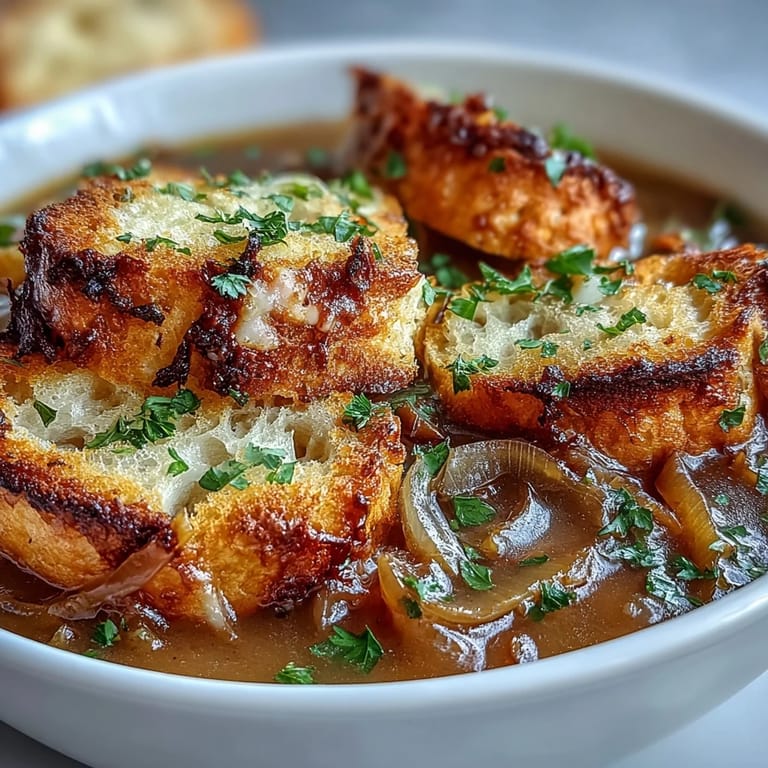
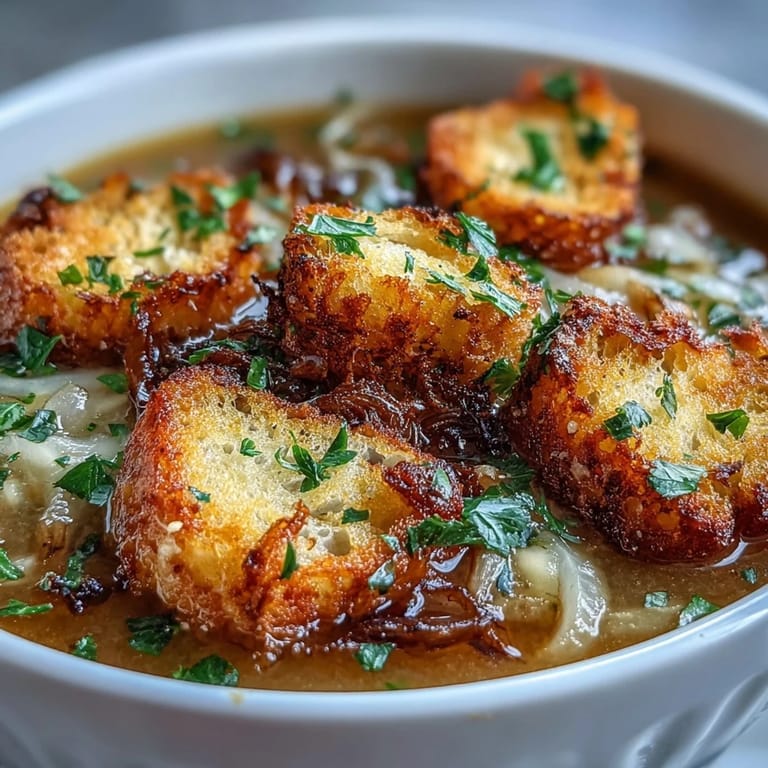
- Ladle the soup into bowls and top each one with a generous handful of those herb croutons, letting them get just slightly softened by the heat. A whisper of fresh parsley on top makes it look like you spent your whole day on this.
 Pin
Pin One winter evening, I made this soup for a group of friends who'd all had the kind of week where everything felt fractured and complicated. As we sat around the table with steaming bowls, someone said, 'This tastes like someone cared,' and suddenly everyone went quiet—not uncomfortable quiet, but the kind where people realize they're being held by something simple and good. That's what I love about soup; it asks nothing of you except to show up and receive it.
The Magic of Slow Roasting
Roasting whole garlic heads changes everything you thought you knew about garlic in soup. The slow heat transforms those sharp, pungent cloves into something almost sweet and mellow, like they've gone through some kind of flavor metamorphosis. I used to think garlic soup meant punchy and aggressive, until I discovered this method and realized I'd had it all wrong. The result is that every spoonful carries this subtle warmth that builds rather than shouts, and that's the difference between a soup that tastes good and one that tastes like home.
Why Onions Are Worth the Time
Caramelizing onions properly feels like a meditation if you're in the right mood, or like the slowest cooking task on earth if you're hungry. But here's what happens when you give them the 25 to 30 minutes they need: they break down into their own syrup, all that sulfur and sharpness cooking away to leave behind pure, concentrated sweetness. This soup lives or dies on that step, because it's what makes the base taste rich and full even though there's no cream involved. Once you've made this soup and tasted what proper onion caramelization actually contributes, you'll start doing it for everything.
Making Croutons That Actually Stay Crisp
The secret to croutons that don't turn into sad bread sponges is starting with day-old bread and not being shy with the oil. I learned this the hard way after making a batch so flimsy they dissolved before I could even get them into a bowl. Now I toss them generously with oil, knowing that creates a kind of protective coating against soup moisture. The herbs go on after the oil so they cling to the oily surface instead of falling off as you eat.
- Make sure to stir your croutons halfway through baking so they brown evenly on all sides and no hidden pale spots ruin the presentation.
- Let them cool on the baking sheet for a minute after removing from the oven because they'll continue to crisp up as they cool.
- Store any leftover croutons in an airtight container for up to three days and reheat them briefly in the oven if they lose their crunch.
 Pin
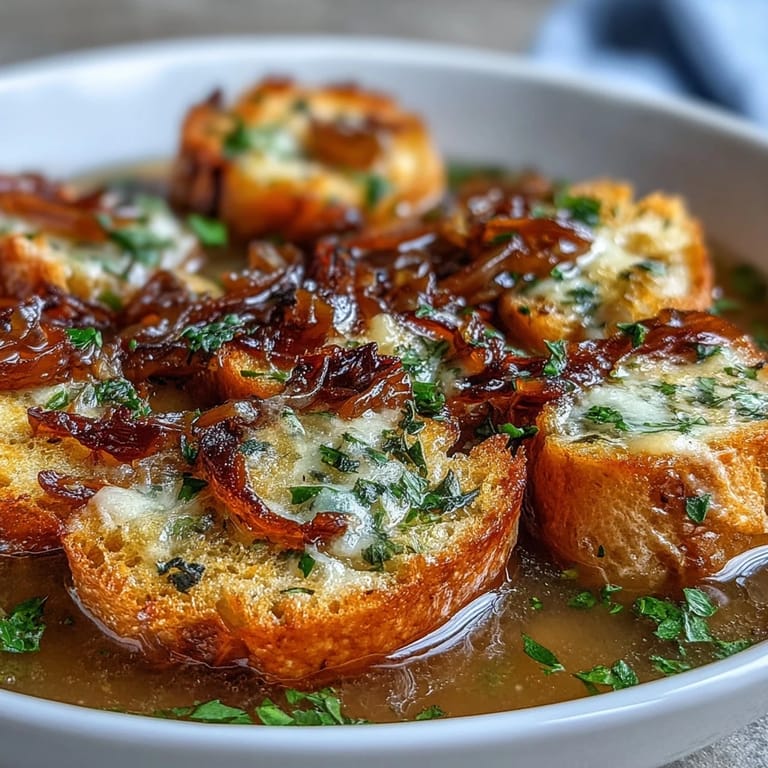
Pin This soup isn't fancy or difficult, but it tastes like both, which is maybe the greatest gift a recipe can offer. Make it when you need to feel like you're taking care of something, or when someone else needs to feel taken care of.
Recipe FAQ
- → How do I properly roast garlic for this soup?
Slice the tops off whole garlic heads, drizzle with olive oil, wrap in foil, and roast at 400°F for about 40 minutes until soft and golden.
- → Can I substitute any vegetables in the soup base?
Yes, you can swap leeks for shallots or add more root vegetables like carrots for added sweetness and depth.
- → What makes the croutons flavorful and crisp?
The croutons are tossed with olive oil, fresh and dried herbs, garlic powder, and a pinch of salt, then baked until golden and crunchy.
- → Is it necessary to blend the soup for a smoother texture?
Blending is optional; blending part or all of the soup creates a creamier texture but leaving it chunky maintains a rustic feel.
- → What wine pairs well with this onion soup?
A dry white wine such as Sauvignon Blanc complements the sweet and savory flavors beautifully.