 Pin
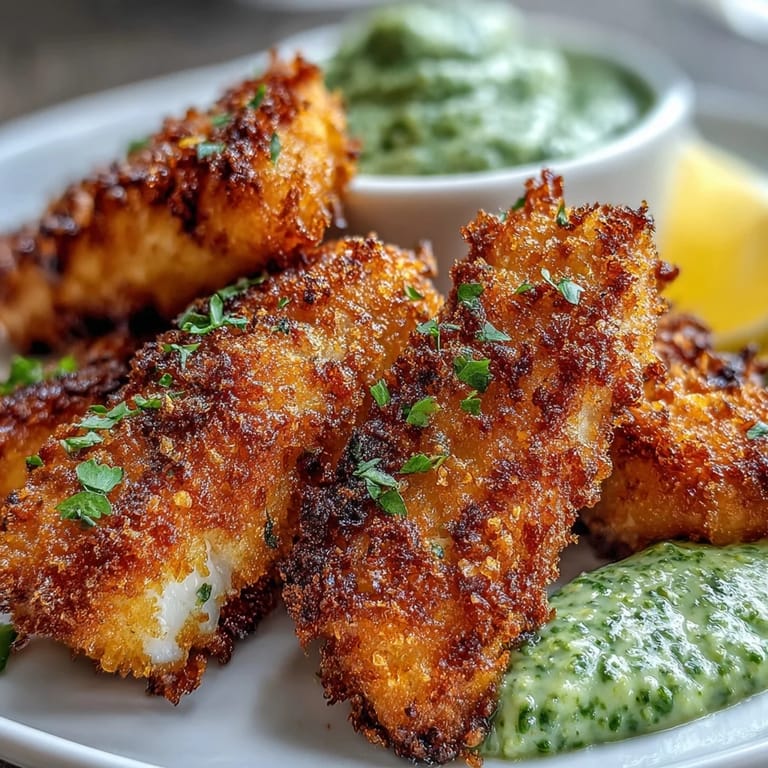
Pin My neighbor once called these the thing that changed fish night forever, and honestly, she was right. There's something about the moment when crispy Parmesan crust shatters under your fork and meets tender haddock inside that makes you realize fish fingers grew up. I stumbled onto this version while trying to impress someone who claimed they didn't eat fish, and by the end of dinner, they were asking for the pesto recipe. It's the kind of dish that feels fancy enough for guests but tastes like comfort food made with intention.
I made these for my daughter's school friends last spring, and one of them asked if I'd catered it. She meant it as a compliment, but what she didn't realize was that I'd spent twenty minutes chopping basil at my kitchen counter while arguing with myself about whether pine nuts were worth it. The pesto turned out so vibrant green that it looked almost suspicious, but the moment everyone tasted it, the skepticism vanished. That afternoon taught me that simple ingredients treated with respect taste like effort without the fuss.
Ingredients
- Skinless haddock fillets, 500g, cut into finger-sized strips: Use a sharp knife and cut against the grain slightly for strips that stay tender rather than flaking apart. Fresh is better than frozen, but thawed frozen haddock works just fine if that's what you have.
- Plain flour, 60g: This creates the first barrier that helps everything stick together and fries to golden.
- Large eggs, 2, beaten: They're your glue, so whisk them until they're properly combined, almost frothy.
- Panko breadcrumbs, 80g: The secret weapon for crispness because those bigger, airier crumbs create pockets that turn golden instead of dense.
- Parmesan cheese, 50g, finely grated: Finely grated matters here because chunky bits don't brown evenly and can burn at the edges.
- Freshly ground black pepper, ½ tsp, and sea salt, ½ tsp: Season your coating properly or everything tastes like nothing wearing a crispy jacket.
- Smoked paprika, ½ tsp (optional): This adds warmth and a whisper of smoke that makes people ask what you did differently.
- Frozen peas, 200g: Frozen peas are picked at peak ripeness and frozen immediately, so they're sweeter and fresher than you'd expect.
- Fresh basil leaves, 30g: Don't use dried basil here because the pesto needs brightness, and dried basil tastes like the cupboard.
- Parmesan cheese, 25g, grated: This goes into the pesto, giving it nutty depth that elevates the whole thing.
- Small garlic clove, 1: One clove is plenty because garlic can overpower pea pesto if you're heavy-handed.
- Pine nuts, 30g: Toast them lightly if you have time, but honestly, they toast a bit during blending anyway.
- Extra-virgin olive oil, 4 tbsp: Use something you actually like the taste of because it's going to shine here.
- Lemon juice from ½ lemon: The acid brings the pesto alive and keeps it from tasting one-note.
- Salt and pepper to taste: Taste everything at the end because Parmesan is already salty, so go gently.
- Lemon wedges for serving: These aren't just garnish—they're the finishing touch that makes people want another bite.
Tired of Takeout? 🥡
Get 10 meals you can make faster than delivery arrives. Seriously.
One email. No spam. Unsubscribe anytime.
Instructions
- Get your station ready:
- Preheat your oven to 200°C (180°C fan) and line a baking sheet with parchment paper so nothing sticks. Set up three bowls in a row: flour in the first, beaten eggs in the second, and your Parmesan-panko mixture in the third—this assembly line approach means less thinking and more rhythm.
- Create your coating mix:
- In the third bowl, combine panko, grated Parmesan, black pepper, sea salt, and smoked paprika if using. Give it a quick stir so everything's evenly distributed and you don't end up with salty spots.
- Coat the haddock:
- Take each strip and dust it lightly in flour, shaking off the excess so it's not powdery. Dip it into the beaten egg, letting any excess drip off, then roll it in the Parmesan-panko mixture, pressing gently so it adheres and doesn't just fall off halfway through cooking.
- Arrange and oil:
- Lay each coated strip on the prepared baking sheet, spacing them out so they're not touching. Lightly spray or drizzle with olive oil—this is what creates that shatter when they cook, so don't skip it.
- Bake until golden:
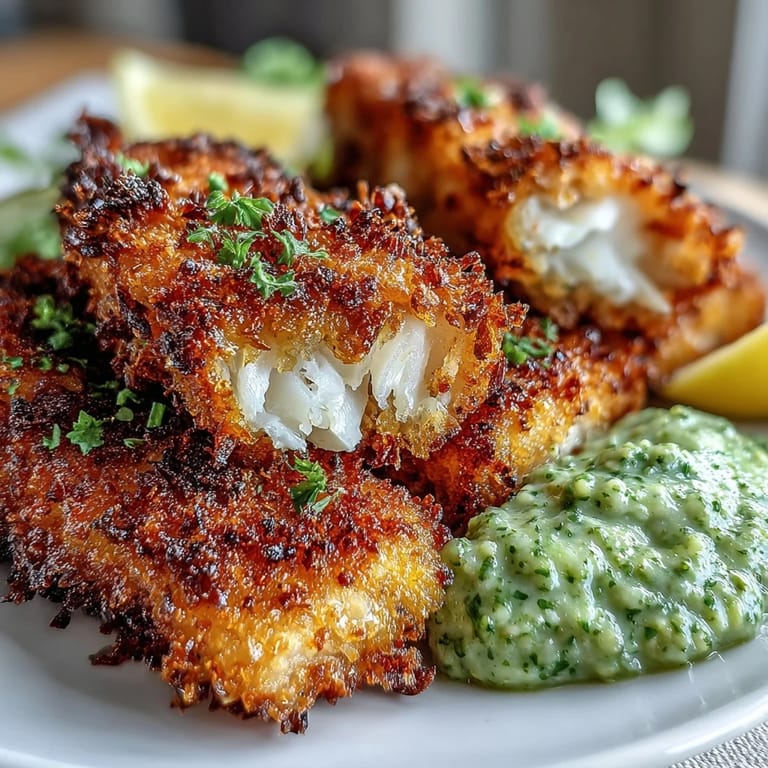
- Bake for 15 to 20 minutes, turning the pieces halfway through so both sides get equally crisp and golden. They're done when the coating is deep golden and you can see little darker spots where the Parmesan has caramelized.
- Make the pea pesto while they bake:
- Bring a small pot of salted water to a boil and blanch the peas for exactly 2 minutes—this sets their color and softens them just enough. Drain and immediately refresh them under cold water so they stay bright green instead of dull.
- Blend the pesto:
- Put the cooled peas, basil, grated Parmesan, garlic clove, and pine nuts into a food processor. Add the olive oil and lemon juice, then pulse until mostly smooth but still textured—you want it to taste fresh and lively, not like baby food.
- Season and taste:
- Taste the pesto and add salt and pepper gently because the Parmesan is already bringing salt to the party. Adjust lemon juice if it needs more brightness.
- Serve hot:
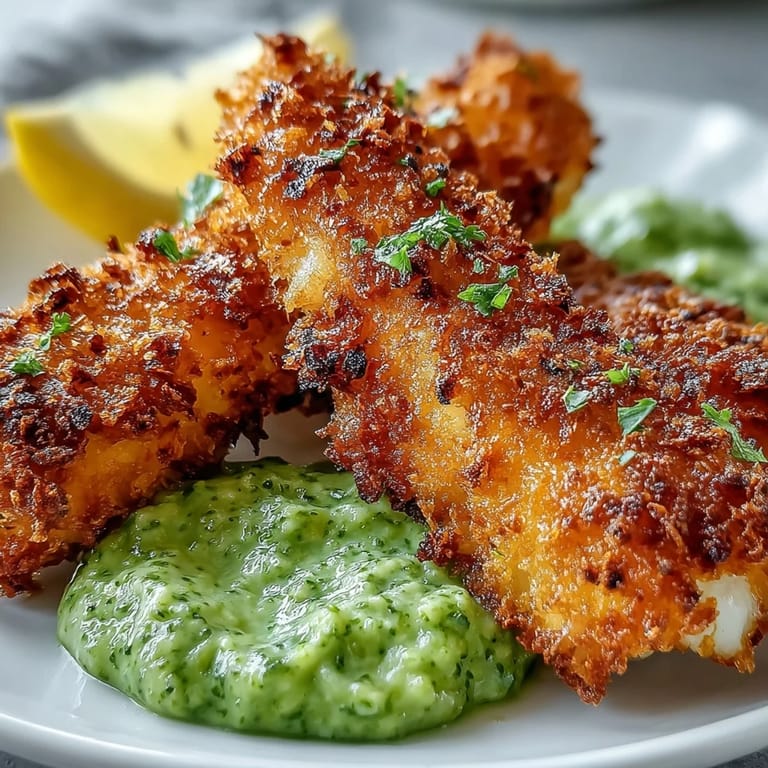
- Plate the golden goujons while they're still warm, add a generous spoonful of pesto, and finish with lemon wedges on the side. The contrast between the crispy coating and creamy pesto is where the magic happens.
 Pin
Pin There was an evening when my partner came home late from work, skeptical about dinner because we'd been in a lazy rut for weeks. I plated these goujons with the pesto, added lemon wedges, and watched their whole face change the moment they tasted it. That's when I realized this dish isn't just food—it's proof that effort doesn't always mean complicated, and that sometimes the best meals are the ones that remind us why we cook in the first place.
Why This Works Better Than Fish Fingers
Fish fingers were invented to make fish convenient, but somewhere along the way they became predictable. This version keeps that accessibility but adds Parmesan, which browns beautifully and tastes sophisticated without pretending to be something it's not. The panko stays crisp longer than regular breadcrumbs, and the oven method means you're not managing hot oil on the stove while also making a fresh pesto. It's the kind of small upgrade that feels like you've been cooking all afternoon when you've barely been in the kitchen.
The Pesto: Not Just a Sidekick
People always ask if they can just use store-bought pesto, and technically yes, but homemade pea pesto is a different animal. It tastes fresher, feels lighter, and honestly takes the same amount of time to make as it does to blend store-bought into room temperature. The peas add sweetness that basil alone can't deliver, and the texture stays a bit chunky instead of becoming a smooth paste, which means every spoonful has something to say. Once you make it fresh, the store-bought version starts looking like a shortcut you don't actually need.
Serving and Pairing Ideas
Serve these with something crisp—a simple green salad dressed with lemon and olive oil, or even just arugula and fleur de sel if you're feeling minimal. The lemon wedges aren't decoration; they're essential for cutting through the richness of the Parmesan and pesto. Pair the meal with a crisp Sauvignon Blanc or dry sparkling wine if you're in the mood for drinks, because the acidity complements the whole plate beautifully.
- A squeeze of fresh lemon right before eating makes everything taste brighter and more alive.
- Leftover pesto keeps in the fridge for three days and tastes even better on toast or stirred into pasta the next day.
- If you have guests, you can coat the goujons an hour ahead and refrigerate them until it's time to bake.
 Pin
Pin This dish reminds me that cooking doesn't need to be complicated to feel special. Whether you're cooking for yourself on a random Tuesday or impressing people who say they don't eat fish, these goujons with pea pesto deliver something that tastes both familiar and new.
Recipe FAQ
- → Can I use a different type of white fish?
Yes, cod or pollock work excellently as substitutes for haddock. Choose firm white fish fillets that hold their shape when cut into strips.
- → How do I make the coating extra crispy?
Ensure each goujon is thoroughly coated in all three layers, and lightly spray with olive oil before baking. Turning halfway through cooking ensures even browning and maximum crispiness.
- → Can the pea pesto be made in advance?
Absolutely. Prepare the pesto up to 2 days ahead and store in an airtight container in the refrigerator. Drizzle a thin layer of olive oil on top to prevent discoloration.
- → What can I serve alongside these goujons?
Pair with roasted potatoes, sweet potato fries, or a simple mixed green salad. The pesto also works beautifully tossed through pasta or spread on crusty bread.
- → How do I make this gluten-free?
Simply swap regular flour for gluten-free flour and use gluten-free breadcrumbs in the coating mixture. The rest of the ingredients are naturally gluten-free.
- → Can I freeze the coated goujons before cooking?
Yes, freeze the breaded goujons on a tray, then transfer to a freezer bag. Cook from frozen, adding 5-7 minutes to the baking time.